
Countering Domestic Terrorism And
On December 4, 2025, Attorney General Pam Bondi issued a memorandum to the FBI implementing President Trump’s September 2025 directive on Domestic Terrorism (NSPM-7) that has been described as “a declaration of war on just about anyone who isn’t MAGA”.)
Bondi’s memo breaks sharply with more than forty years of accepted practice, in which investigations have required predication based on a credible threat of violence or a criminal act— political dissent has never been treated as a threat category. This memo is a distinct and aggressive shift of the government away from responding to acts of violence and toward the policing of views–specifically views with which the Trump administration disagrees.
The memo treats certain widespread, legal and protected political and social beliefs, as actionable“indicators” of potential violence and danger, none of which fall within current law governing what acts constitute prosecutable acts of domestic terrorism.
These indicators include:
“extreme viewpoints on immigration, radical gender ideology, and anti-American sentiment”
“opposition to law and immigration enforcement; extreme views in favor of mass migration and open borders; adherence to radical gender ideology, anti-Americanism, anti-capitalism, or anti-Christianity…”
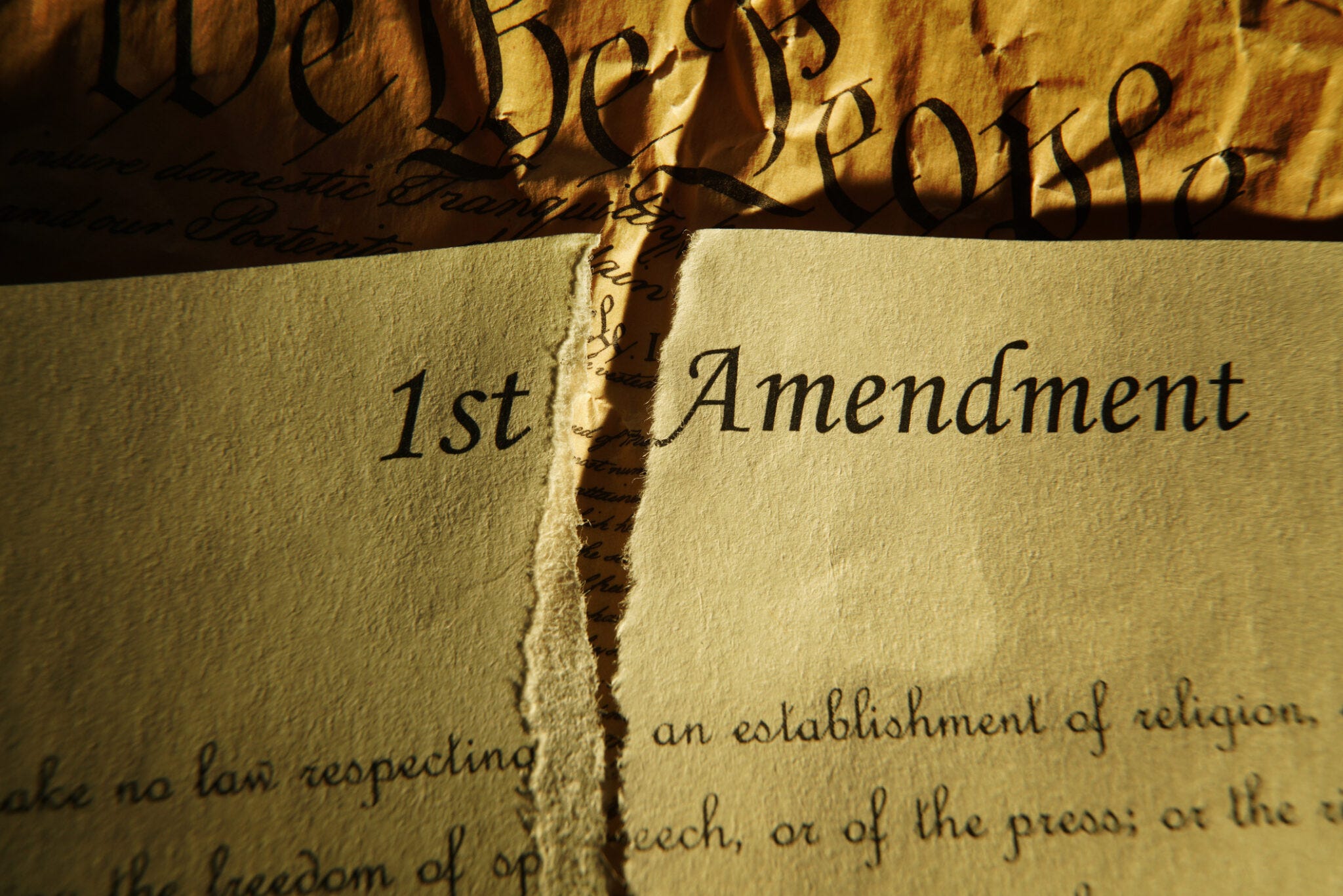
The memo does include a narrow First Amendment disclaimer, stating that the government does not investigate U.S. persons “solely” for protected activity, but it seems unlikely that “solely” would protect persons against investigation. It would appear, for example, that peaceful demonstrations to celebrate “LGBTQ+Pride would put one at risk of FBI counterterrorist action.
FBI Joint Terrorism Task Forces Responsibilities and Procedures Expanded and Redefined
“Encountered or Suspected” The memo instructs law enforcement to refer “encountered or suspected matters” of domestic terrorism to one of the FBI-run Joint Terrorism Task Forces (JTTF) which are located across the United States. A local police chief or DHS officer who encounters a peaceful immigration rights group, a transgender rights parade, or an anti-capitalist bookshop is to report that group, parade, or store to the FBI.
Network Mapping as Investigative Dragnet: The memo directs the JTTFs to “map” the network of “culpable actors” involved in the organization referred to the FBI. If one person in the referred organization once attended a protest, shared an online forum, or donated to an advocacy group, the FBI is directed to map the “full network.” The network might include social networks, donors, event attendees, online communities, professional or advocacy groups who, by virtue of association, are then targets for investigation.
Retroactive Investigations: The memo directs the FBI to undertake an investigation of records over the last five years to identify earlier potential acts of domestic terrorism. As with all of this memo, “potential acts” is undefined and, as such, has movable boundaries. It may include protests and demonstrations where peaceful attendees vastly outnumbered those who engaged in vandalism or violence. A peaceful organization that co-sponsored an event where an unaffiliated individual later damaged property could become the subject of a terrorism-related review. Retroactive investigations amplify the risks of association-based targeting.
Each part of this National Security Presidential Memorandum reinforces the indefensible definition of terrorism as people who are assembled for any number of reasons. It puts the First Amendment rights of all of us at risk and, at the same time, will weaken the law enforcement agencies’ ability to effectively counter actual terrorism, crime, or any of the actual functions for which federal law enforcement should be responsible.
The Author is a former intelligence officer with 20 years of experience in counterintelligence and security and is a member of The Steady State.
Founded in 2016, The Steady State is a nonprofit 501(c)(4) organization of more than 360 former senior national security professionals. Our membership includes former officials from the CIA, FBI, Department of State, Department of Defense and Department of Homeland Security. Drawing on deep expertise across national security disciplines including intelligence, diplomacy, military affairs and law, we advocate for constitutional democracy, the rule of law and the preservation of America’s national security institutions.