Giants And Pygmies
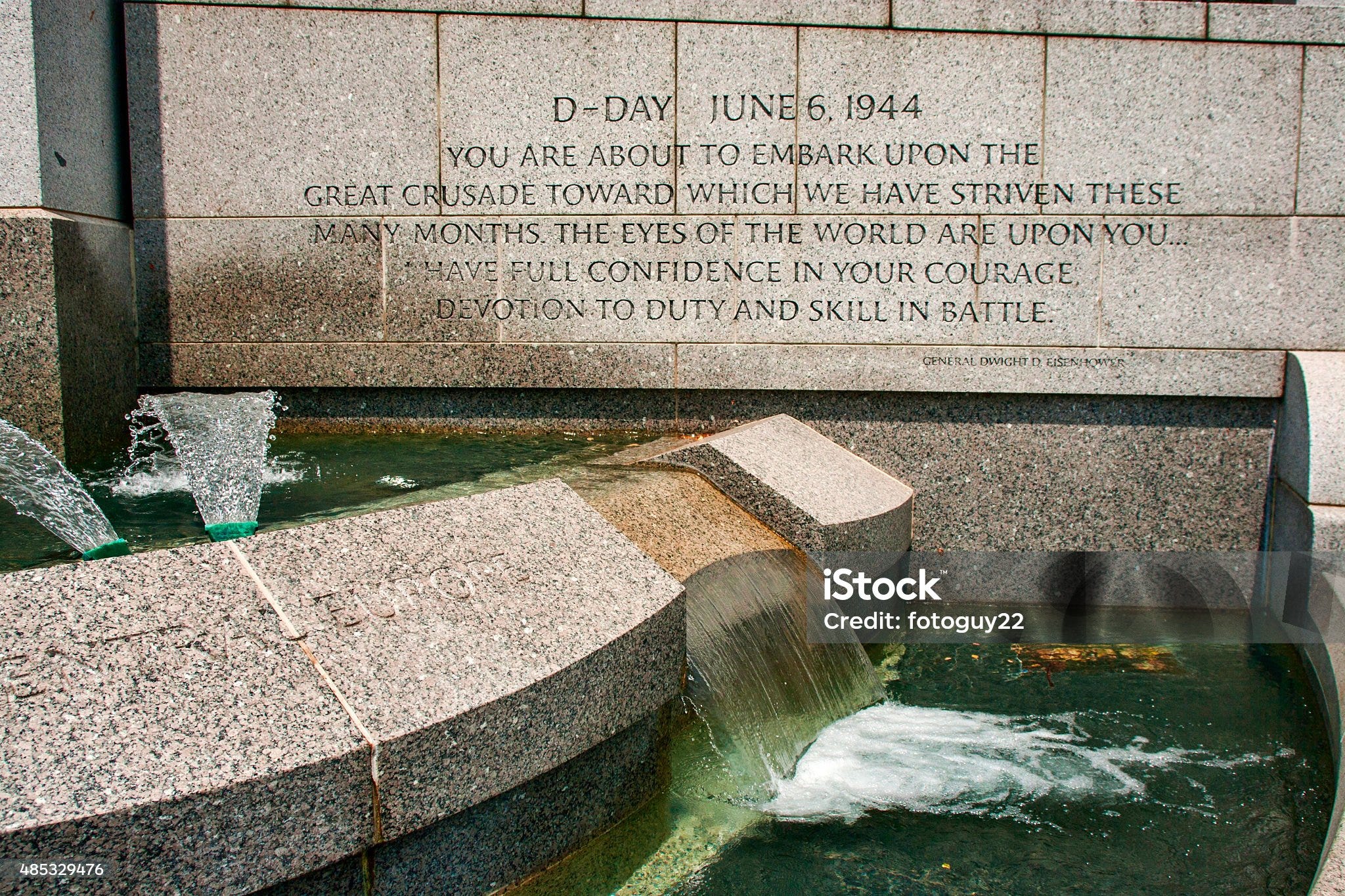
June 6, 1944 D-Day: Profiles in Leadership
On this day over 80 years ago, thousands of Allied troops, spearheaded by American forces, waded through surf raked by German fire or dropped by parachute through the flak-clogged skies of Normandy. There were countless acts of courage on that day and the days following, leading to the destruction of Nazi forces and the obliteration of fascism in Europe for decades after.
They were led by giants: Roosevelt, Stimson, Marshall, Eisenhower, and others. These leaders were not flawless, of course. But they possessed moral courage and a strong sense of ethics. They were the very opposite of narrow-minded and short-sighted. They knew that America’s place was with allies from like-minded democracies, not blinkered behind the walls of Fortress America.
Roosevelt held together a coalition of domineering personalities such as Churchill and Stalin.
Marshall led the Combined Chiefs of Staff to issue the broadest possible order to Eisenhower: “You will enter the continent of Europe and, in conjunction with the other United Nations, undertake operations aimed at the heart of Germany and the destruction of her armed forces.” They showed full trust and confidence in Eisenhower and his command, but ran the real risk that the operation could end in disaster.
Eisenhower himself fully understood this possibility and drafted a statement taking personal responsibility should the landings fail. “My decision to attack at this time and place was based on the best information available. The troops, the air, and the Navy did all that bravery and devotion to duty could do. If any blame or fault attaches to the attempt it is mine alone.”
More broadly, Eisenhower thought that a leader should be “self-effacing, quick to give credit, ready to meet the other fellow more than halfway, must seek and absorb advice and must learn to decentralize. On the other hand when the time comes when he himself feels he must make a decision, he must make it in clean-cut fashion and on his own responsibility and take full blame for anything that goes wrong; in fact, he must be quick to take the blame for anything that goes wrong whether or not it results from his mistake or from an error on the part of a subordinate.”
This might be considered quaint by some today.
After the war, Marshall saw that America’s interests lay in the rebuilding of Europe and both physically and institutionally. He realized that magnanimity and national interest could reinforce each other. This idea characterized America’s approach to international relations for over the next three-quarters of a century, though it has recently come under attack.
Hopefully our country will never face such a terrible threat again. Possibly we will never find leaders of the moral and technical mettle that era brought forth. We can, however, seek and support potential national leaders who strive to emulate their singular qualities of courage, vision, and humanity. We can support national leaders capable of selfless service, whose interests are not in what boosts their wealth or ego, but what benefits the greater good.
We may not need or be able to find giants, but we can shun moral pygmies.
Michael Eiland, Retired Army Officer and member of The Steady State
Founded in 2016, The Steady State is a nonpartisan, nonprofit 501(c)(4) organization of more than 270 former senior national security professionals. Our membership includes former officials from the CIA, FBI, Department of State, Department of Defense and Department of Homeland Security. Drawing on deep expertise across national security disciplines including intelligence, diplomacy, military affairs and law, we advocate for constitutional democracy, the rule of law and the preservation of America’s national security institutions.