How The Trump Administration Undermined
During the Cold War and its aftermath, one principle united the U.S. national security establishment across party lines: the belief that democracy promotion served both our values and our interests. Institutions like USAID and the National Endowment for Democracy were not mere tools of soft power; they embodied a strategic commitment to a world that was freer, more stable, and less prone to authoritarian aggression.
That consensus has been shattered under both Trump administrations.
From 2016 to 2020 and now again in 2025, the United States abandoned its post–World War II role as a defender of liberal democracy. Through a toxic combination of admiration for right-wing autocrats, the defunding of democracy programs, and a reckless abandonment of moral leadership, the Trump White House has done lasting damage to America’s credibility—and to the hopes of democratic movements around the world.
Authoritarian Affinities
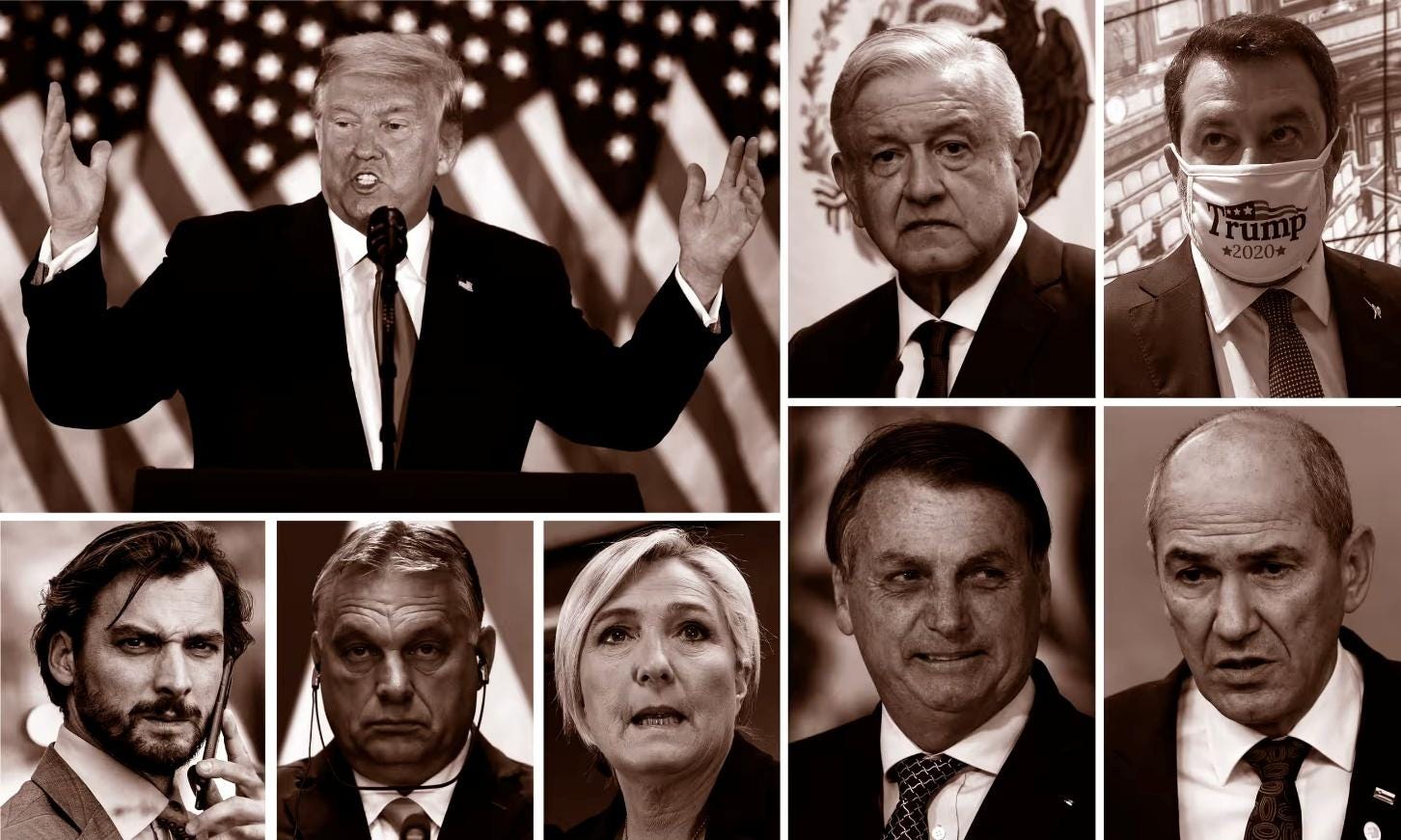
Perhaps the most alarming shift came in the administration’s open embrace of authoritarian-leaning leaders. Donald Trump didn’t just tolerate illiberal regimes—he often praised them. From Viktor Orbán to Jair Bolsonaro to Vladimir Putin, Trump found common cause with leaders who attacked independent judiciaries, suppressed civil society, and stifled press freedoms. Rather than holding these governments accountable, the administration aligned itself with their agenda. Trump’s admiration for “strong” leaders undermined American diplomats, demoralized human rights advocates, and emboldened regimes looking for an excuse to consolidate power. For decades, autocrats faced the prospect of U.S. pressure if they veered too far from democratic norms. Under Trump, they received a wink and a nod.
This reversal has had global implications. In Eastern Europe, civil society organizations operating under hostile governments found themselves increasingly isolated. In Latin America and Southeast Asia, the message was clear: America would no longer object if elected leaders dismantled democratic institutions—so long as they flattered the U.S. president or aligned with his political worldview.
Democracy on a Budget—Then No Budget at All
Meanwhile, the Trump administration worked to strip democracy promotion of its financial and institutional foundations. USAID, long a pillar of America’s global development strategy, faced deep budget cuts, political interference and now, a complete dismantling. Democracy and governance programs were the first on the chopping block.
Career experts have been fired in favor of appointees more interested in promoting nationalist or evangelical agendas than democratic resilience. Programs supporting independent media, election monitoring, and human rights defenders were simply shut down.
These were not bureaucratic reshuffles. They were strategic retreats. In nations where democracy hangs by a thread, even modest U.S. support can mean the difference between survival and collapse for NGOs, investigative journalists, or opposition parties. By starving these actors of support, the administration is helping accelerate democratic backsliding across the globe.
The Shining City, Diminished
Perhaps the most painful cost of this retreat is reputational. For generations, the United States—despite its flaws—was seen as a standard-bearer for human rights and democratic norms. This soft power was invaluable. Dissidents, activists, and reformers could look to America for solidarity, funding, and international legitimacy.
Trump shattered that perception. His own attacks on the press, the judiciary, and the legitimacy of U.S. elections echoed the playbooks of the very autocrats he admired. When he refused to condemn the murder of journalist Jamal Khashoggi or turned a blind eye to human rights abuses in Egypt, the world understood the message: American values were now negotiable.
Even more damaging were the events of January 6, 2021, which showed the world an America riven by democratic crisis. For the first time in modern history, the image of the United States as a model democracy was questioned not only abroad—but from within.
Rebuilding Trust, Restoring Purpose
Restoring America’s role as a global champion of democracy will take more than new budgets or speeches. It will require a clear, consistent recommitment to the values we once both practiced and exported with confidence: free expression, the rule of law, and respect for the dignity of all people.
It also means rejecting the dangerous idea that democracy is just one governance model among many. Democracy is messy, yes—but it is also the most legitimate, stable, and humane system ever devised. Promoting it abroad isn’t moral posturing—it’s national security strategy.
As members of the national security community, we understand that when the U.S. retreats, authoritarian powers rush in. When we abandon our allies, we embolden our adversaries. And when we sacrifice our values for short-term political or economic gain, we pay a long-term strategic price.
The Trump administration’s damage is real—but it is not irreversible. The shining city on a hill still stands. The world is watching to see whether we will light it again.
A member of the Steady State, Bruce Berton served as a U.S. diplomat for over three decades, ultimately rising to the senior ranks of the Foreign Service, including two years as Ambassador and Head of Mission at the Organization for Security and Cooperation in Europe’s (OSCE) Mission to Bosnia and Herzegovina. He is a native of the Pacific Northwest and a graduate of Pacific Lutheran University.
The Steady State is an association of more than 275 senior veterans from the U.S. National Security, Homeland Security and Diplomatic Communities. We have dedicated our careers to the principles of an apolitical, professional, and constitutionally bound national security enterprise. We have served under both Democratic and Republican administrations, always with the goal of upholding the rule of law and safeguarding the integrity of the institutions that protect our nation. (More about The Steady State can be found at our website, www.thesteadystate.org)