
Iran Nuclear Crisis Moves To Tragedy
With President Trump’s failure to persuade Prime Minister Netanyahu not to start what will likely be a long-term conflict, Israel’s multi-targeted attacks against Iran’s nuclear and missile programmes will likely push Iran into more secretive and dangerous nuclear pursuits.
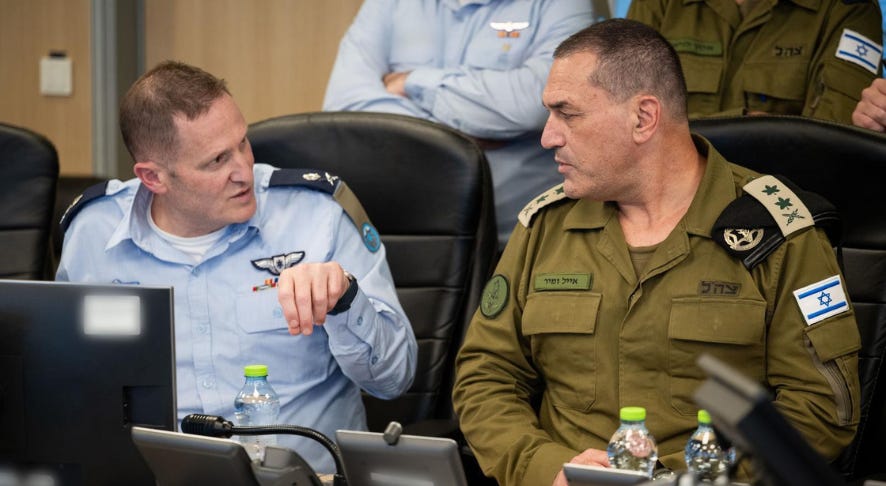
After at least 15 years of agitating for a kinetic attack on Iran’s nuclear programme, Israeli Prime Minister Benjamin Netanyahu finally found his chance. In the early hours of 13 June 2025, the Israeli Air Force and commando units unleashed a multi-pronged attack against the Natanz enrichment facility, the missile production site at Khorramabad, the Parchin military complex, the Islamic Revolutionary Guards Corps (IRGC) headquarters and the living quarters of military leaders and nuclear scientists.
The deeply buried enrichment plant at Fordow was not hit in the first night’s attack. However, it could be targeted in the continuing operation that Netanyahu forecast in a televised address the same morning. It is unknown whether Israel was able to destroy the 604kg uranium enriched to 60% U-235 content that Iran has produced to date. This amount is enough for ten or more nuclear weapons if further enriched to the approximate 90% considered to be weapons-grade. The stockpile is transportable and would have been the first thing to be hidden when Israel’s bombing plans became clear.
Opportune timing
United States President Donald Trump had asked Netanyahu not to take action while US–Iran talks were in progress. A sixth round of talks had been scheduled for 15 June and is now unlikely to proceed. Netanyahu likely judged that a window of opportunity was closing – last October, Israeli airstrikes knocked out Iran’s air defences, and Iran had been replacing the radars and other equipment.
Netanyahu may also have judged that global circumstances were in Israel’s favour. One factor is that Trump suggested on 11 June that talks were nearing an impasse over Iran’s refusal to meet Washington’s demand that it stop enriching uranium on Iranian soil. Another factor in Israel’s favour was the 12 June resolution by the International Atomic Energy Agency, which censured Iran’s lack of cooperation with the agency. Iran had vowed to respond by expanding its enrichment programme.
Iran also threatened to respond to any Israeli attack by targeting US assets in the region. These could include large bases in Bahrain and Qatar, as well as smaller holdings in Egypt, Iraq, Jordan, Kuwait, Oman, Saudi Arabia, Syria and the United Arab Emirates, plus ships in the Gulf. The IRGC and other military and intelligence units could also be launched against American embassies and companies. Despite Trump’s stated desire to avoid American involvement in Middle Eastern conflicts, the US may still be drawn into the escalating Israel–Iran confrontation.
US green light or yellow light?
US Secretary of State Marco Rubio insisted the US was not involved in Israel’s attack. On 9 June, Trump told Netanyahu to stop talking about an attack on Iran. Whether Trump also told Netanyahu not to do it is unclear. An unnamed Israeli official claimed, ‘There was full and complete coordination with the Americans.’
On at least one previous occasion, when Israel sought US approval for a bombing raid, in 2008, then-President George W. Bush refused. Without a US green light, Netanyahu pulled back. Analysts have long debated whether Israel needed a green light or just the absence of a red light. In the current case, Netanyahu may have detected only a yellow light and, therefore, sped ahead.
Israel may have to ignore many more traffic signals in the days and years ahead. Iran will surely seek to reconstitute what enrichment capabilities it lost. Now, however, it will do so in secret, likely after fulfilling past threats to withdraw from the Nuclear Non-Proliferation Treaty and its monitoring requirements. The world will be without its most reliable set of eyes and ears on Iran’s nuclear capabilities. Within a year or two, Iran should be able to assemble enough centrifuge cascades to produce weapons-grade uranium. If, or more probably when, Israel learns about the secret facility, it will launch more attacks.
Israeli security experts understand that Iran’s nuclear weapons capability cannot be eliminated; it can only be retarded as long as the nuclear knowledge is retained. They talk therefore about the need for repeated military operations, akin to ‘mowing the grass.’ It seems likely that Israel has now embarked on a long-term, indefinite lawnmowing campaign, a choice of, in effect, permanent war.
Diplomacy failure
The tragedy is that all of this could have been avoided had Trump not wilfully withdrawn from the 2015 Joint Comprehensive Plan of Action nuclear deal in 2018, when Iran was in full compliance. Only a year later did Iran begin to walk away from the limits of the deal.
Adroit diplomacy in Trump’s second term might have forestalled the disaster likely now to ensue. It would have been very difficult, however, for even an experienced negotiator to find a way around Trump’s demand that Iran give up enrichment on its soil and Iran’s insistence that it would not do so under any circumstances, even under a proposed multilateral enrichment consortium scheme.
Trump should have heeded advice to allow enrichment while ensuring it was strictly limited and highly monitored. Although some voices within the MAGA movement advocated for that route to avoid war, he chose not to challenge hawks calling for an Israeli attack. Trump also proved unable to stop Netanyahu from upending the diplomatic playing board. The two leaders will now have co-ownership of the ensuing disaster.
Mark Fitzpatrick is a retired US diplomat who served as Deputy Assistant Secretary for Non-Proliferation. He is an Associate Fellow at the London-based International Institute for Strategic Studies and a member of Steady State, among other affiliations. His views expressed here are personal.
Initially founded in 2016, The Steady State is a nonpartisan, nonprofit 501(c)(4) organization of more than 270 former senior national security professionals. Our membership includes former officials from the CIA, FBI, Department of State, Department of Defense and Department of Homeland Security. Drawing on deep expertise across national security disciplines including intelligence, diplomacy, military affairs and law, we advocate for constitutional democracy, the rule of law and the preservation of America’s national security institutions.