
Our Democracy Is Not Stronger Than
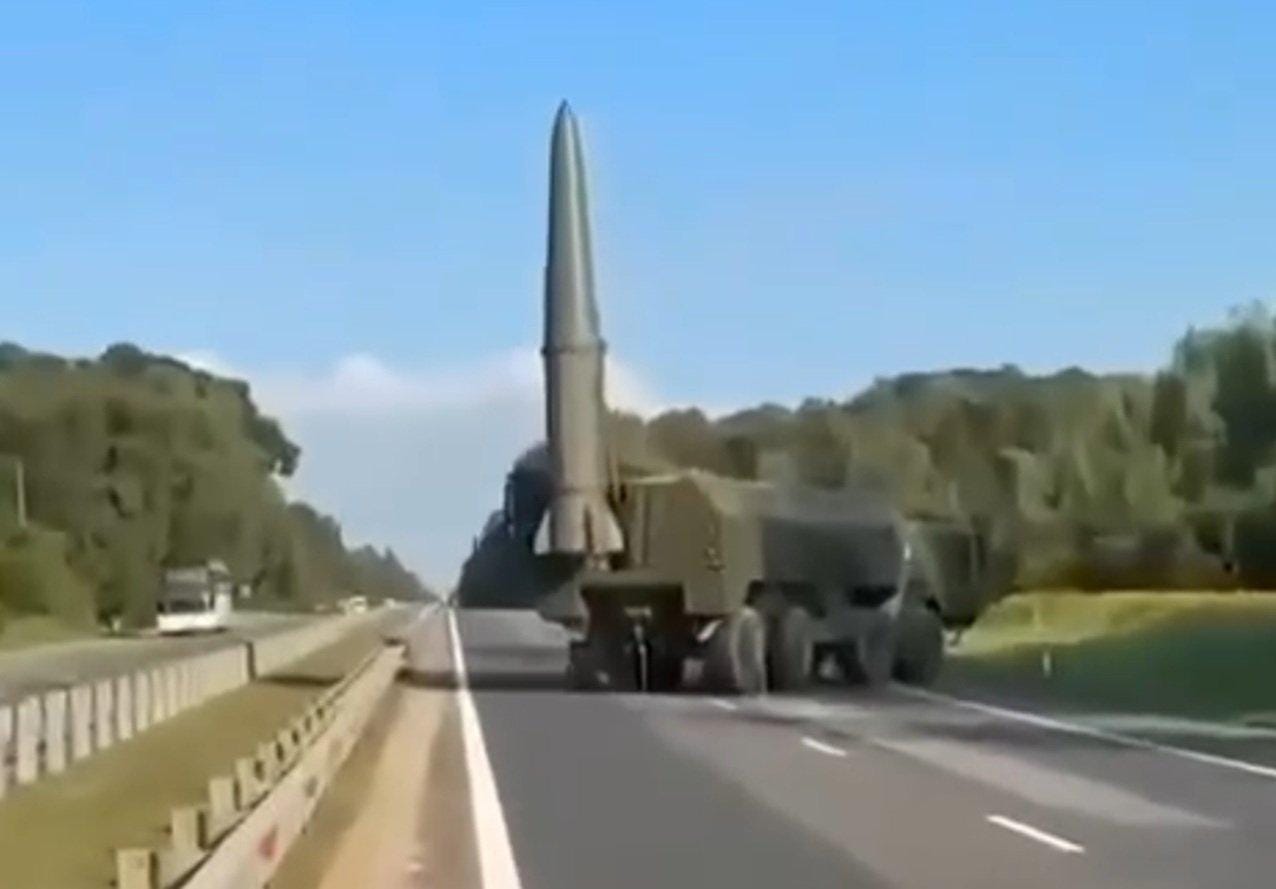
Russia openly flaunts a simulated missile strike on Polish territory as part of its large-scale joint military exercise with Belarus, known as Zapad 2025.
When I served in the Army Reserves, we would line up at the shooting range under the watchful eye of the Range Control Officer. His commands were precise and steady: “Ready on the right. Ready on the left. All clear? Commence fire.” It was an orderly process—even when handling weapons—because discipline and structure gave us the space to focus. Everyone knew their role. Everyone respected the line.
Today, in American politics, we hear echoes of that call—but without the discipline, without the respect, and without the safety of a controlled range. Instead, our “ready right” and “ready left” are aimed at one another. Each side chambers outrage, waiting for the signal—not to engage in dialogue, but to unleash rhetorical fire.
This is not just a matter of sharp rhetoric or political theater. How we manage our differences has become a threat. Differences are natural in any democracy; they are, in fact, its lifeblood. But when democratic norms—respect for process, for truth, for institutions—are abandoned, those differences no longer strengthen us. They become vulnerabilities.
And vulnerabilities have consequences beyond partisan politics. They erode our ability to govern ourselves effectively, and they weaken us in the eyes of adversaries abroad. Our domestic strife can only be providing more latitude for Russia’s aggression. Disinformation campaigns thrive in a divided America. Polarization makes it harder to respond to crises with unity and speed. When we show that we cannot manage our disagreements within democratic boundaries, we are signaling to the world that our democracy—and by extension, our security—is unstable.
We used to know how to disagree and still stand shoulder to shoulder when it mattered most. That didn’t mean abandoning convictions, but it did mean respecting the rules of engagement: truth, civility, peaceful transfers of power, and trust in institutions. Today, those norms are under fire. And without them, our democracy is not stronger than our differences—it is weakened by the very way we conduct them.
The lesson from the range stays with me: respect the process, respect each other, and above all, don’t fire without being sure of your target. In politics, that means resisting the impulse to aim at one another, and recommitting to the norms that keep democracy safe.
Because in the end, our democracy—and our national security—depend not on whether we have differences, but on whether we choose to handle them with discipline, respect, and restraint.
Martha Duncan is a retired DOD senior executive, with 36 years serving including 23 in the U.S. Army Reserves, as Reserve attaché, analyst, operations officer, and 3 deployments to areas of conflict. She is a member of The Steady State.
Founded in 2016, The Steady State is a nonpartisan, nonprofit 501(c)(4) organization of more than 300 former senior national security professionals. Our membership includes former officials from the CIA, FBI, Department of State, Department of Defense, and Department of Homeland Security. Drawing on deep expertise across national security disciplines, including intelligence, diplomacy, military affairs, and law, we advocate for constitutional democracy, the rule of law, and the preservation of America’s national security institutions.