
The Call Is Coming From Inside The
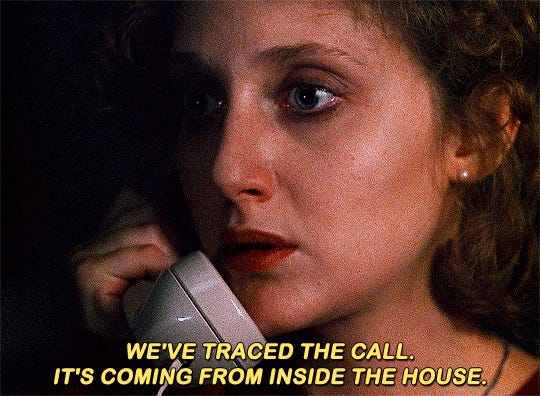
“The US Intelligence Community is under attack,” warns a well-documented, sobering recent analysis from a respected intelligence authority at the London-based Royal United Services Institute (known by its acronym, RUSI) that hasn’t received the attention it deserves. “What is new is that this adversary now sits in Washington, D.C: the current administration,” the RUSI analyst’s warning continues. “It knows precisely where US intelligence is vulnerable and how to wound it.”
Very strong words, especially considering the source. RUSI, headquartered at 61 Whitehall, is as well-connected to the British security establishment as it gets. Author Matthew Savill is a former senior intelligence official with Britain’s Ministry of Defence. Savill’s extensive experience in special operations includes service in hot spots across the Middle East. And when an authoritative RUSI official warns that “the call is coming from inside the house,” official Washington — especially the congressional committees with oversight responsibilities on defense and intelligence, for which I ran investigations in the mid-1970s — should be paying attention.
That’s especially true, considering that Savill’s principal sourcing for his September 9 analysis https://www.rusi.org/explore-our-research/publications/commentary/war-american-intelligence is derived from official announcements from the White House, the Office of the Director for National Intelligence, the director of the Central Intelligence Agency and the leaders of the FBI and Department of Justice.
As the RUSI author notes, the heads of the Defense Intelligence Agency and the National Security Agency “have been forced out,” along with the acting chair of the National Intelligence Council and other intelligence officials who dared speak truth to power. Moreover, he (painfully) points out, newly declassified US documents have “not disproved the 2016 Intelligence Community Assessment” concerning the Russian intelligence operations aimed at supporting then-presidential candidate Donald Trump, over Hillary Clinton. Yet the White House-directed criminal investigations and prosecutions of dedicated civil servants who served their country so well have begun.
Readers of these pages would already be aware of such worrisome facts — from my experience, they cry out for congressional investigations. It’s (alas) hardly news that the Republicans who chair the congressional oversight committees with foreign affairs and intelligence responsibilities have, to date, averted their eyes. (I worked for both Republicans and Democrats, who did not.)
Meanwhile, as the RUSI report warns with classic British understatement, the United Kingdom and other key American allies “will have to consider the US a less reliable intelligence partner.” Translation: America’s current leaders cannot be trusted.
So what exactly could congressional hearings do? That’s clear, from personal experience. The best way to start exposing today’s abuses is for Congress to do what both Republican and Democratic leaders did in the 1960s and 1970s, reacting to the lies and illegalities during the Vietnam War and the Watergate scandals: investigate. Just start holding public hearings, and writing reports, aimed at educating the American public.
It’s easy to chart that path:
For openers, the Senate and House intelligence committees could hold public hearings to explain why the US-UK Special Relationship that began with codebreaking and daring covert operations during World War II remains at the core of today’s US intelligence. And why today’s publicly expressed concerns from London are to be taken seriously.
Scholars who have helped fill libraries on the British-American intelligence relationship that evolved during World War II would make excellent opening witnesses. Historian Nicholas Reynolds, a former CIA officer, could tell inspiring tales of how the Brits taught us “how to turn information into intelligence and use it to kill U-boats.” https://www.amazon.com/Need-Know-World-American-Intelligence/dp/0062967479. Harvard’s Calder Walton could talk about the UK’s Special Operations Executive, one of the fathers of today’s CIA, which taught American operatives how to run covert operations. https://www.amazon.com/Need-Know-World-American-Intelligence/dp/0062967479. Renowned Cambridge intelligence historian Christopher Andrew, author of The Secret World, could relate how, since the war, American and Great Britain “have shared more secrets than any two independent powers have ever shared before.”
Further congressional testimony could hear testimony from current authorities, including RUSI’s Matthew Savill. Thanks to the current Washington misconduct, Savill has written, “the UK should probably reconsider intelligence sharing arrangements on some sensitive issues, where there is little chance of influencing the US position, but considerable risks of exposure of sourcing.
Such concerns are even broader, extending to the so-called Five Eyes intelligence-sharing arrangement. An agreement that originated between only the US and the UK and now includes Canada, Australia, and New Zealand — where officials have (alas) reason to share the concerns being voiced openly in London.
There’s a lot more: the Trump administration’s firings of Russia specialists. The firing of a highly valued scientist at the National Security Agency who has insights into artificial intelligence. The shameful public disclosure of the name of a dedicated CIA undercover operative, the handiwork of an unapologetic Director of Intelligence Tulsi Gabbard.
In my day, congressional investigations would already be undergoing.
Greg Rushford is a former congressional aide who conducted intelligence oversight, and a former Washington journalist. He is a member of The Steady State.
Founded in 2016, The Steady State is a nonprofit 501(c)(4) organization of more than 330 former senior national security professionals. Our membership includes former officials from the CIA, FBI, Department of State, Department of Defense and Department of Homeland Security. Drawing on deep expertise across national security disciplines including intelligence, diplomacy, military affairs and law, we advocate for constitutional democracy, the rule of law and the preservation of America’s national security institutions.