
The Theater Of Power Trump And The
There’s a temptation to dismiss Donald Trump’s excesses—the gilded ballrooms, the golden toilets, the absurd social-media feasts of self-adulation—as simply bad taste on a spectacular scale. Or as the pure narcissism of a man who never tires of seeing himself reflected back in every mirror and camera lens.
But that’s only the surface. What we are witnessing is something older, darker, and far more deliberate: the politics of decadence as domination. And it matters, because these examples of “Deliberate Decadence” are “indicators” of growing authoritarianism – warnings, not jokes.
Authoritarians have always understood that spectacle is power. To overwhelm the senses is to project control. To indulge without shame is to show immunity from consequence. To flaunt what others cannot have—or should not approve—is to remind them who rules and who obeys.
It’s why Louis XIV built Versailles, not just as a palace but as a stage where the Sun King’s light could blind his courtiers. It’s why Nero staged banquets in which guests dined on wildly extravagant foods (hummingbird tongues!). It’s why Caligula made his horse a senator and paraded through Rome in robes sewn with pearls. These weren’t acts of madness so much as demonstrations: I can do this, and you can’t stop me.
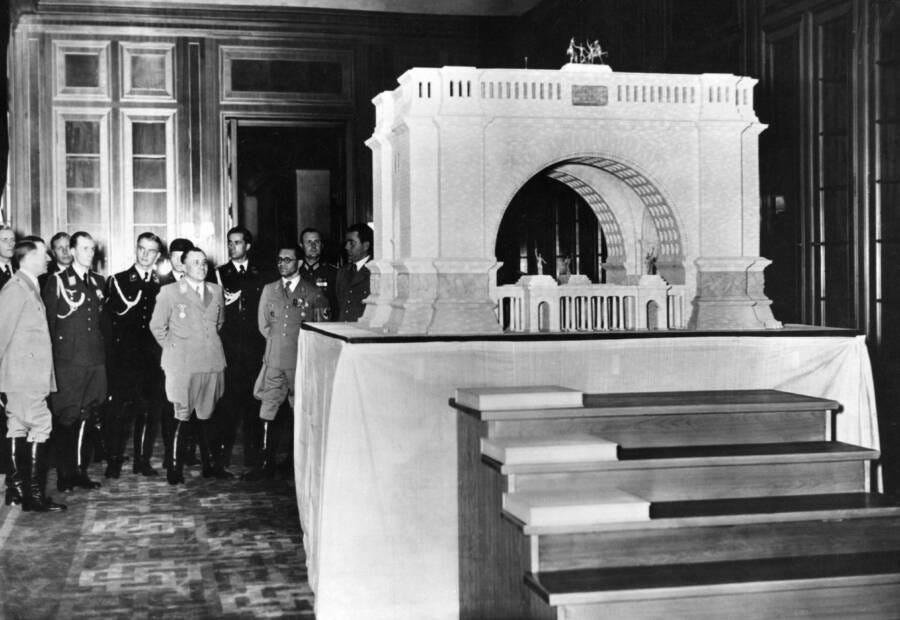
Stalin understood it too. His parades in Red Square were choreographed declarations of omnipotence—the synchronized goose-stepping of men who no longer owned their own motion. Hitler’s Nuremberg rallies, filmed by Leni Riefenstahl filmed in Triumph of the Will — pure propaganda-as-art, making Hitler appear as a messianic figure descending from the clouds. Like Trump planned a huge meeting space and triumphal arch. Saddam Hussein built palaces of marble and gold while Iraqis queued for bread. Gaddafi’s “tent diplomacy” and Putin’s shirtless photo shoots are variations on the same theme. Each an assertion that the leader is beyond normal rules, beyond ridicule, beyond restraint.
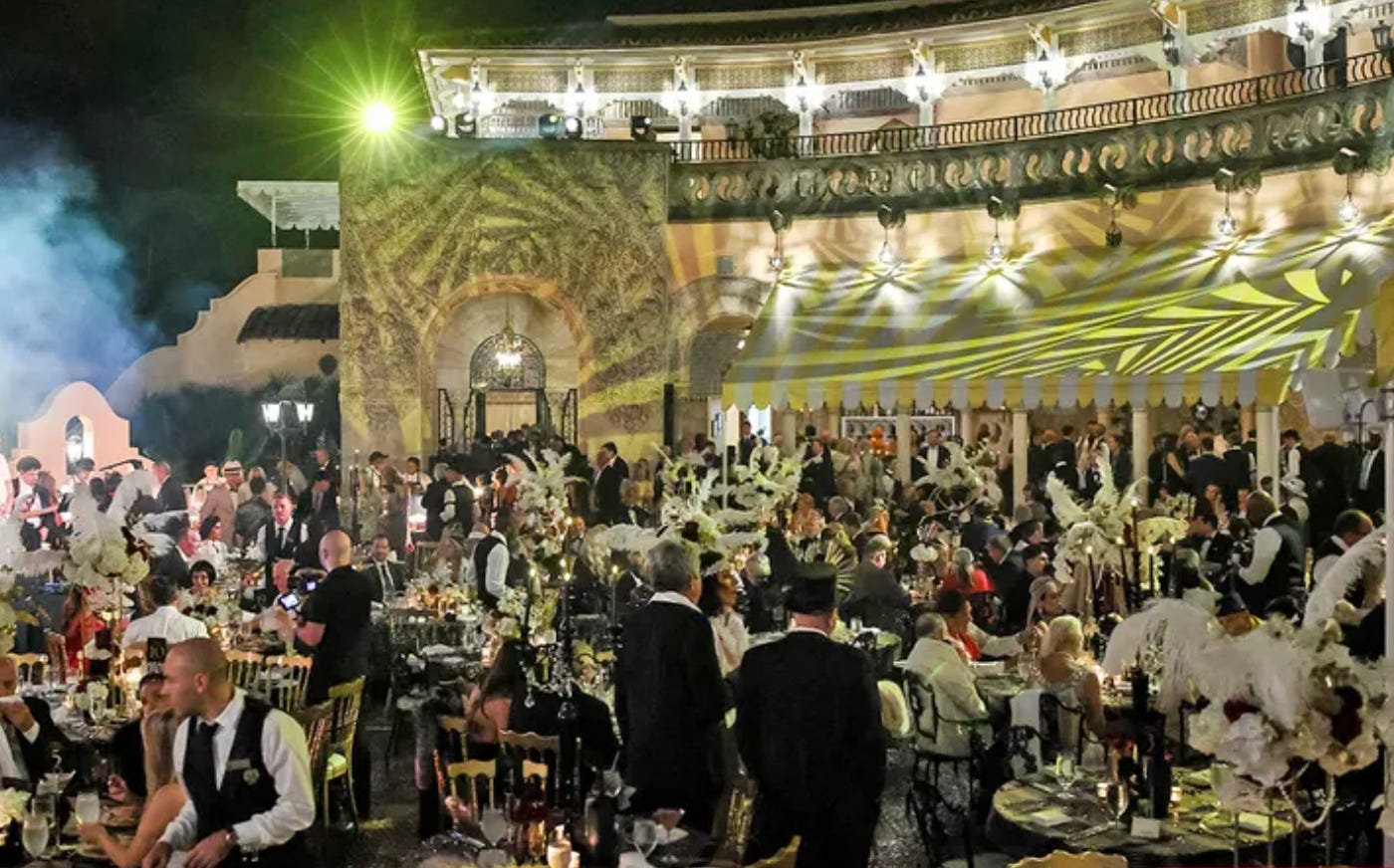
Trump has updated that playbook for the age of reality television. His is the aesthetic of the strongman reimagined as influencer—every chandelier, every ball gown, every Trump-branded plane another prop in a continuous performance of dominance. The self-portraits, the marble bathrooms, the ballroom rallies, even the fake “military-style” staging of campaign events: all are signals, not to good taste, but to power. When he holds court at Mar-a-Lago among courtiers in sequins and sycophants in tuxedos, he is doing what autocrats have always done—inviting the nation to watch the coronation of his own myth.
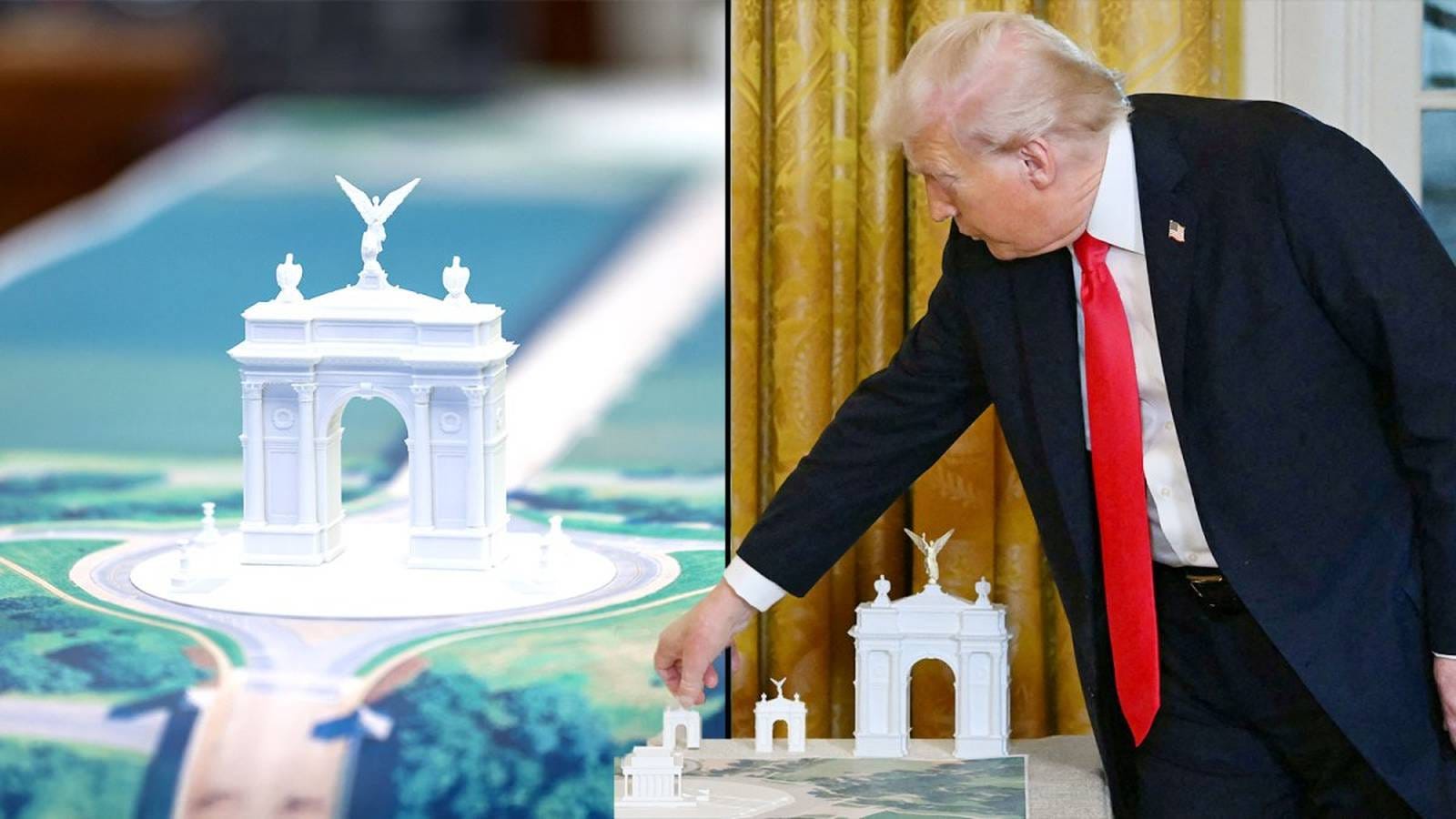
And now, as his circle of followers grows ever more radical, we are seeing literal echoes of imperial theater. The plans for a “triumphal arch”—a permanent monument to himself. The video spectacles of boat “attacks” filmed as patriotic pageantry, the 21st-century equivalent of Roman mock naval battles staged in flooded forums. Every performance is a reminder: this, too, is about who commands, who kneels, and who dies.
Marie Antoinette is remembered for saying “Let them eat cake.” Historians doubt she actually did, but the phrase endures because it captures the logic of ruling decadence. Her luxury wasn’t just obliviousness; it was an assertion: “I live above your suffering.” The robes, the jewels, the banquets—all were declarations of divine right. Until the day they weren’t. Until the theater of power collapsed under its own weight.
The Wizard of Oz was terrifying only until the curtain drew back and revealed the man with the microphone—small, ordinary, and afraid. Every autocrat is the same. The show of grandeur is a projection of fear: the fear of being seen as he is, of being small, of losing the stage.
We should recognize Trump’s excesses for what they are: the language of authoritarian display, not the quirks of an eccentric celebrity. His taste for gold leaf and pageantry is not accidental—it is strategic. A ritual of dominance meant to humiliate restraint, reason, and law.
And yet, as history shows—from Antoinette to Nero to the Soviet parade ground—the audience can change. Sometimes, slowly, people stop clapping. Sometimes they see through the spectacle to the fragility beneath. This week’s elections may offer the first hint that Americans, too, are beginning to look past the marble and mirrors to the man behind them.
Pay attention. The theater of power always ends the same way—when the people stop believing the show.
Steven A. Cash served as a prosecutor in the Manhattan District Attorney’s office before joining the CIA in 1994 as Assistant General counsel and subsequently serving as an intelligence officer in the Directorate of Operations. In 2001 he joined the Senate Select committee on Intelligence as Counsel and designee-staffer to Senator Diane Feinstein. He later served as a senior staffer in the House Select Committee on Homeland Security, the Department of Energy, the Senate Judiciary Subcommittee on Terrorism, Technology and Homeland Security and the Department of Energy. In the private sector he has advised on national security, counterintelligence, and technology policy and served on the Biological Sciences Experts Group under the Director of National Intelligence. Mr. Cash is the Executive Director of The Steady State.
Founded in 2016, The Steady State is a nonprofit 501(c)(4) organization of more than 350 former senior national security professionals. Our membership includes former officials from the CIA, FBI, Department of State, Department of Defense and Department of Homeland Security. Drawing on deep expertise across national security disciplines including intelligence, diplomacy, military affairs and law, we advocate for constitutional democracy, the rule of law and the preservation of America’s national security institutions.