
The Wars That Donald Trump Didnt
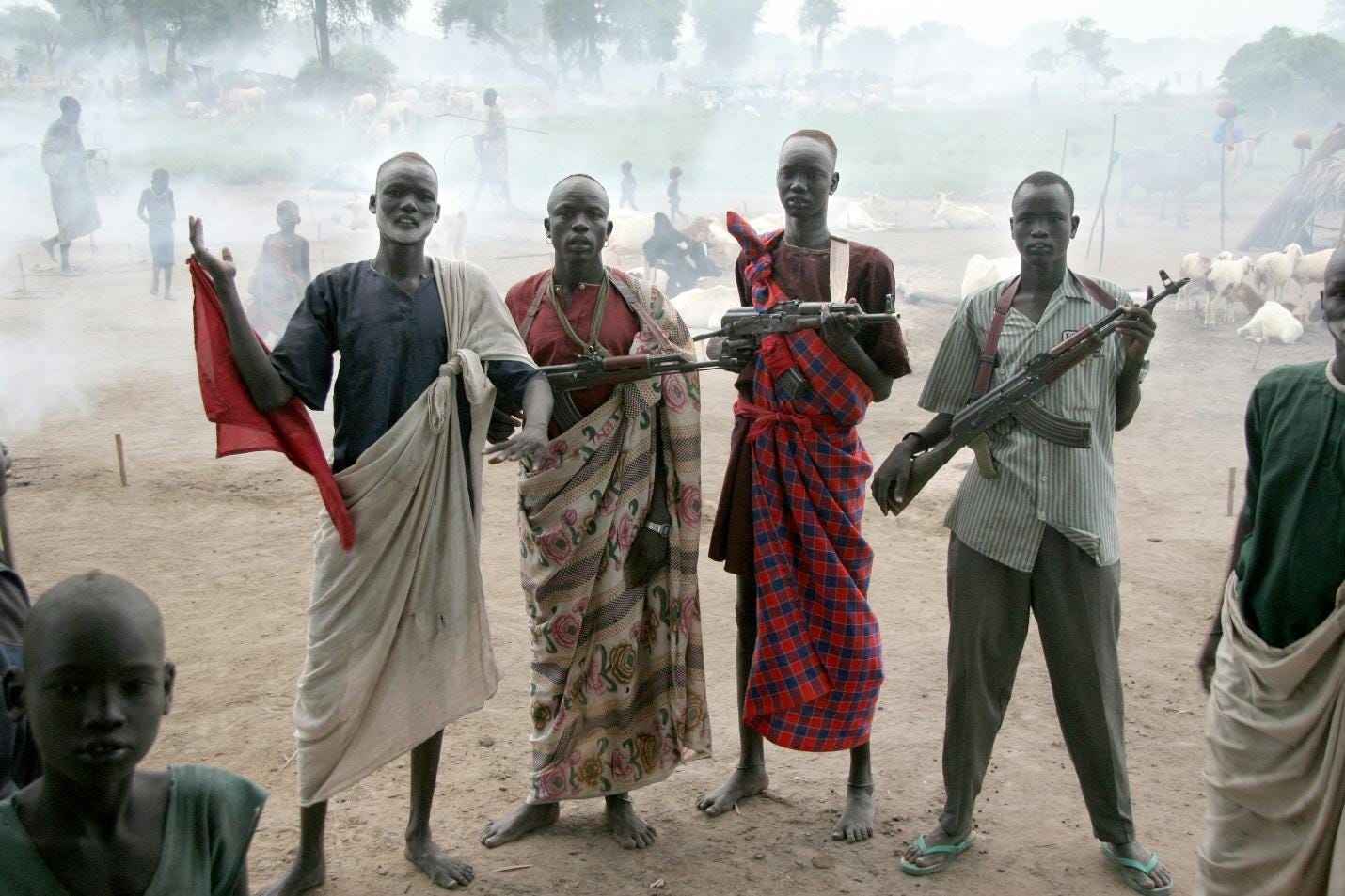
The Sudan civil war has raged for almost three years, and Trump is just now noticing. (Photo by Randy Fath on Unsplash)
During the 2024 presidential campaign, and frequently since his inauguration, Donald Trump has endeavored to portray himself as the ‘Peace President’, whose masterful skills as a dealmaker will end some of the world’s most intractable conflicts. Some of his wilder claims, such as ‘If I’m elected, I’ll end the war in Ukraine before inauguration,’ haven’t stood the test of time. His unseemly and ultimately unsuccessful campaign to be awarded the Nobel Peace Prize was akin to an embarrassing reality TV show; you cringed every time it came on. Still, you found yourself watching like rubberneckers at the scene of a highway mishap.
Let’s take a look at some of the conflicts currently raging around the globe, and some that are brewing, and assess Trump’s contribution to them—whether it’s ending, starting, or just participating.
The Russian invasion of Ukraine
Before Russia invaded Ukraine on February 24, 2022, there had been eight years of conflict in eastern Ukraine between Ukraine’s military and Russian-backed separatists, including Russia’s annexation of the autonomous peninsula of Crimea in 2014. The Russian buildup to the 2022 invasion began in early 2021 with the movement of Russian forces to Belarus, a Russian ally. In 2019, during the first Trump administration, he withheld aid that Ukraine needed for its fight against Russian-supported separatists in the east, in exchange for Ukraine providing him with negative information on Joe Biden, his political opponent.
During the 2024 presidential campaign, Trump said that, if elected, he would end the war in Ukraine before his inauguration because he is ‘respected by Ukraine and Russia’s leaders. It goes without saying that this didn’t happen, and despite a recently-proposed Trump plan that calls for Ukraine to cede land that it controls and give up plans to become a member of NATO (Ukraine’s president has indicated a willingness to do the latter, but given a flat ‘no’ to the proposal to give up territory), Russia continues its deadly assaults.
Thailand and Cambodia
In the summer of 2025, fighting erupted between Thailand and Cambodia over a disputed border area established by French colonial officials more than a century ago. Trump assisted Malaysia in obtaining a ceasefire in July by threatening to withhold trade agreements, but in early December, the 150-day ceasefire collapsed when the two countries resumed fighting. Trump’s response to the peace deal tanking was to say to reporters on December 10, “I think I can get them to stop fighting. Who else can do that?” So far, though, the fighting continues. At the same time, he repeated his claim that he has ended eight wars—a claim that he has never been able to substantiate.
Rwanda and the Democratic Republic of Congo (DRC)
In June, Trump announced a peace treaty he’d brokered between Rwanda and the DRC, which also involved the Rwanda-backed M23 rebel group, which has taken control over a significant part of eastern DRC. Decades of fighting has displaced more than seven million people. Despite much-touted claims and extensive PR surrounding this ‘Great Day for Africa and, quite frankly, a Great Day for the World!’ as Trump wrote on his Truth Social account, fighting continues, with the M23 rebels seizing the town of Luvungi and other violence that continues to kill, injure, and displace civilians in eastern DRC. It was clear even at the December meeting in Washington, where the presidents of the two countries met to ratify the June agreement, that all was not well. The two men were cold toward each other, avoiding eye contact or shaking hands; this behavior is not what one would expect from two leaders making peace with each other.
Israel and Hamas, et al
After two years of fighting, since Hamas launched the October 7, 2023, attacks on Israel that have killed over 70,000, on October 8, 2025, Trump announced a ceasefire, and a 20-point peace framework that would include the release of Israeli captives and Palestinian prisoners. There were hiccups from the outset, and both sides have continued to attack each other.
On June 13, 2025, Israel launched a twelve-day offensive against Iran, targeting nuclear facilities, military sites, and government infrastructure. The United States participated, with air strikes against the most critical sites in Iran’s nuclear program. A ceasefire was announced on June 24, with Trump claiming ‘total obliteration’ of the nuclear sites—a claim that many international experts have questioned. The UN’s International Atomic Energy Agency (IAEA) said that Iran is still capable of building nuclear weapons. Israel has also launched attacks against Hezbollah in Lebanon. There have also been rocket launches by the Houthis in Yemen against Israel.
India and Pakistan
In his campaign for the Nobel Peace Prize, Trump has repeatedly claimed credit for brokering a ceasefire between India and Pakistan on May 10, 2025, ending a conflict that started when India accused Pakistan of being behind an April terror attack in India-administered Kashmir. While Pakistan hailed Trump’s effort and nominated him for the prize, India refuted his claim of mediation, saying that the four-day conflict was ended after talks between the two countries’ militaries. A spokesperson for the Indian foreign minister said that Indian PM Modi emphasized that “India has not accepted mediation in the past and will never do.”
Armenia and Azerbaijan
Four decades of fighting between Azerbaijan and Armenia over Nagorno-Karabakh ended (supposedly) on August 8, when the Armenian PM and the Azerbaijani president signed a comprehensive peace agreement in the presence of Trump and US officials. The deal grants the US exclusive rights to develop a transit route through a stretch of Armenian territory near its border with Azerbaijan, known as the Zangezur corridor, which will be renamed the Trump Route for International Peace and Prosperity. There are, however, a few snags in this so-called peace deal. The two countries have yet to agree on the location of their border. Some observers have likened this and other Trump declarations of peace to ‘holding a grand opening ribbon-cutting for a building whose foundation is not even completely dug.’ They say, for instance, that Ilham Aliyev, Azerbaijan’s pro-Turkey dictator, uses Trump’s empty ceremonies to cloak himself in a mantle of peace to launder his image while he prepares for war.
Civil War in Sudan
After ignoring the ongoing civil war in Sudan, which is approaching its third year, in November, Trump announced that he would work to end the war upon a request from Saudi Crown Prince Mohammed bin Salman. Trump’s secretary of state, Marco Rubio, called him ‘the only leader in the world capable of resolving Sudan’s crisis.’ Any such effort, however, faces significant obstacles before it even begins. First, Sudan’s army has refused to engage in any negotiations that include the United Arab Emirates (UAE). This Washington ally is accused of supporting the Rapid Support Forces (RSF). Trump’s dilemma, then, is how to structure a deal that will satisfy the Sudanese government without alienating the UAE. There is also the report of Sudan’s offer to allow Russia to build a naval base in Port Sudan, as well as rumors of the Sudanese army’s ties with the Muslim Brotherhood, just when Washington is looking to designate it as a terrorist organization. The only action that Washington has taken so far is the imposition of sanctions on several Colombian nationals and companies, accusing them of fueling the war through the recruitment of former Colombian military personnel to fight for the RSF.
War in the Western Hemisphere
While styling himself as the ‘Peace President,’ who boasts that he has ended eight wars that no one else could have ended (based solely on his pronouncements, by the way), Donald Trump has ordered the staging of a large military task force in the Caribbean, where it has attacked small boats, alleged to be transporting drugs to the U.S., and killing over seventy people, while, at the same time, threatening possible land action in Venezuela. He has already ramped up actions by seizing an oil tanker departing a Venezuelan port.
If all of the foregoing has you scratching your head in confusion, welcome to the club. Trying to make sense of this brings to mind the conversation between Alice and Humpty Dumpty in Lewis Carroll’s Through the Looking-Glass, when he says, “When I use a word, it means just what I choose it to mean – neither more nor less.”
Charles A. Ray spent 20 years in the U.S. Army with two tours in Vietnam. He retired as a senior US diplomat, serving 30 years in the U.S. Foreign Service, with assignments as ambassador to the Kingdom of Cambodia and the Republic of Zimbabwe, and was the first American consul general in Ho Chi Minh City, Vietnam. He also served in senior positions with the Department of Defense and is a member of The Steady State.
Founded in 2016, The Steady State is a nonprofit 501(c)(4) organization of more than 360 former senior national security professionals. Our membership includes former officials from the CIA, FBI, Department of State, Department of Defense, and Department of Homeland Security. Drawing on deep expertise across national security disciplines, including intelligence, diplomacy, military affairs, and law, we advocate for constitutional democracy, the rule of law, and the preservation of America’s national security institutions.