
Trumps Un American National Security
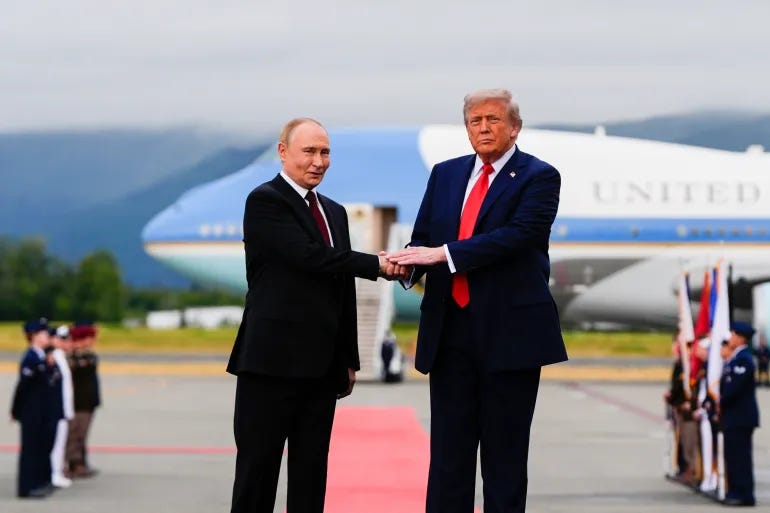
“The [NSS] unexpectedly echoes what we have been saying for over a year: security must be shared and sovereignty respected.” Russian Security Council Deputy Chairman Dmitry Medvedev
The Trump administration’s National Security Strategy (NSS) dropped on December 4, 2025. The NSS is mandated by the Goldwater-Nichols Act (1986) that requires each administration to produce a public statement of its goals and strategies.
A criticism of these efforts is that they end up being watered-down consensus documents that say little and try to cover every foreign policy base. However, they can also reveal key assumptions and changes in strategic direction. They are authoritative expressions of the President and his senior staff that are taken seriously abroad, and can be cited to justify decisions and win interagency debates.
A lead author of this NSS was Michael Anton. Anton was head of the State Department’s Policy Planning Staff until September, when he resigned (apparently because he was upset that he was denied a senior position at the NSC). While there are many fingerprints on this kind of document, Anton’s are the most visible.
Anton is an intellectual who embodies the nationalist and nativist side of the MAGA movement, along with Stephen Miller, Steve Bannon, Russell Vought and JD Vance. He became famous in 2016 for his (initially anonymous) essay in which he argued that electing Donald Trump was an existential necessity comparable to the decision by airline passengers on 9/11 to storm the cockpit of the hijacked jet over Pennsylvania. After Trump was defeated in 2020, he was notorious for entertaining the idea of a ‘red Caesar’, a dictator who would do the necessary work of restoring order to a corrupt society. His home port is the Claremont Institute, a right-wing thinktank that also harbors John Eastman, the recently pardoned legal architect of Trump’s attempt to overthrow the 2000 election.
The 2025 NSS reflects many of the positions held by Anton and his wing of the MAGA movement. For them the central goal of all policy, including foreign policy, is to fight what they see as the “real enemy:” an insidious leftism that seeks to weaken our traditions and values through immigration, DEI, globalization, free trade, environmentalism and the like. The section of the NSS titled ‘What We Want Overall’ climaxes with a call for “the restoration and reinvigoration of American spiritual and cultural health, without which long-term security is impossible. We want an America that cherishes its past glories and its heroes, and that looks forward to a new golden age.” They believe that our culture and heritage are under attack from within, and our foreign policy must be structured accordingly.
To win this fight, Anton and other ‘neo-nationalists’ argue it is appropriate for nations to nakedly pursue their own interests with little regard for any broader global order or the type of regime in other nations—‘America First.’ Supporting democracy abroad is a mistake—in fact, the word ‘democracy’ hardly appears in the entire NSS.
It astonishingly argues that our founding document, the Declaration of Independence, teaches that every nation’s distinct way of life should be respected; a sharp break with traditional American interpretations that say the rights to ‘life, liberty, and the pursuit of happiness’ are universal and always worthy of support.
The NSS criticizes American interventionism, but with telling exceptions. One is Europe. Europe is described as declining and in danger of ‘civilizational erasure’, due largely to immigration. Here the NSS echoes the criticism of Europe made by Vice-President Vance at the Munich Security Conference in February, as he chastised European leaders for supposedly suppressing populism. The NSS calls for the US to help Europe ‘correct its current trajectory’ by supporting ‘patriotic European parties’ and movements.
Behind this approach we can detect the ‘civilizationalist’ view, highly influential in Moscow and Beijing, that the best of all possible worlds is one where distinct nations with different cultures and values protect and enhance these differences. Powerful civilizations have a right to their own sphere of influence. Diversity is a weakness. It is dangerous to mix peoples via immigration, or weaken sovereignty via multinational institutions, or meddle abroad by trying to turn authoritarian regimes into democracies. Europeans are exhorted to fight the ‘loss of national identities and self-confidence’.
This view of Europe translates into US policy on Ukraine, which centers on a peace settlement and restoring ‘strategic stability’ with Russia. The NSS claims the European people “want peace without further assistance to Ukraine, but are being blocked by European elites who continue to support that assistance.” The US must defend genuine democracy in Europe by pushing for a peace settlement over the head of Ukraine and against the wishes of Europe’s elected leaders.
While there is little discussion of Russia, it is easy to draw conclusions. Russia is a model for the West in this administration’s view. Russia is an example of a nation that, unlike Europe—and the US—is unabashedly nationalistic and proud of its history. It apologizes for nothing in its pursuit of security and territory. It spurns immigrants and asks its people to bear more children for the motherland. (The NSS calls for Americans to have “growing numbers of strong traditional families that raise healthy children.”)
While past administrations have put forward win-win strategies that aim for an interdependent global system, the world of the NSS is decidedly zero-sum. There is no discussion of transnational issues—terrorism, non-proliferation, global warming, pandemics—that might require global cooperation, even with adversaries. The portrayal of China is entirely as a threat and a competitor.
In contrast to longstanding US policy that has brought relative peace and prosperity to the US for the last 80 years, the NSS sees the world as divided into spheres of influence dominated by major powers: “The outsized influence of larger, richer, and stronger nations is a timeless truth of international relations.” It calls for a balance of power, with the US making sure no other nation encroaches on our domain. The NSS makes this domain clear: “The United States must be preeminent in the Western hemisphere.” It describes in detail a ‘Trump corollary’ to the Monroe Doctrine: the US must dominate militarily and economically, and prevent any other power from making inroads in the region.
While not explicitly granting China and Russia their own similar spheres, this is the conclusion America’s allies can appropriately draw. You are on your own.
The Trump NSS attempts to draw a close to an era of American multilateralism and openness to the world that made the United States the strongest, wealthiest, and most respected nation on earth. It makes selfishness a virtue and willfully ignores the long-term consequences for global stability, the American economy, and the well-being of the planet. It withdraws support from liberal democracies, which it explicitly rejects, and advocates helping anti-liberal, populist forces. For Trump, the United States is not conceived as a country founded on universal principles, on natural rights to ‘life liberty, and the pursuit of happiness’. We are just a country like any other with our own culture, interests and norms that aren’t relevant to anyone else. .
It is, simply, un-American.
Adam Wasserman is a retired CIA analyst with experience on failing democracies in the former Soviet Union, the Middle East, and Southeast Asia. He served on the State Department Policy Planning Staff, the CIA Red Cell, and the National Security Council staff. He is a member of The Steady State. All statements of fact, opinion, or analysis expressed are those of the author and do not reflect the official positions or views of the US Government. Nothing in the contents should be construed as asserting or implying US Government authentication of information or endorsement of the author’s views.
Founded in 2016, The Steady State is a nonprofit 501(c)(4) organization of more than 360 former senior national security professionals. Our membership includes former officials from the CIA, FBI, Department of State, Department of Defense and Department of Homeland Security. Drawing on deep expertise across national security disciplines including intelligence, diplomacy, military affairs and law, we advocate for constitutional democracy, the rule of law and the preservation of America’s national security institutions.