What Happened To Marco Rubio
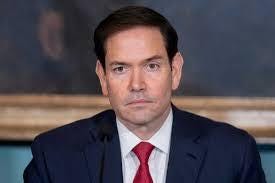
There was a time when Marco Rubio stood for a very different vision of American leadership. The son of Cuban immigrants, he rose quickly as a senator with eloquence and energy—a Republican who championed democracy promotion, strong alliances, and the moral imperative of U.S. global engagement. Today, as Donald Trump’s Secretary of State, Rubio is not just complicit in the erosion of American credibility—he’s helping to dismantle the very institutions he once defended.
The transformation is staggering.
Rubio built his political brand on support for soft power and principled diplomacy. He spoke often about USAID as a force multiplier for American values. He praised career diplomats, warned against politicizing the State Department, and made a moral case for foreign assistance. Now, under his leadership, USAID has been effectively gutted. In just weeks, more than 80% of its programming (over 5,000 contracts) was terminated. Lifesaving food aid expired in warehouses. Global health initiatives collapsed midstream. Partners in fragile states were abandoned with no notice.
This isn’t recalibration. It’s retreat.
Rubio insists the shift is a matter of “realigning aid to our strategic interests,” but there’s no mistaking the deeper agenda: withdrawing from the global commons, replacing development with leverage, and purging institutional memory. That agenda has extended deep into the State Department itself. Using sweeping Reductions in Force (RIFs), Rubio’s team has eliminated hundreds of experienced career officials. Offices that once led on trafficking, human rights, and migration are now hollowed out or shuttered. Many of those who remain are operating in fear.
This is not the foreign policy of a confident superpower. It’s the bureaucracy of a government at war with itself, and it makes us all less safe.
But the most painful rupture may be on immigration; the issue that once brought out Rubio’s most personal, idealistic side. In 2013, he helped lead the bipartisan “Gang of Eight” reform effort, crafting a pathway to citizenship and preserving asylum. He warned then that “we cannot be a nation that rounds up innocent families.” Yet as Secretary of State, Rubio now actively facilitates and defends exactly that.
Under policies he supports, mass deportations are well underway. Military and law enforcement units conduct wide sweeps in major U.S. cities. Green cards are being revoked from permanent residents based on vague associations with foreign groups. Hundreds of Venezuelan migrants were deported earlier this year under the Alien Enemies Act—many sent to a high-risk facility in El Salvador. In April, the U.S. government traded a new round of deportees for American prisoners held by Nicolás Maduro’s regime.
The man who once teared up talking about immigrant dreams is now the face of their nightmares.
Rubio defends it all in technocratic terms—legality, sovereignty, restoring order. But it’s not just enforcement; it’s ideological cleansing. And it marks a full-circle break with everything he once stood for. His defenders argue that he’s moderating Trumpism from within. But moderation requires limits—and Rubio has crossed every line. He has endorsed the politicization of the State Department, the dismantling of U.S. development programs, the erosion of asylum protections, and the instrumentalization of immigration policy for political ends. If he’s drawing boundaries, they are invisible to the rest of us.
This isn’t just about one man’s evolution. It’s about the collapse of a broader guardrail. The institutions that once anchored U.S. foreign policy—USAID, the State Department, the immigration system—are under coordinated attack. Not because they’ve failed, but because they represent a vision of America that Trump and his allies reject: open, globally engaged, and anchored in democratic norms. Rubio once gave voice to that vision. Now, he’s helping to extinguish it.
He hasn’t changed because the world changed. His political calculus did.
Rubio made his choice. He could have stood up for the institutions he once praised. Instead, he chose power—and in doing so, helped normalize policies that a decade ago would have been unthinkable. Sadly, this is not just his moral reckoning. It’s ours.
A member of the Steady State, Bruce Berton served as a U.S. diplomat for over three decades, ultimately rising to the senior ranks of the Foreign Service, including two years as Ambassador and Head of Mission at the Organization for Security and Cooperation in Europe’s (OSCE) Mission to Bosnia and Herzegovina. He is a native of the Pacific Northwest and a graduate of Pacific Lutheran University. He is a member of The Steady State.
Founded in 2016, The Steady State is a nonpartisan, nonprofit 501(c)(4) organization of more than 300 former senior national security professionals. Our membership includes former officials from the CIA, FBI, Department of State, Department of Defense and Department of Homeland Security. Drawing on deep expertise across national security disciplines including intelligence, diplomacy, military affairs and law, we advocate for constitutional democracy, the rule of law and the preservation of America’s national security institutions.