
Where Is Trump Leading America
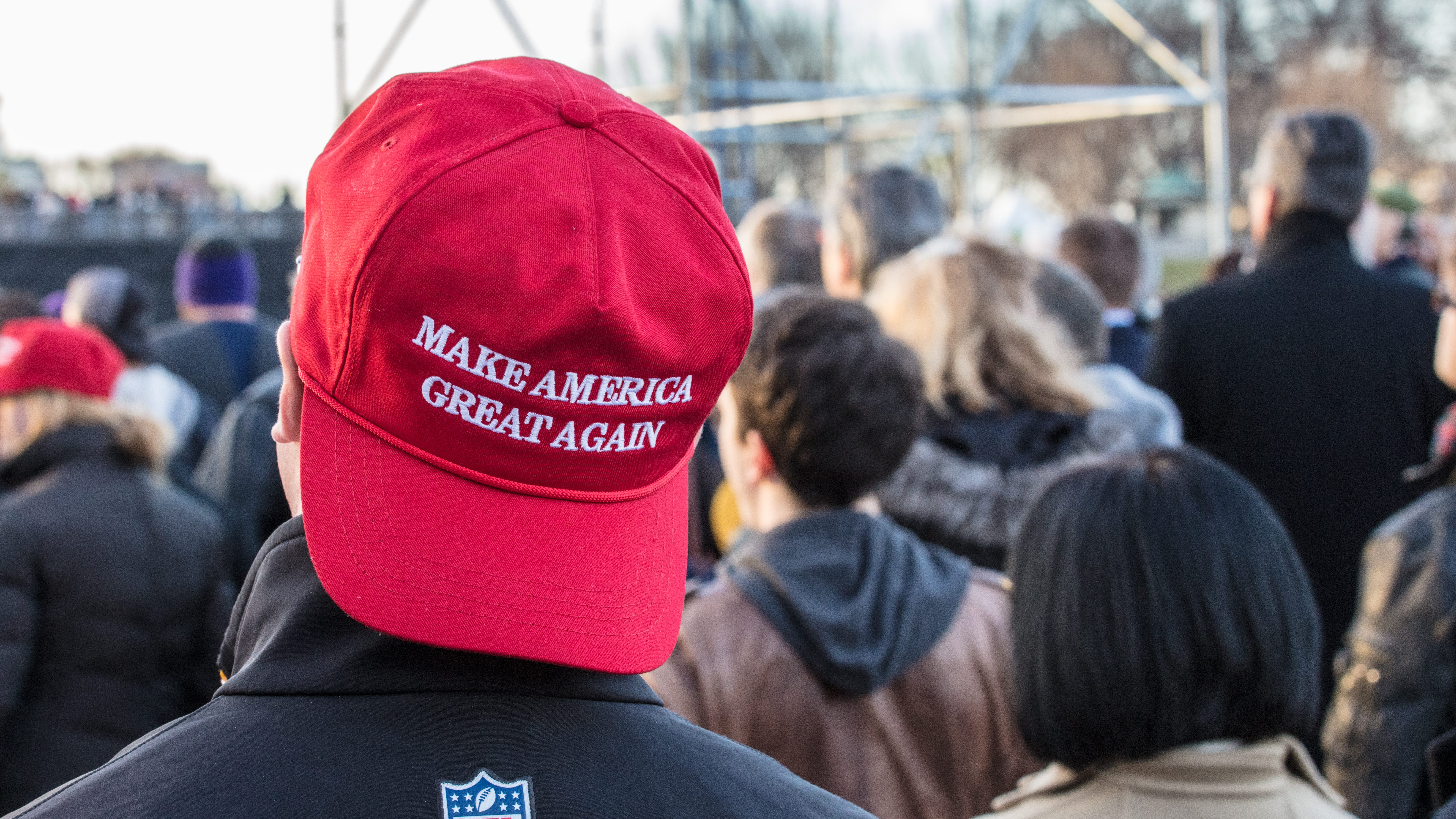
MAGA adherents fear that change is passing them by. They are suspicious about globalization and resent the disruption of their lives and economic expectations it has brought. Trust that Trump can set their world to rights has not been exhausted, despite his awful behavior, broken promises, and confused and contradictory domestic and foreign policies. Trump slashes away with his stick of punitive tariffs, certain that they will make other countries more pliant, raise revenue for the U.S., and, despite all evidence, not raise prices for Americans. Led by Vice President J.D. Vance, Administration figures heap scorn on economic powerhouse Europe as, nevertheless, a “declining civilization.” Trump’s National Security Strategy seeks “strategic stability,” whatever that means, with weak Russia, as if it were still the great power of Russian dictator Putin’s dreams. The Administration takes a push-pull approach to China, fundamentally uncertain whether the world’s second-largest economy, steered by a cult leader striving for international predominance, is adversary or partner.
The administration views international problems and threats primarily through a prism of commercial opportunities for state or personal profit. It has an impulse to dominate the Western Hemisphere, while also speaking of our neighbors as worthy partners. The National Security Strategy sees little at stake for the U.S. in how powerful countries in other regions behave, while at the same time, Trump yearns to be involved in far-flung parts as a bringer of peace. He wishes to glory in a powerful military, without much of a clue how to deploy that power meaningfully. He swore to his supporters that he would end overseas military commitments, while he does nothing to hide his bravado as he gets close to starting a new armed conflict in Venezuela.
Without any necessity, the Administration has abandoned tools of effective American “soft power,” and has surrendered yet more influence by withdrawing from one international organization after another.
Also, unnecessarily, the administration has ceased the bedrock U.S. advocacy of democracy and human rights – previously a source of inspiration and hope for millions of people living and suffering under political oppression. Trump wants the foreign-born, American citizens or not, to leave or be thrown out of the country, and his Administration increasingly sees foreigners’ visitor visa applications as threats.
With Trump 2.0 almost a year old, what does this mass of contradictions mean for U.S. national security?
As many commentators have pointed out, this year of Administration work has hacked away 80 years of America’s role in the world. Trump has definitively cast that role as a burden; discarding it, he claims, will bring the U.S. new prosperity and international respect.
That role did not originate in any American urge for self-sacrifice. Out of the chaos and destruction of World War II, a new international order, for which the U.S. was largely responsible, was built and organized to prevent great power war, encourage international cooperation and respect for human rights, increase general prosperity, and improve the health and lives of people everywhere. During the war, the U.S., unlike other combatants, suffered no physical damage, other than the attack on Pearl Harbor. U.S. combat casualties totaled barely 500,000 – which was a relatively small share of the 16 million Americans under arms, and a lower number than countries which lost millions of their servicemen. Enlightened U.S. leadership produced a world that, despite the ever-present threat of “mutual assured nuclear destruction,” was more secure and made the U.S. a much more prosperous place.
The Administration’s ambition to replace this role with something new is breathtaking in scope – even if its approach were less chaotic, and the team in charge were not incompetent to the point of cluelessness.. That anyone might imagine it might make America safer – something the Administration insists is true, despite the world becoming more dangerous – is a tragic delusion.
And what picture does this paint for Americans’ view of themselves?
Americans, by and large, have historically thought of themselves as charitable, looking out for members of their communities and generally ready to help those more widely removed but nevertheless in need. The Administration, through cruelty and intent (e.g., Trump’s calling calling Somali-Americans “garbage,” his immigration policies, his hobbling the Federal Emergency Management Agency’s ability to provide domestic disaster relief, and abolishing foreign assistance programs) has sliced through that self-image. Similarly, Americans’ inclination to welcome newcomers in their communities, be it from elsewhere in the U.S. or from abroad, is tragically mocked by Trump’s policies, selfishness and outrages. Americans, historically, have cared about decency, and that others think that of us. Anecdotal evidence is piling up that Americans traveling abroad feel compelled to apologize to those they meet for what Trump is wreaking, or go so far as to disguise themselves by pretending to be Canadians.
Americans have also cared about our national reputation. Trump and his people would never admit, or even consider, that they are hurting that reputation, but the fact is unfortunately painfully apparent. The elder President Bush used to talk about wanting to create a “kinder, gentler America.” Most Americans, I think, want that, too.
Under Trump, the very opposite is happening, and most Americans know it.
Tom Wolfson is a former senior U.S. diplomat who has lived and worked in six foreign countries, occasionally multiple times. His work representing the U.S. has included assignments at the United Nations, in the U.S. Congress, and with an international democracy-building organization. He is a member of The Steady State.
Founded in 2016, The Steady State is a nonprofit 501(c)(4) organization of more than 360 former senior national security professionals. Our membership includes former officials from the CIA, FBI, Department of State, Department of Defense, and Department of Homeland Security. Drawing on deep expertise across national security disciplines, including intelligence, diplomacy, military affairs, and law, we advocate for constitutional democracy, the rule of law, and the preservation of America’s national security institutions.