Autocracy The Warning Signs I Saw
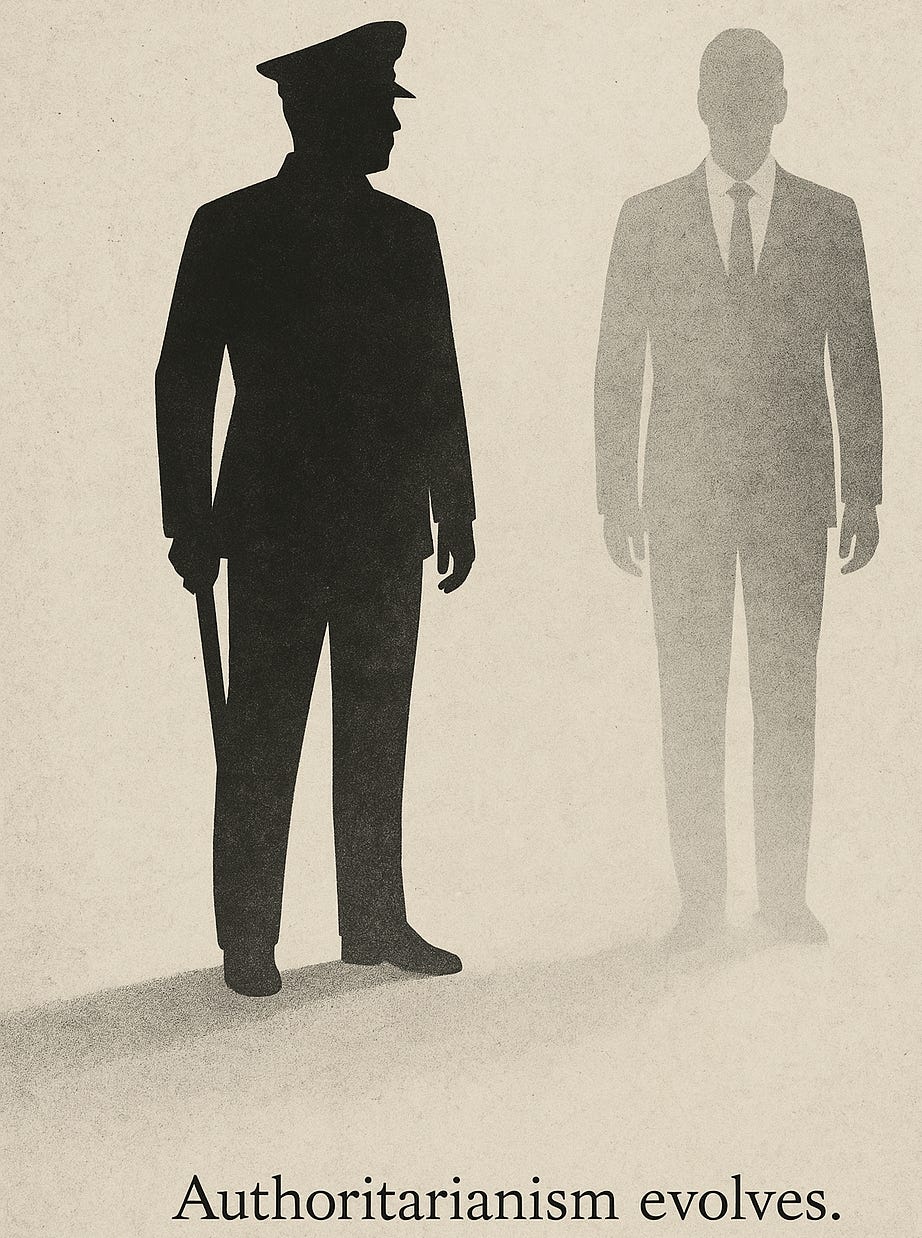
Authoritarianism doesn’t arrive as a thunderclap. It arrives as a series of adjustments the public learns to live with.
In 1989, the country where I was born, still claimed to be a democracy. Panama had elections, courts, a legislature, and a constitution. But none of those things protected us. All real power belonged to one man: General Manuel Antonio Noriega.
Noriega did not overthrow democracy in a single dramatic moment. He hollowed it out from the inside, methodically and confidently, until nothing remained but the appearance of democratic life. By the time people understood how much power he had taken, it was already too dangerous to resist.
The United States is not immune to the forces that destroyed Panama.. Indeed, the signs I saw in Panama — the quiet steps that pave the way for autocracy — are taking shape here.
Autocracy Is Not an Event. It’s a Process.
The most dangerous misconception about authoritarianism is that it happens suddenly. Authoritarianism rarely announces itself with a coup. It arrives through normalization: Living under Noriega was not one moment of terror — it was slow suffocation. People whispered, justifying lawless behavior as necessary, temporary, or deserved. Journalists vanished. Elections became theater. Hope became private. And all of it was done with patriotic slogans, legal justifications, and promises of “order.” Courts, media outlets, and election boards were staffed with loyalists. Legality became a weapon, not a safeguard.
Autocrats don’t destroy constitutions. They weaponize them.
. In Panama, authoritarianism unfolded in predictable steps:
Capture the institutions. Courts, media outlets, and election boards were staffed with loyalists. Legality became a weapon, not a safeguard.
Control information. Opposition was smeared as treason. Facts were replaced by narratives.
Expand executive authority. Noriega ruled through decrees that bypassed oversight.
Punish dissent. Not everyone was arrested — just enough people to make everyone else afraid.
Blame outsiders and minorities. Fear of “destabilizers” justified crackdowns.
Rig elections, then brag about it. Fraud was not just committed — it was flaunted.
Deploy street enforcers. The “Dignity Battalions” didn’t wear uniforms. They wore impunity.
Washington DC is not Panama City. But I am hearing echoes I cannot ignore:
Loyalty tests for judges and career officials
State-aligned media ecosystems built on disinformation
Expansions of executive power to bypass Congress
Open hostility toward journalists and protestors
Demonization of immigrants and minority groups
Efforts to undermine vote counting and certification
Political violence framed as patriotism
These are warning indicators — the same early signals intelligence analysts use to detect democratic breakdown abroad.
The day people stopped speaking freely was not the day democracy died. It was the day people realized it already had”
The most dangerous phase is when people still think “it can’t happen here.” By the time the United States intervened to remove Noriega, Panama’s institutions were too compromised to save themselves. Judges couldn’t act. Journalists couldn’t publish. The public couldn’t organize. The tools of resistance had been dismantled before anyone realized they’d need them.
Not every country gets rescued. Today, we see the same pattern repeating elsewhere: Venezuela, Nicaragua, Hungary, Turkey. Elections continue, but outcomes no longer matter. Courts exist, but rulings are ignored. Constitutions remain, but only as decorations.
The United States still has something these countries lost: time. But time only matters if used. Democracy will not survive on inertia. It will survive only with engagement. What I learned in Panama is this: A democracy does not die when a leader claims absolute power. It dies when the public accepts that claim as normal.
I lived through the slow death of one democracy. I know its vocabulary. I know its pace. I know its excuses. The warning is not that America has already fallen. The warning is that we are learning to tolerate the things that make democracies fall.
Panama thought it was immune, too.
Martha Duncan is a retired U.S. Department of Defense senior executive with 36 years of service, including 23 years in the U.S. Army Reserves and three deployments. She lived in Panama during the final years of the Noriega regime.
Founded in 2016, The Steady State is a nonprofit 501(c)(4) organization of more than 360 former senior national security professionals. Our membership includes former officials from the CIA, FBI, Department of State, Department of Defense and Department of Homeland Security. Drawing on deep expertise across national security disciplines including intelligence, diplomacy, military affairs and law, we advocate for constitutional democracy, the rule of law and the preservation of America’s national security institutions.