
Inside The Walls Justice Dignity
Reflections on law, humanity, and what happens when institutions forget their purpose.
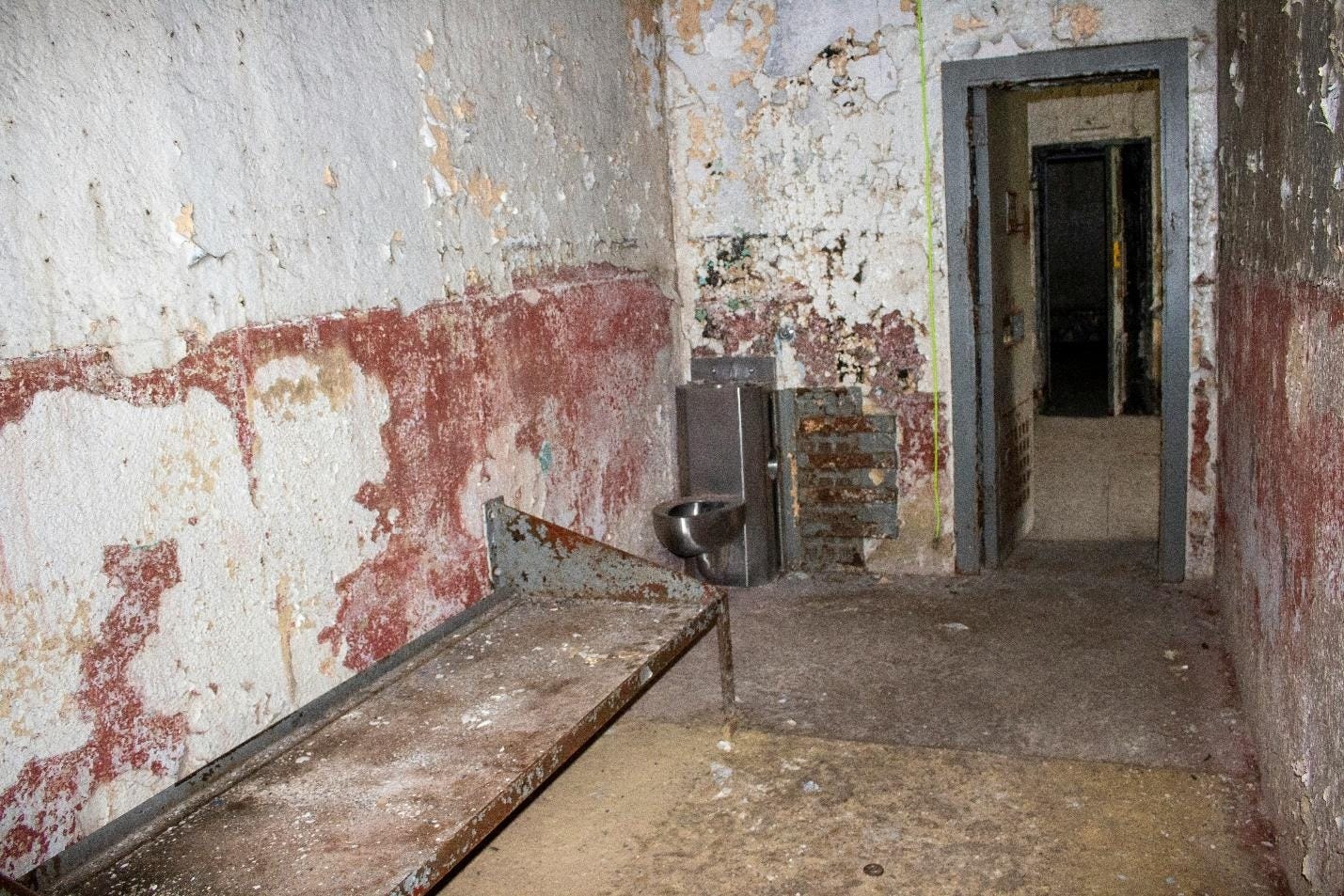
Photo by Ray Graciano on Unsplash
“How could you work with our governments when you know that they have no respect for the rule of law and violate human rights?”
The question came from a group of lawyers and judges from the Middle East and North Africa during a program sponsored by the U.S. State Department. They were curious and accusatory — wrestling with what it means to practice justice inside systems built to suppress it and questioning why the U.S., a beacon of democracy, would engage with governments that do not. I understood the question better than they knew.
Years earlier, I had worked in Gabon, investigating the murder of Peace Corps volunteer Karen Phillips. I learned then what it means to uphold law and humanity under pressure, especially with the very real threat of violence against my team. Corruption was rampant — the judge’s office was broken into, and files were stolen, possibly by those connected to the murderer or the government. In another brazen incident, evidence sent to France to prevent tampering was stolen from the mail.
When the U.S. Ambassador and I met with Gabon’s Minister of Justice to discuss the investigation, our private conversation turned into a public ambush. We walked into a wall of cameras and reporters. The Ambassador had warned that if they didn’t agree to a fresh investigation with the FBI, the Peace Corps would be pulled from the country forever. It was a performance, not a meeting.
That experience crystallized how autocratic power bends process and compromises the rule of law. Justice becomes a stage play performed for cameras while decisions are made elsewhere. And yet, even in that setting, moments of truth surface — often in the smallest, most human ways.
When I first arrived in Oyem, where the murder occurred, I was walking down a dim hallway and felt a sensation near my ankles. When I looked down, I saw a steel door — filthy, dented, smashed outward near the bottom. Through a jagged hole, a pair of eyes looked up at me from the floor. Someone was inside. Later that day, the door stood open. The space was barely six by eight feet – a dirt floor, no light, no toilet, just four stained walls. It was a cell.
That’s where Karen’s neighbor — a man I had interviewed the day before in Libreville — had been held after police swept through the neighborhood, rounding up anyone they could find. The conditions were unimaginable, but they weren’t unique. In autocratic systems, this is the norm, not the exception.
The man, a witness, was brought in wearing only undershorts after a night spent in a cell without food or water. I had seconds to decide what I could safely demand. I asked that he be given his trousers, water, and food. During the interview, as he tearfully described being tortured by police shortly after the murder, I could hear another man being beaten and slammed against the cinderblock walls just outside the door — the harsh reality of what happens when respect for human dignity and legal process is absent. I felt the weight of judgment, knowing that pushing too hard might endanger the witness, my team, and others relying on our discretion. It was a moment that tested every instinct — balancing justice with restraint, conviction with humility.
The case, which drew attention in Congress, underscored how difficult it is to uphold justice under pressure. That experience taught me that integrity can never be situational.
The images of masked ICE agents pulling people off U.S. streets and reports of filthy, overcrowded detention cells are hard to reconcile with the country I’ve spent my life defending.
I’ve made arrests too — for drugs, for terrorism, for other crimes. I’ve led raids and was on an FBI SWAT team. But I never wore a mask to conceal my identity, and I never hid from the people I was arresting. The authority of law enforcement doesn’t come from intimidation; it comes from transparency, accountability, and treating people with dignity.
That same principle is being tested inside the FBI today. Agents who question directives or raise legitimate concerns about the legality or morality of decisions risk being sidelined, silenced, or dismissed outright. The fear of retaliation is real – and it’s corrosive. The Bureau I knew thrived on debate, analysis, and dissent because those things made our work stronger. Suppressing them weakens morale and mission readiness.
When armed, hooded officers arrested Rümeysa Öztürk, a Turkish doctoral student at Tufts University in Boston, simply because her visa had been revoked, when power replaces process and fear becomes the point, we have crossed a moral line. That episode threw me back to Gabon — and reminded me how easily institutions lose sight of their own purpose when loyalty is prized over law.
The rule of law isn’t just a phrase in our founding documents; it’s a living trust between citizens and the institutions sworn to protect them. When those institutions misuse power — or when loyalty replaces judgment — we should pay attention.
I often think of Karen’s neighbor and others who still believed truth mattered. Gabon taught me that integrity is a form of resistance – and that justice without dignity isn’t justice at all. Even in small acts – a word, a question, a refusal to look away – we choose to stay human.
Lauren C. Anderson is a former FBI executive who spent nearly three decades running toward the crises most people run from. An Advisor to the U.S. Comptroller General and the U.S. Army, she is a member of the Council on Foreign Relations and The Steady State. She writes What We Choose to Defend, exploring the intersection of trust, security, conscience, and the rule of law. Ms. Anderson is a member of The Steady State.
Founded in 2016, The Steady State is a nonprofit 501(c)(4) organization of more than 360 former senior national security professionals. Our membership includes former officials from the CIA, FBI, Department of State, Department of Defense and Department of Homeland Security. Drawing on deep expertise across national security disciplines including intelligence, diplomacy, military affairs and law, we advocate for constitutional democracy, the rule of law and the preservation of America’s national security institutions.