
Capabilities Not Authorities The
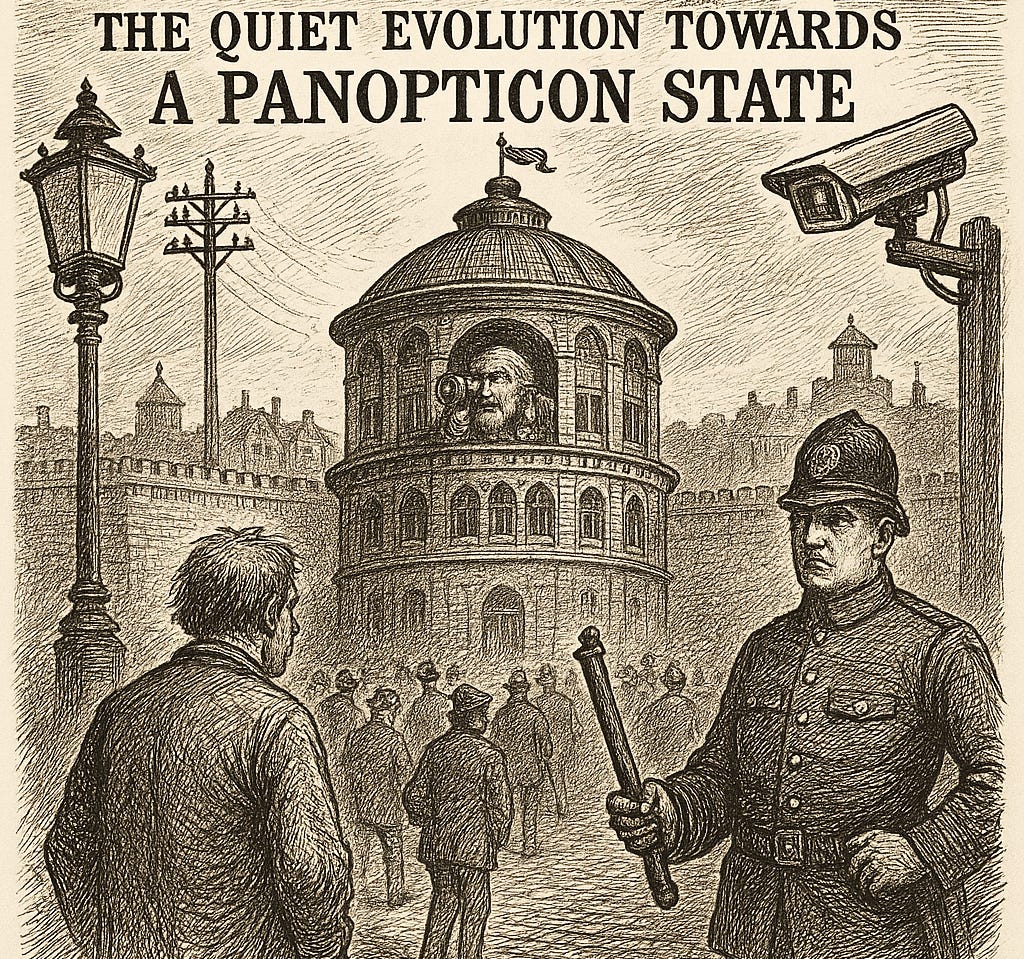
For decades, when Americans worried about government overreach, they argued about authorities—laws, regulations, and formal constraints that define what federal agencies are allowed to do. That focus made sense in an era when statutes were relatively stable, when guardrails were meaningful, and when administrations of both parties tended to treat legal constraints, even when frustrating, as binding, and the real limits were often rooted in technology, not law.
But today, that framework is dangerously outdated. To understand what is happening inside the U.S. national security and homeland security systems—the subtle consolidation of intelligence, operational power, and domestic enforcement tools—we must shift our attention. The essential question is no longer what federal agencies are authorized to do, but what they are capable of doing. Capability now outstrips authority by orders of magnitude, and because recent political actors have shown a willingness to override or ignore legal limits, the traditional “authorities-first” analysis is increasingly feckless. The true danger lies in what the modern American state can do right now.
Other nations provide a warning. Russia’s FSB, China’s Ministry of State Security, and Iran’s Islamic Revolutionary Guard Corps are not simply intelligence services; they are interior ministries with fused intelligence, security, and paramilitary powers, designed to monitor populations, shape political behavior, and enforce the will of leaders unconstrained by law. They are instruments of internal control. While the United States has not built a single monolithic organization like these, it has—accidentally, incrementally, and often with benign intent—assembled the components of such a system across different agencies. The result is a fragmented but potent potential: a domestic intelligence and enforcement capacity whose technical abilities already resemble, in function if not in name, the core features of a modern interior ministry.
Over the past quarter-century, especially since 9/11, the U.S. government has acquired extraordinary tools: persistent location tracking from mobile devices, AI-driven facial recognition, integrated surveillance networks, historic license-plate databases, ubiquitous commercial data that can be purchased without warrants, predictive analytics applied to individuals and communities, drone platforms capable of wide-area monitoring, and cyber tools that can reach deeply into personal communications. These technologies, scattered across agencies and fused through federal, state, and private-sector data sharing, form a surveillance architecture whose collective capabilities exceed anything imagined by earlier generations. The United States now possesses the technical capacity to monitor, track, and analyze the movements, associations, communications, and behaviors of individuals and populations in ways that echo, and in some respects surpass, the surveillance systems of China and North Korea—not because it has chosen to exercise these powers, but because it has the machinery to do so.
In the past, Americans focused on legal authorities—statutory limits, regulatory frameworks, and constitutional constraints—to prevent misuse of such tools. That trust presupposed that political actors would respect the boundaries. But the Trump Administration made clear that this assumption no longer holds. In numerous domains, from intelligence to immigration enforcement to investigative pressure on political opponents, the administration treated legal limits as suggestions, barriers to be navigated around rather than rules to be observed. This shift in attitude represents the single most important change in modern governance. When leaders do not feel bound by authorities, the limiting factor on governmental action is no longer the law—it is capability. The relevant question becomes: What can federal agencies do with the tools they already possess?
This is where the second development—the rise of a domestic paramilitary capacity—interacts ominously with the surveillance state. The United States has long avoided the creation of a national gendarmerie or interior force, precisely because the founders, and those that followed, understood how easily such institutions could be turned inward. Yet over the last twenty years, the country has built something approximating one, not by deliberate design but through the operational evolution of sub-agencies such as Immigration and Customs Enforcement (ICE), Customs and Border Protection (CBP), and various tactical components of the Department of Homeland Security and the Department of Justice. What began as specialized border and immigration enforcement has grown into a network of heavily armed, highly trained units with nationwide operational reach, sophisticated intelligence support, and the legal—or extralegal—ability to operate far everywhere and all the time.
This emerging domestic paramilitary capacity, when combined with the government’s sweeping surveillance capabilities, creates the functional equivalent of an interior ministry. Not a single hierarchical institution with a single leader, but a set of interoperable capabilities that, in the hands of an administration willing to disregard legal norms, could be rapidly fused into a coherent instrument of political control. The distinction between foreign intelligence, domestic intelligence, border security, and internal enforcement has eroded as technology and mission creep have blurred the boundaries. The United States now has the technical ability to identify individuals through digital surveillance, track their movements, map their associations, monitor their communications, assess their political and social activities, and deploy armed paramilitary units to detain or intimidate them—all within a framework that assumes compliance with legal authorities, but does not structurally prevent their abuse if leadership instructs otherwise.
We live in a society saturated with data: phones broadcasting location, cars logging routes, storefronts recording movement, cities tracking faces, financial systems documenting transactions, and online platforms analyzing preferences, contacts, and behaviors. These systems were built for convenience, commerce, and efficiency. But the federal government can access, purchase, compel, or repurpose much of this digital exhaust, often without warrants or meaningful oversight. The shift from physical surveillance to digital persistence means that individuals now generate a continuous stream of observable behavior, available to government agencies equipped to gather, correlate, and interpret it. The panopticon is no longer a metaphor; it is the default condition of digital life.
The danger is not hypothetical and not confined to distant authoritarian governments. The United States has built a surveillance capability and a domestic paramilitary capability that together could be misused in ways the framers feared, the post-Watergate reforms sought to prevent, and the American public does not yet fully appreciate. The separation between these capabilities and political power now depends less on law and more on culture—on the expectation that leaders will restrain themselves. But culture is fragile, and norms are eroding.
If we intend to preserve constitutional democracy, we must confront this reality. We need oversight structures, transparency mechanisms, and restrictions on data aggregation that match the technical environment of 2025, not 1975. We need firewalls between political leadership and operational agencies and governance frameworks for AI-powered surveillance. Above all, we need to restore the expectation—across administrations, across agencies, and across political alignments—that constitutional constraints are binding and non-negotiable.
The American state is powerful. The question we face now is whether that power will remain disciplined and democratic, or whether, piece by piece, it will continue to drift toward a functional interior ministry—an evolution as quiet as it is dangerous.
Steven A. Cash served as a prosecutor in the Manhattan District Attorney’s office before joining the CIA in 1994 as Assistant General counsel and subsequently serving as an intelligence officer in the Directorate of Operations. In 2001 he joined the Senate Select committee on Intelligence as Counsel and designee-staffer to Senator Diane Feinstein). He later served as a senior staffer in the House Select Committee on Homeland Security, the Department of Energy, the Senate Judiciary Subcommittee on Terrorism, Technology and Homeland Security and the Department of Energy. In the private sector he has advised on national security, counterintelligence, and technology policy and served on the Biological Sciences Experts Group under the Director of National Intelligence. Mr. Cash is currently the Executive Director of The Steady State.
Founded in 2016, The Steady State is a nonprofit 501(c)(4) organization of more than 360 former senior national security professionals. Our membership includes former officials from the CIA, FBI, Department of State, Department of Defense and Department of Homeland Security. Drawing on deep expertise across national security disciplines including intelligence, diplomacy, military affairs and law, we advocate for constitutional democracy, the rule of law and the preservation of America’s national security institutions.
This essay was subject to pre-publication review by the Central Intelligence Agency, which required the addition of the following statement “All statements of fact, opinion, or analysis expressed are those of the author and do not reflect the official positions or views of the US Government. Nothing in the contents should be construed as asserting or implying US Government authentication of information or endorsement of the author’s views.”