
Dangerous Rhetorica Springboard To
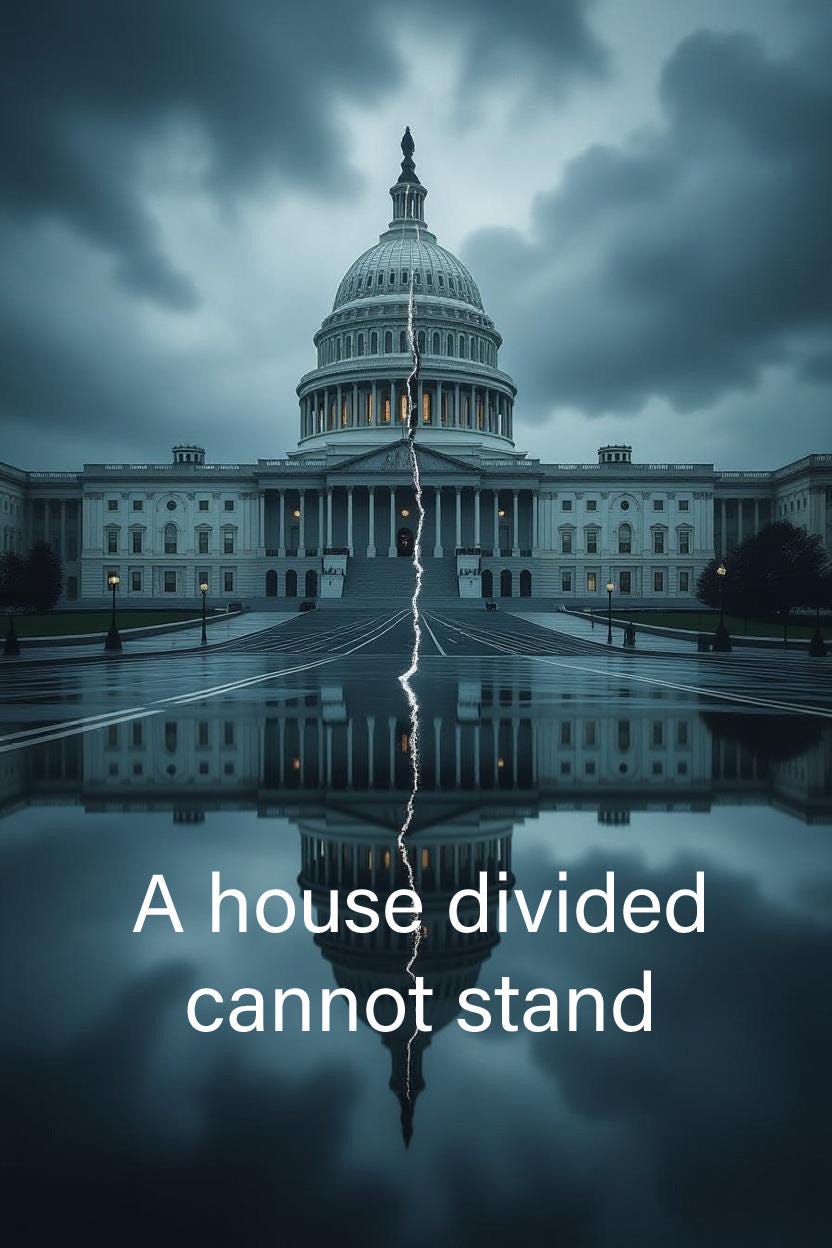
On September 10, 2025, the Federalist, an American online conservative magazine and podcast, published an article titled, “The Democrat Party is a Domestic Terrorist Organization.” This political rhetoric is an alarming escalation with the potential to push American politics into profoundly dangerous territory. Although there has always been fierce partisanship in American politics, comparing a significant political party that represents tens of millions of people to violent extremists enables the ultimate labeling of opponents as enemies of the state. This opens the door to repression, persecution, and potential escalation of violence that would-be authoritarians seek.
Domestic terrorism is legally defined per 18 U.S. Code § 2331(5), as activities that “(A) involve acts dangerous to human life that are a violation of the criminal laws of the United States or of any State; (B) appear to be intended—(i) to intimidate or coerce a civilian population; (ii) to influence the policy of a government by intimidation or coercion; or (iii) to affect the conduct of a government by mass destruction, assassination, or kidnapping; and (C) occur primarily within the territorial jurisdiction of the United States.” While this Code is not a charging statute and itself does not criminalize conduct or provide penalties for acts that meet the definition, federal law relies instead on other statutes for criminal charges with respect to domestic terrorism.
The Federalist’s statement that Democrats “need to be treated like the domestic terrorists they are” suggests that they believe Democrats should be targeted and stripped of legitimacy. It also frames compromise or power-sharing as impossible, turning electoral competition into an existential conflict. Fundamental to a democracy is that different ideas can coexist, be discussed, and be decided through free and fair debate and elections. The Federalist’s rhetoric undermines those principles.
Two tactics are frequently employed by authoritarian movements: (1) redefining political opponents as existential threats, and (2) using that definition to defend emergency or extraordinary powers. “Terrorist” rhetoric is classically used by authoritarian ruling parties around the world leading to the banning and persecution of political opponents in the name of national security. In practice, this escalation invites justification for criminalizing speech, disqualifying candidates, banning opposing parties, and justifying the use of emergency powers—all characteristics of authoritarian regimes.
The gravity of this rhetoric cannot be overstated. Its intended outcome appears to be to change the public’s perception of what constitutes historically-acceptable political behavior and discourse and to prepare the ground for emergency powers, mass repression, and the destruction of the democratic system itself.
Congress and citizens must acknowledge and oppose this behavior before it takes root. If we fail to call out this escalation now by recognizing the gravity of what is at stake, advocating for our first amendment rights, and petitioning our representatives to act, the line between political competition and political criminalization could vanish, leaving our democracy fatally compromised.
The time to confront and reject this rhetoric is today.
Jaime Ellison is a former senior intelligence officer with two decades of service in the Department of Defense and the Department of Homeland Security, specializing in counterintelligence and security. She has a Ph.D. from the University of Wisconsin-Madison in Applied Operations Research in Terrorism Risk Analysis. Jaime is a member of the The Steady State.
Founded in 2016, The Steady State is a nonpartisan, nonprofit 501(c)(4) organization of more than 300 former senior national security professionals. Our membership includes former officials from the CIA, FBI, Department of State, Department of Defense and Department of Homeland Security. Drawing on deep expertise across national security disciplines including intelligence, diplomacy, military affairs and law, we advocate for constitutional democracy, the rule of law and the preservation of America’s national security institutions.