
Destroying American Diplomacy Pulling
Diplomacy as we know it is fading fast if Congress doesn’t act.
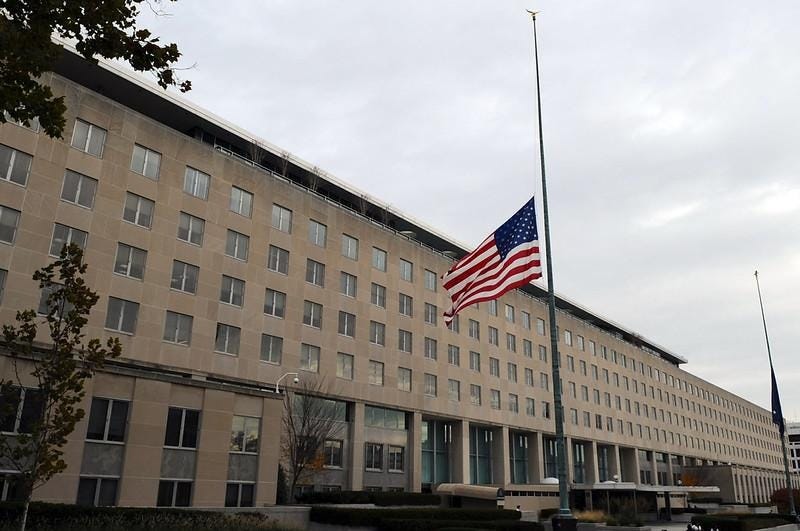
During Donald Trump’s first term as president (2017-2021), he was in constant conflict with what he termed the ‘Deep State,’ one component of which was the U.S. Department of State. His ‘art of the deal,’ impulse-driven approach to foreign policy was often at odds with the more measured, coordinated approach of traditional diplomacy, frequently putting him at odds with the men he appointed to the position of secretary of state, such as Rex Tillerson, the ExxonMobil executive he fired after approximately a year on the job, and Mike Pompeo, who was moved from his position as director of the CIA to replace Tillerson.
During the 2024 presidential campaign, Trump made it clear that he planned to demolish the ‘deep state’ by gutting the civil service, limiting the power of institutions and experts, and replacing career officials with loyalists. This included blacklisting those who were appointees in his first administration, like Pompeo, who publicly contradicted Trump’s assertions that the ‘deep state’ was at the State Department and CIA.
Trump launched his campaign immediately following his second inauguration, beginning with a flurry of executive orders and memoranda, many of which undercut American diplomacy and demoralized the career diplomatic service (Civil and Foreign Services). These included terminating foreign aid programs and dismantling USAID, withdrawing from international agreements, laying off or firing civil service and Foreign Service personnel, and ending Diversity, Inclusion, Equity and Accessibility programs, not just in the State Department but across the entire government. By June, the Department of State was facing its biggest reorganization in decades, with Congress considering plans to reduce the foreign affairs workforce by 3,400 positions, cut international affairs funding by 85%, and overhaul the network of US diplomatic missions.
As bad as things were during his first term, with the budget cuts reducing State Department staff by about 10 percent, the disruption of the second Trump administration is even more dramatic. Just how dramatic is highlighted in a December 3, 2025, report prepared by the American Foreign Service Association (AFSA), the professional association and bargaining agent for the Foreign Service employees of the foreign affairs agencies, which include the Department of State, USAID (which officially ceased operations on March 28, 2025), the Foreign Agricultural Service, the Foreign Commercial Service, the Animal and Plant Health Inspecting Service, and the US Agency for Global Media (also eliminated in early 2025).
Trump has ushered in budget cuts, mission closures, and policy realignments, not in response to any new major global threat, but as part of the president’s war on the ‘deep state,’ and in line with recommendations in the Heritage Foundation’s Project 2025 playbook.
Since January 2025, according to AFSA, as many as one in four career diplomats have been removed, retired, or resigned, weakening global leadership and the ability to serve the American public. This loss of accumulated experience and knowledge will take decades to replace. During that time, our adversaries will be replacing us in many current and future critical regions of the world.
When one considers that, before January 2025, the U.S. Foreign Service consisted of 17,000 professionals across all six foreign affairs agencies, representing American interests in more than 190 countries and international organizations, the loss of 20 to 30 percent is not just significant, it’s frightening. In July 2025, the State Department laid off 200 members of the Foreign Service in one day, the largest single-day layoff in history, and more than 1,000 civil servants.
The July layoffs were carried out without regard to merit. They included the firing of experts on weapons of mass destruction, human rights, embassy security, visa fraud, economic policy, and global agriculture. The consequences were soon evident in the weak response to natural disasters, prompting China to respond on a much larger scale, undercutting our stated goals of restoring U.S. leadership and deterring China. Before the start of Trump’s second term, China had already surpassed the US in diplomatic capacity, especially in Africa and Southeast Asia, expanding its global diplomatic and economic presence just as we began scaling back our own. The current cuts will only accelerate China’s rise and the U.S.’s decline, with the possible exception of the Caribbean, where China and Russia are likely to make noise but remain otherwise uninvolved, letting the U.S. stew in the pot under which Trump has lit a fire.
The AFSA survey confirmed what those of us observing from the outside have long expected: what’s left of America’s diplomatic service after the administration’s bloodletting is demoralized and unable to perform at its optimum. Of more than 2,200 active-duty Foreign Service employees surveyed worldwide, 86 percent say the recent changes have affected their ability to advance diplomatic priorities; 98 percent report declining morale; nearly one-third report changed career plans since January; and 61percent face heavier workloads because of staff reductions.
As an example of the unprofessional and counterproductive treatment of personnel, one Foreign Service Officer said that he was in training at the Foreign Service Institute, training for his next assignment, when his office was abolished under the reorganization. When the reduction-in-force (RIF) notice was issued on July 10, despite having an onward assignment and having been recommended for promotion into the Senior Foreign Service last year, he was notified that he would be involuntarily retired. This, despite a congressionally mandated moratorium on such cuts through January. On December 4, a federal judge temporarily blocked the immediate layoff of more than 250 State Department workers pending a ruling in the lawsuit filed by employee unions.
America’s global leadership, in addition to depending on a strong, apolitical military, depends on a strong, professional diplomatic corps serving around the globe, backed by an experienced, professional, and apolitical State Department staff that, as it always has, supports the policies of the duly-elected leadership, while adhering to its oath to support and defend the Constitution. The nation’s position in the world is in jeopardy as its diplomatic corps faces a crisis unlike any before, with personnel losses, political meddling, and the erosion of our soft power—at a time when global threats have intensified.
Our diplomatic tools are being broken and discarded. We are losing decades of hard-earned experience and are tarnishing our international reputation. The damage done in less than one year can be repaired, but it will take decades. Worse, where we once led with ease, we’ll now find ourselves as a nation, bringing up the rear.
The politicization and hollowing out of America’s diplomatic capability endanger our global leadership and, as a consequence, our national security.
The only hope of stopping the decline and beginning the process of rebuilding is for Congress to act.
Congress must:
Reaffirm that career diplomats serve under presidents of either party and that they must be able to function without fear of political retaliation
Exercise its oversight of organizational and policy processes
Legislate the strengthening and modernization of the diplomatic service through enhanced training, leadership
And it must safeguard the professionalism and integrity of the diplomatic service enabling it to meet the challenges facing the nation in the 21st century. So far, only the judicial branch has acted to slow the erosion of our diplomatic capacity, but unless Congress acts, this will only be a temporary fix.
If we are to restore America’s global image as a beacon of freedom and democracy, we must act now to restore the integrity, morale, and capacity of America’s diplomatic workforce.
Charles A. Ray spent 20 years in the U.S. Army with two tours in Vietnam. He retired as a senior US diplomat, serving 30 years in the U.S. Foreign Service, with assignments as ambassador to the Kingdom of Cambodia and the Republic of Zimbabwe, and was the first American consul general in Ho Chi Minh City, Vietnam. He also served in senior positions with the Department of Defense and is a member of The Steady State.
Founded in 2016, The Steady State is a nonprofit 501(c)(4) organization of more than 360 former senior national security professionals. Our membership includes former officials from the CIA, FBI, Department of State, Department of Defense, and Department of Homeland Security. Drawing on deep expertise across national security disciplines, including intelligence, diplomacy, military affairs, and law, we advocate for constitutional democracy, the rule of law, and the preservation of America’s national security institutions.