
Politics Driving Dod Personnel Initiatives
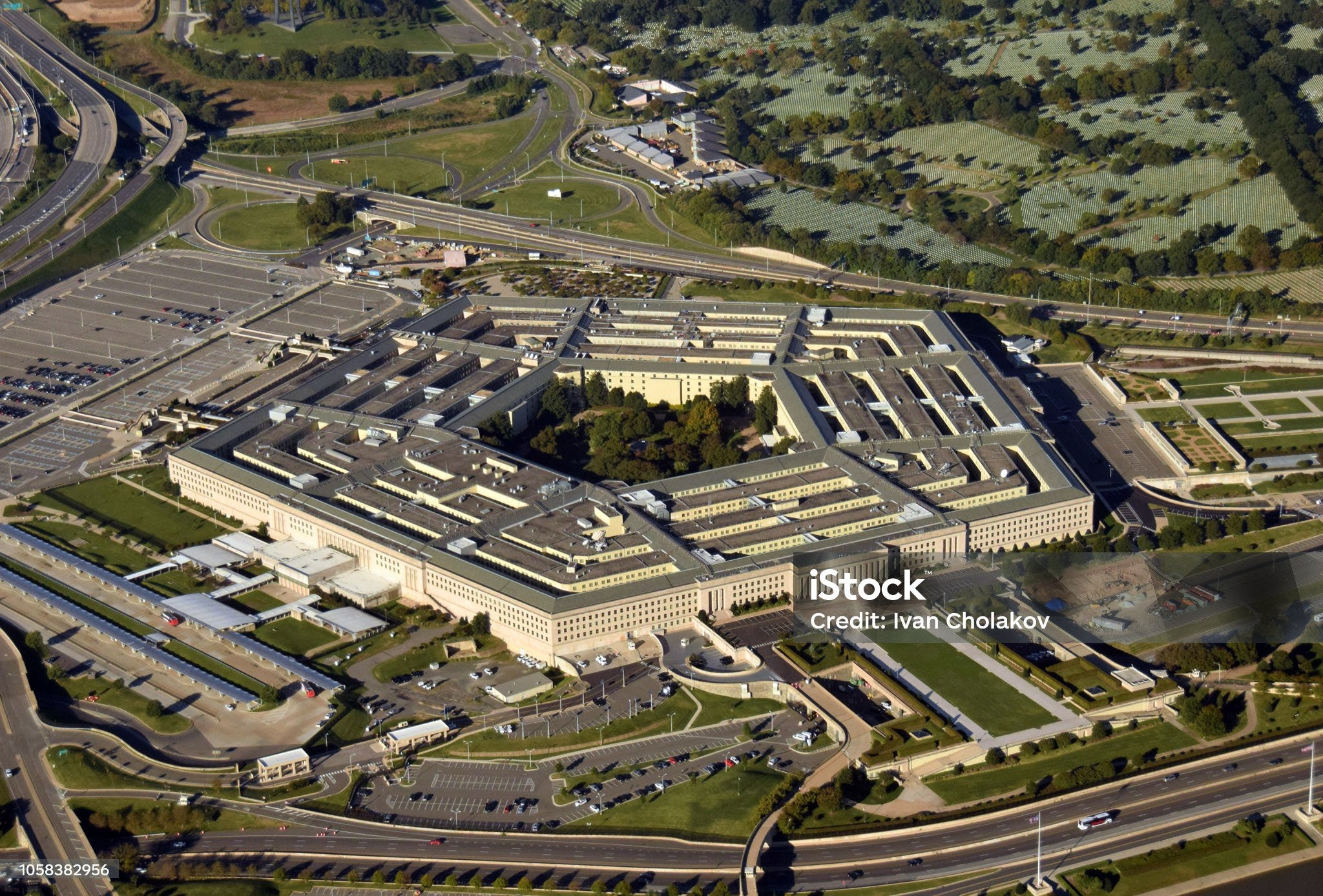
Over the weekend of November 8-9, the New York Times published an article examining the Trump administration’s latest personnel purge, without explanation, of almost two dozen senior uniformed military officers. This represented significant negative implications for democracy, civil-military relations, and a non-political uniformed military.
However, there is another negative consequence of such purges — the risk to US military capabilities.
For a large portion of my decades in the intelligence community, I assessed foreign military capabilities throughout the world–the Middle East, Africa, South Asia, and East Asia: Can they perform basic military functions? Can they defend their country? Can they execute their tasks under the country’s national strategy?
In examining a country’s military power, many look at the size of the defense budget, assess technology levels, and measure the size of the forces. However, to really understand a military and what it can do, one needs to study the quality of its leadership, the soundness of its strategy and plans, its cohesion at all echelons, its internal culture, and its morale. While hard to judge and impossible to quantify, these so-called soft factors are often decisive and therefore the most important. History is replete with the failures of large, well-equipped militaries suffering because of weakness in these soft factors. Russia’s 2022 assault on Ukraine is the most recent example.
Size and technological superiority have been hallmarks of US military power, but it is the ability to put together all the physical facets of military power into a cohesive whole on a repeatable basis, in wide-ranging environments, against different adversaries, and over decades that is the secret sauce. US military power is dependent on good leadership and a good leadership culture, a sound planning process allowing flexibility to learn from mistakes, realistic training/exercises (including at senior levels), and a strong level of trust up and down the chain of command and across the whole department, uniformed and civilian. These are precisely the factors that are at risk under this administration and call into question the basic capabilities of our military to achieve its missions.
Three alarming actions point to the prospect of weakened leadership, culture and cohesion within our military.
Leadership Purges and Political Loyalty Tests The leadership purges and emphasis on personal/political loyalty risk undermining the professionalism of the US military. Decisions may increasingly be made on the basis of loyalty, not military judgment. Factions and cliques may develop over time within the military based on loyalty, which will undermine trust and collaboration across the force. More pernicious is that a culture of loyalty may develop whereby officers at all echelons will begin to develop their own fiefdoms based on the loyalty of more junior personnel.
Bullying Leadership Style The Secretary’s speech to the assembled general officer cadre in September was an exemplar of what not to do. He touted many of the bad aspects of leadership, including machismo, braggadocio, and bullying. While there are times and places when this style can be necessary and appropriate, they are generally few. What I have observed as a civilian looking at the uniformed services is that successful leaders more often consciously avoid using these techniques, recognizing that most people do not respond well when bullied. Moreover, this style of leadership is totally inappropriate for managing large units, much less a vast department often staffed by civilians, and cooperating closely with non-US allies and partners.
Anti DEI Campaign The so-called “war on woke” will have a number of negative effects across the military and society, as many will feel as if they are being targeted, and, in many cases, ARE targeted as the anti-DEI crusade seeks to re-normalize bigotry. While one can question the effectiveness and appropriateness of individual DEI measures, their importance lies in their collective impact – establishing a culture within the military that is opposed to bigotry and laying down supporting guidelines for behavior and attitude. Firing the African-American Chief of the Joint Chiefs and the female Chief of Naval Operation early in the Trump administration was a calculated signal. The anti-DEI campaign threatens the military’s internal cohesion and, if allowed to persist, will challenge recruitment. As of 2023 just over 30 percent of the total DoD military force were non-white, and just under 20 percent were female, and just over 18 percent self-identified as Hispanic or Latino., the “war on woke” is a challenge to a sizable portion of the US military. Beyond immorality, these risks will undermine cohesion and morale.
In a changing military environment, these three actions pursued by the administration are particularly consequential. In an era of strategic competition with China and Russia, military strategy and planning involves organizing and commanding large numbers of people over vast distances. What might have been appropriate in a platoon or company-sized engagement in Iraq or Afghanistan is not for tens of thousands of people from Alaska to Australia, or the Svalbard to the Caucasus. Units will often have to operate autonomously and rely on the skill of the local leadership and the “mission orders” concept, which will require high degrees of trust. Actions that increase the role of personal and political loyalty and undermine trust will reinforce the incentives to be safe and bump decisions up the chain of command, which will slow operations and overload the top level to every enemy’s benefit and to every ally’s dismay.
Warfare is changing with technology playing a greater role. While close combat will always remain central, the expanding use of technology changes the balance in the types of personnel in the force, with those supporting technology growing in prominence. Those operating drones at a remote base in the US or conducting cyber-attacks are different from an infantry platoon kicking down doors.
An added strategic and technological dimension is that to counter China’s growing capabilities in the western Pacific, DoD forces will increasingly be required to laterally coordinate across different services, command boundaries, physical environments, and vast distances while under fire — and operate more autonomously. However, the Secretary’s action and growing politicization reinforce centralization.
When US analysts look at the Chinese military, they point precisely to the impact of Chinese purges, a lack of trust, politicization, and overly hierarchical and centralized command as critical weaknesses of the Chinese military. We are, in fact, at risk of losing exactly that those same key elements of superiority, exactly at a time when we no longer enjoy technological or industrial superiority. Raising defense budgets, or efforts to fix a broken acquisition system, and rebuilding the defense industrial base, cannot make up for the negative consequences of the administration’s actions that are undermining leadership, culture and cohesion in the DoD.
Our military power is at risk.
Harry Hannah retired after four decades of experience in the Intelligence Community. He retired from the CIA in 2018. About half that time was focused on analyzing the capability of multiple foreign militaries in direct support of US military planning and operations and national level decision making. He is a member of The Steady State.
Founded in 2016, The Steady State is a nonprofit 501(c)(4) organization of more than 360 former senior national security professionals. Our membership includes former officials from the CIA, FBI, Department of State, Department of Defense and Department of Homeland Security. Drawing on deep expertise across national security disciplines including intelligence, diplomacy, military affairs and law, we advocate for constitutional democracy, the rule of law and the preservation of America’s national security institutions.
All statements of fact, opinion, or analysis expressed are those of the author and do not reflect the official positions or views of the US Government. Nothing in the contents should be construed as asserting or implying US Government authentication of information or endorsement of the author’s views.