
How to Interfere With an Election: Let’s Count the Ways
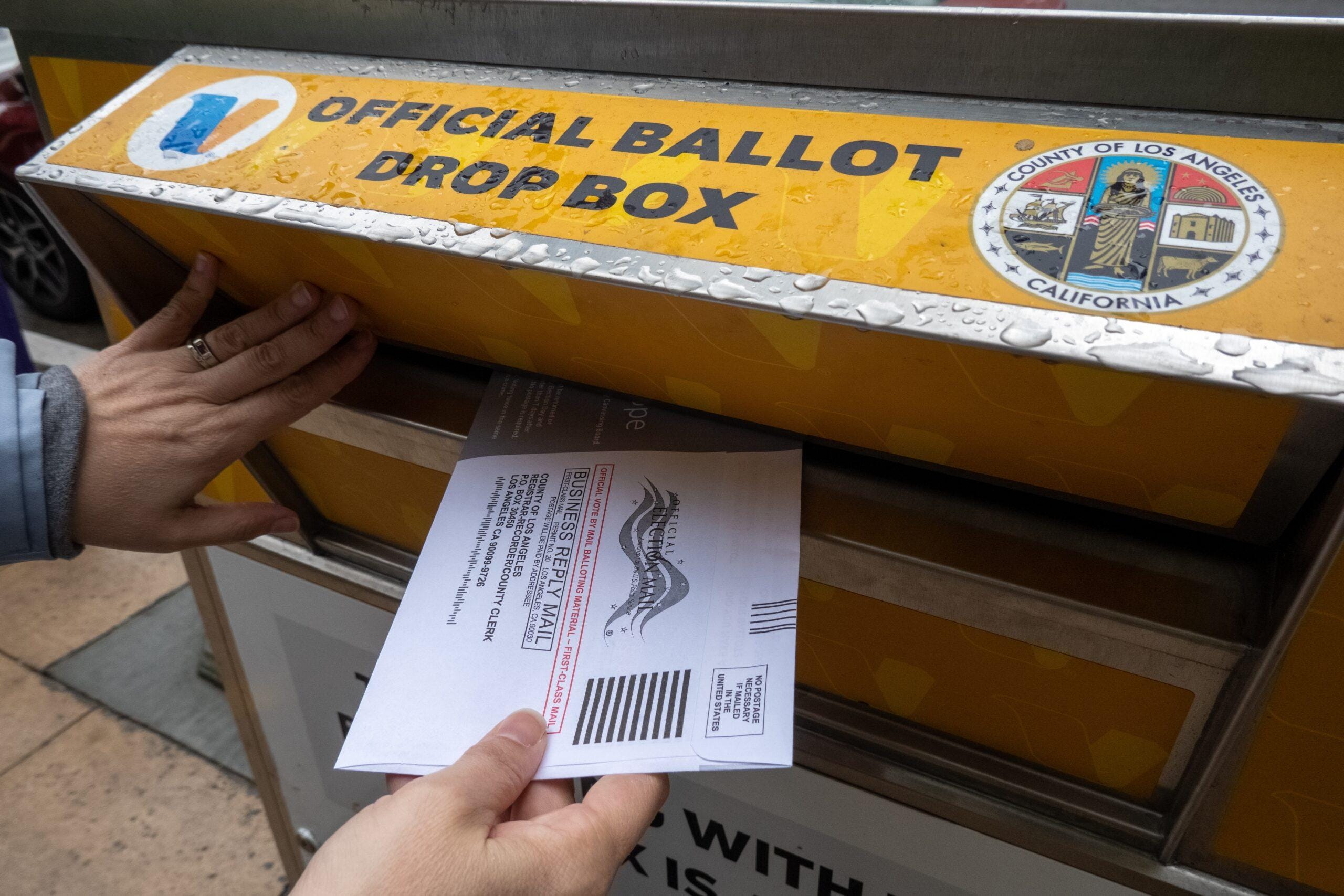
There is more than one way to interfere with an election. You can redraw congressional districts, change the rules for mail ballots, demand new voter data from the states, or create enough uncertainty that voters and election officials no longer know which rules apply. As the 2026 midterms approach, all of these tools are in play.
If your goal is to “guarantee the midterms”, but your poll numbers are in the tank, you’ve jacked up prices with misguided and unpopular tariffs, and started an even more unpopular and unsuccessful war with Iran, your best bet might be to prevent people from voting. Or to direct Republican controlled legislatures to engage in out-of-cycle extreme gerrymandering. Or figure out other ways of suppressing the vote.
And surprise, that is exactly what Trump has been doing.
First, there was his launch of the extreme gerrymander wars with the opening salvo in Texas, then his SAVE Act, which passed the House but which the Senate refuses to pass (a rare bit of pushback from an otherwise feckless group). Next came Executive Order 14399 that seeks to prevent the US Postal Service from delivering mail-in ballots unless otherwise eligible voters are on a list approved by the Department of Homeland Security.
If you are one of the MAGA -adjacent Roberts Six, and you have the opportunity to make another move that will have the effect of helping to “guarantee the midterms” (having already gutted the Voting Rights Act, thereby effectively disenfranchising Black voters in the Deep South), it may be hard to say no. Given the chance to squash Donald Trump’s attempt to control the election process that the Constitution leaves to the States and Congress, the Roberts Six once again used its Emergency Docket to put democracy on hold by allowing Trump’s Executive Order to proceed, at least temporarily, thereby introducing more uncertainty and potential chaos just over two months before the 2026 midterms.
A Quick Summary of the Legal Ping-Pong Match
It is difficult to follow this ping-pong match, but here is a quick summary. In its recent emergency decision, the Roberts Six allowed the Executive Order to proceed because the issue was not “ripe” (the regulations had not been issued) and the plaintiffs lacked “standing.” The lack of “standing” argument (a favorite way the Roberts Six uses to kick deserving plaintiffs out of court by saying they have not shown they will suffer harm) is curious. It defies common sense and reality to say that states who have relied on and expanded mail-in voting have no interest in a regulation that would pull the rug out from their ability to run elections as they have been run for years.
Once the Postal Service issued its regulations, however, those jurisdictional issues went away, and the case again became active. District Court Judge Indira Talwani on August 28 once again found the Executive Order to be unconstitutional, again putting the Executive Order on hold, awaiting yet another review by the Roberts Six.
So what exactly does the Executive Order do? The unsigned emergency order says it is “designed to maintain public confidence in federal elections.” Justice Jackson, in her dissent, describes it as “demanding changes to the standard vote-by-mail system states have traditionally administered” and “injects chaos and uncertainty into the upcoming midterm elections.”
The Executive Order links mail-in voting to lists of citizen voters approved by the Department of Homeland Security, lists that even it admits are notoriously inaccurate. And how does DHS get those lists? By demanding them from each of the fifty states. And by what statutory or constitutional authority can DHS make such a demand? A critical question that the Roberts Six did not bother to answer. Even though DHS has no legal basis for compelling states to comply, the Executive Order makes the states an organized crime-like offer they can’t refuse. Washington State, for instance, has statewide vote by mail. That’s how people vote, and they rely on the US Postal Service, which is legally required to deliver mail. The Executive Order takes a different tack, instructing the Postal Service to deliver mailed ballots only to those individuals on a DHS-approved list. And if states don’t comply with a baseless demand for federal intrusion into the way they conduct their elections? We will soon see if this is a problem for the Roberts Six.
So what are the next steps? The Roberts Six will get a second bite at the poisoned apple that is Executive Order 14248 now that the District Court has once again struck down the Administration’s efforts to take control of local elections. It is once again up to the Roberts Six to see how far they are willing to go to assist the White House “guarantee the midterms.”
In the meantime, voters all over the country need to prepare for chaos and uncertainty. In earlier times, DHS encouraged citizens to be prepared for a disaster. That is solid advice for the upcoming election.
Voters need to educate themselves on how and where to vote in the event that the Post Office refuses to deliver the mail.
Watch this space: More to come on this quickly changing issue!
James Petrila spent over thirty years as a lawyer in the Intelligence Community, working at the National Security Agency and, for most of his career,at the Central Intelligence Agency. He has taught courses on counterterrorism law and legal issues at the CIA at the George Washington University School of Law. He is currently a senior advisor to the Institute for the Study of States of Exception and is a member of The Steady State.
Founded in 2016, The Steady State is a nonprofit 501(c)(4) organization of more than 400 former senior national security professionals. Our membership includes former officials from the CIA, FBI, Department of State, Department of Defense, and Department of Homeland Security. Drawing on deep expertise across national security disciplines, including intelligence, diplomacy, military affairs, and law, we advocate for constitutional democracy, the rule of law, and the preservation of America’s national security institutions.
Powered by WPeMatico