
Loyalty Over Competence
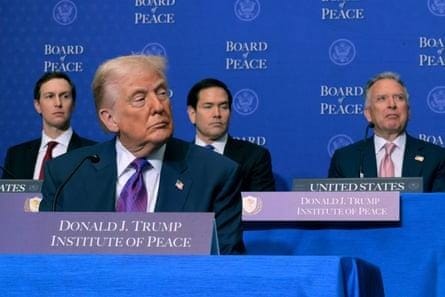
By hollowing out the State Department and replacing expertise with loyalists and dealmakers, Donald Trump has turned American diplomacy into an echo chamber, with dangerous consequences.
For most of American history, presidents have understood a basic rule of foreign policy: surround yourself with people who know more than you do.
The world is too complex and the stakes too high for improvisation. That is why the United States built a professional diplomatic corps and placed it inside the U.S. Department of State, an institution designed to provide presidents with regional expertise, institutional memory, and an understanding of how foreign governments actually operate.
Donald Trump has taken the opposite approach. In his effort to ensure loyalty across the government, Trump has systematically hollowed out America’s diplomatic institutions. Career experts have been pushed aside or fired outright. Senior positions once filled by professionals are now dominated by politically appointed loyalists.
The consequences are predictable. The Department increasingly resembles an echo chamber rather than a source of independent advice. Experienced diplomats are trained to question assumptions, test strategies against regional realities, and warn when policies are likely to backfire. Loyalists, by contrast, tend to tell leaders what they want to hear. Given this transformation, mistakes are not just possible. They are inevitable.
The Iran Miscalculation
The most dangerous example may be the administration’s war with Iran.
From the outside, the conflict appears to have been launched without a clear strategic objective or a realistic political end state. There is little evidence of a coherent diplomatic strategy or serious planning for how Iranian politics might respond.
Instead, the conflict appears to have strengthened exactly the forces it was meant to weaken. Hardliners continue to wield power in Tehran, while the regime’s security establishment, particularly the Islamic Revolutionary Guard Corps, remains firmly in control. Emerging leadership figures appear younger, more ideological, and even less inclined toward compromise with the West.
Rather than weakening the regime, the war risks entrenching it, and the wider conflict that began with the U.S. and Israeli attacks threatens to destabilize the entire region. This is precisely the kind of strategic miscalculation experienced diplomats exist to prevent.
Hollowing Out Crisis Response
The consequences of dismantling expertise are also visible in more immediate ways. After purging large numbers of consular professionals responsible for crisis response and evacuations, the United States found itself scrambling when tensions escalated across the Middle East.
Former State Department employees who had been RIFed or laid off reportedly offered to return temporarily to help evacuate American citizens from the region. They were turned away. When institutions built to manage crises are hollowed out, the result is confusion, delay, and Americans left to fend for themselves. That’s exactly what happened.
Diplomacy Is Not a Business Deal
Part of the problem is that the administration increasingly treats diplomacy like a business negotiation. Trump’s preferred envoys (figures like Jared Kushner and Steve Witkoff) approach international disputes with the instincts of dealmakers rather than diplomats.
But geopolitics does not operate on a balance sheet. Authoritarian regimes in places like Russia, Iran, or China are driven primarily by power, ideology, security fears and domestic political survival, not by investment opportunities or financial incentives.
While the Trump family’s global business interests continue to expand, the costs of this approach are borne elsewhere: by Americans placed at risk overseas, by allies who increasingly question whether Washington’s commitments can be trusted, and by a global order that depends (whether we like it or not) on competent American leadership.
Strategic Contradictions Everywhere
At the same time the administration is escalating conflict with Iran, it is simultaneously weakening other pillars of U.S. strategy. Washington is moving to ease sanctions on Russian oil even as Vladimir Putin’s government assists Tehran with intelligence and targeting of U.S. personnel! Meanwhile, American support for Ukraine continues to slow despite the fact that Ukrainian forces are fighting for all of us, to stop Russian expansionism on Europe’s frontier.
The contradictions are difficult to miss. Relieving pressure on Moscow while confronting Tehran without a clear strategy. Weakening Kyiv while claiming to defend the international order. This is not strategic statecraft. It is improvisation.
Sadly, None of this is Accidental
Authoritarian leaders deliberately weaken professional institutions because expertise creates independence. Experienced diplomats ask difficult questions. They warn about unintended consequences. Loyalists do not. When foreign policy becomes an echo chamber, the leader hears only what he wants to hear, and decisions are shaped less by national interests than by personal instinct, political loyalty, and sometimes even financial opportunity.
That is how democracies drift toward the model long favored by autocrats: government not as a system of institutions, but as a personal instrument of the leader himself.
Bruce Berton served as a U.S. diplomat for over three decades, ultimately rising to the senior ranks of the Foreign Service, including two years as Ambassador and Head of Mission at the Organization for Security and Cooperation in Europe’s (OSCE) Mission to Bosnia and Herzegovina. He is a native of the Pacific Northwest and a graduate of Pacific Lutheran University. He is a member of The Steady State.
Founded in 2016, The Steady State is a nonprofit 501(c)(4) organization of more than 390 former senior national security professionals. Our membership includes former officials from the CIA, FBI, Department of State, Department of Defense, and Department of Homeland Security. Drawing on deep expertise across national security disciplines, including intelligence, diplomacy, military affairs, and law, we advocate for constitutional democracy, the rule of law, and the preservation of America’s national security institutions.
Powered by WPeMatico