
Will “Nice” Still Play in Peoria?
Peoria once symbolized an America where political opponents still shared democratic values and basic decency. The disappearance of “Peoria Nice” reveals how profoundly American politics—and the Republican Party—have changed.
“Will this play in Peoria?” American presidents were famously known to ask this in the mid-20th century. Peoria, a small central Illinois city between Chicago and St. Louis, became a metaphor for the American heartland’s traditional decency, where political moderation prevailed, otherwise known as Peoria Nice.
Peoria is also my hometown.
Peoria politics were never all cotton candy. The usual animosities that still divide Americans were there: conspiracy-mongering; race; religion; distrust of a free press.
My first political memory, when I was six or seven in the early 50s, happened at a family picnic. An uncle, after imbibing a couple of Peoria-brewed Pabst Blue Ribbons, whispered in my ear. President Truman, he confided, was a communist sympathizer, who wouldn’t mind if the Russians or Chinese communists would sink our ships in American ports. (I remember cringing; today’s MAGA conspiracy lovers don’t.)
Those were the high days of McCarthyism, marked by true witch-hunts to root out perceived disloyalists throughout the U.S. government, Hollywood and other institutions. Midwestern racism was more subtle; it took years to fully understand. I adored my second-grade teacher. Years later, I learned that Miss Bentley had chosen to retire, rather than teach our school’s first black student. I never heard of the future celebrated comedian, Richard Pryor, who was growing up in the whorehouses on Peoria’s South Side. Nor did I know that Peoria’s first black fireman wasn’t hired until 1957. (Today, there is a Peoria Fire Station named for Edward G. Gaines, Jr.)
We youngsters were aware, sort of, of religious discrimination. The family of Betty Friedan (who in 1963 authored the groundbreaking The Feminine Mystique) couldn’t join Peoria’s country club. They were Jews. (My grandfather told me he had once voted for a Democrat, who turned out to be Catholic, but would never make that mistake again.)
Despite these animosities, Peoria Republicans in the 1950s supported President Harry Truman, a Democrat, and then Republican Dwight Eisenhower, as they led the European democracies in the struggle against Soviet aggression. So did Peoria Democrats.
President John F. Kennedy, a Democrat, was ardently for lowering global trade barriers. “Trade or die,” JFK said. We free-market Republicans agreed, enjoying the prosperity as tariffs were gradually lowered for our major manufacturers, especially the Peoria-based Caterpillar Inc. Presidents of both parties supported Peoria-area farmers, who thrived upon their access to global corn and soybean markets (markets that have been thrown into turmoil by Trump’s punitive trade wars).
I left Peoria for Washington, D.C in 1967.to work on Capitol Hill. I first worked for Republicans who considered it important to work with Democrats to get things done. Later, I worked for Democrats who valued their working relationships with Republicans. Every one of them had the character to resist untoward Executive Branch overreach.
Of course, Midwestern Democratic and Republican congressmen had their differences. But, especially when it came to respecting the rule of law, both parties learned to succeed by reaching across the aisle. A prime example: Illinois Republican Sen. Everett Dirksen worked against fierce southern Democratic resistance to help President Lyndon Johnson pass the Civil Rights Act of 1964.
It has been long in the making, but today, very sadly, Peoria Nice is gone. My hometown now is gerrymandered into two congressional districts that stretch 100-some miles, closer to Iowa and Wisconsin. Illinois’ 17th district is safe for its Democratic incumbent, who lives upstate in Moline. The 16th district, which includes the rest of Peoria, is traditionally Republican territory. Blame the Chicago Democratic machine for that. Peoria’s incumbent Republican Darin LaHood comes from the party’s traditional moderate wing; his father, former Representative Ray LaHood, served in President Barack Obama’s cabinet.
These days, as anyone with a political pulse and an iPhone is incessantly reminded, the flames of America’s heartland’s divisions are being fanned daily. Any sense of shared moral values reels from the continuing stream of crude insults that the president of the United States hurls at anyone who crosses him — especially “stupid” European elected leaders and “piggy” female journalists. Plus, the vicious graphic rants that this president constantly posts in the wee hours — pooping on his enemies, blowing them up, portraying himself as a Christ-like figure. Seventy-seven million American adults voted in the 2024 elections to put such a man in the Oval Office. And I am saddened to note that the majority of America’s Republicans say they would do it again! Peoria Nice is just a memory.
And Darin LaHood, like most House Republicans who have abandoned the party’s traditional conservatism, mostly goes along with Trump. He knows what happens to Republicans who dare defy the party’s intolerant leader and MAGA base. He has said he is “grateful” to have President Trump’s “full support and endorsement for our 2026 re-election campaign.”
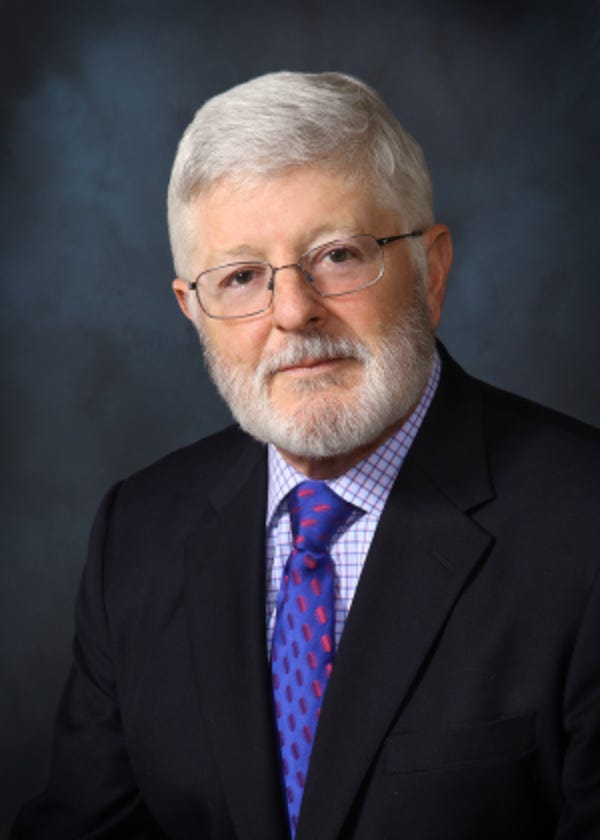
Greg Rushford is a former senior congressional aide (defense & intelligence) and a former Washington-based journalist who specialized in the nexus between national security and global trade politics. He is a member of The Steady State.
Founded in 2016, The Steady State is a nonprofit 501 (c)(4) organization of more than 400 former senior national security professionals. Our membership includes former officials from the CIA, FBI, Department of State, Department of Defense, and Department of Homeland Security. Drawing on deep expertise across national security disciplines, including intelligence, diplomacy, military affairs, and law, we advocate for constitutional democracy, the rule of law, and the preservation of America’s national security institutions.
Powered by WPeMatico