Crisis is the key test of leadership
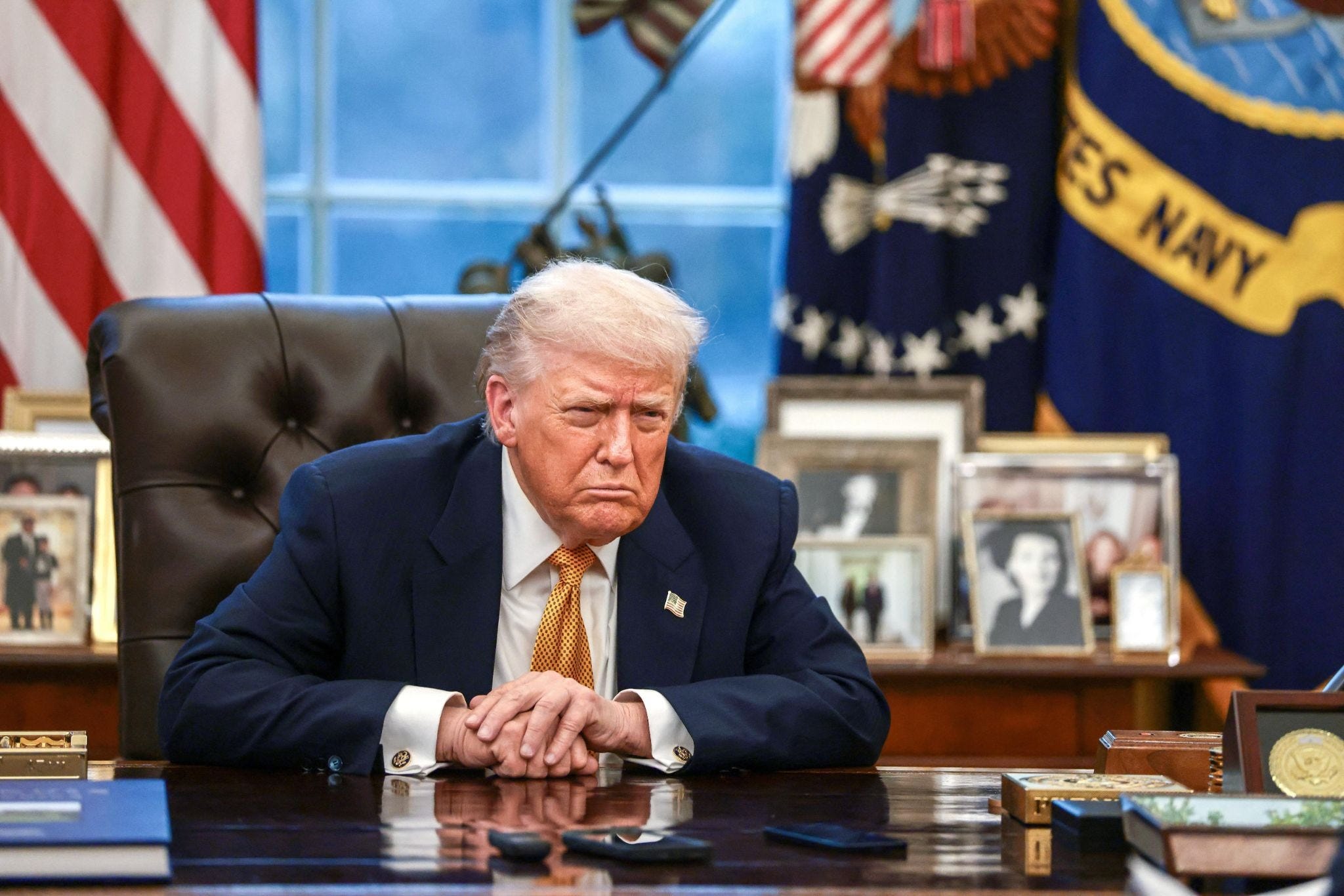
Anyone can claim to be a strong leader. Crisis tells us who actually is. The Iran conflict is exposing the consequences of leadership without the character, competence, and humility required when the stakes could not be higher.
It has been said that good leaders flourish in times of crisis. In fact, and from personal hard-won experience, I can assure you that crisis is the key critical test of leadership. Some rise to the occasion. Others fall by the wayside. Unfortunately, the latter case reflects the current reality in America. Today, it is about a war of choice with Iran that is already lost.
Like all professional military officers, I am a student of leadership. I have studied the skills needed; lived them in the field; discussed the matter ad nauseum with friends and colleagues; taught classes and given presentations on the subject; written and published about the core issues; and read a multitude of books on the topic.
Decades ago, the U.S. Army War College even sent me a copy of their draft senior leadership manual (for colonels and generals) to review and comment. I was surprised and honored by that request: At that time, I was a mere major.
What is good leadership?
President Dwight D. Eisenhower said, “The supreme quality for leadership is integrity.” There are few experienced government officials who would disagree. Based on both academics and experience, I can state without equivocation that three other essentials are also required: caring, competence, and humility. These are the benchmarks that all good leaders aspire to. Leaders that possess deep reservoirs of integrity, know their profession well (competence); are not arrogant in either word or deed (humble); and exhibit empathy (caring) in support of their teams are near universally successful in meeting any challenge and overcoming all obstacles.
The sum of all these positive attributes is often described as character. The topic is of such great importance that Retired General Stanley McChrystal devoted an entire book to the subject, which he entitled, unsurprisingly, “On Character.”
These remarkable individuals evoke profound respect, admiration, trust, and loyalty in us because they represent what is best and most noble of humankind. It could not be otherwise. Many of General George Washington’s biographers believe that our first president clearly exhibited all of these traits, which were central to his winning that most honorable appellation “Father of the country.” He is remembered and revered for his “character.”
Sadly, there appears to be no Washington-like figure inside the Beltway’s current ruling political landscape.
In fact, and tragically, what we see today is largely the antithesis of President Washington’s virtues on display: corruption, mendacity, incompetence, greed, selfishness, and arrogance all appear to reflect the rule rather than the exception within this White House. The result: nobody trusts this president, not enemies, allies, or even our own military leadership.
Tragically, these wholly negative characteristics can only evoke fear; sow anxiety; spread division; feed doubt; and fuel suspicion, no way to deal successfully with any crisis at all. The consequences of such leadership failures are measured not in headlines but in lives, resources, and our national security.
Good leadership has seldom mattered more for our nation, but it seems to have vanished like smoke in a strong wind. My maternal grandfather suggested to me many years ago, “Bobby, the fish stinks from the head down.” His wisdom continues to stand the test of time.
Originally published in the Tampa Bay Times, this essay has been reviewed and updated by the author.

Robert Bruce Adolph , a qualified Military Strategist, is a retired senior US Army Special Forces soldier. He holds graduate degrees in both National Security Studies & International Affairs and was formally trained as a counterintelligence special agent. Robert also taught university level courses in American Government, US History, and World Politics. Following his retirement from the active military, he joined the UN, subsequently seeing service in Sierra Leone, Yemen, Iraq, Egypt, Israel/Palestine, Indonesia and more, culminating in the role of Chief of the Middle East and North Africa at UN Headquarters in New York. He is the author of “Surviving the United Nations,” now out in a second edition. He is a member of The Steady State.
Founded in 2016, The Steady State is a nonprofit 501(c)(4) organization of more than 400 former senior national security professionals. Our membership includes former officials from the CIA, FBI, Department of State, Department of Defense, and Department of Homeland Security. Drawing on deep expertise across national security disciplines, including intelligence, diplomacy, military affairs, and law, we advocate for constitutional democracy, the rule of law, and the preservation of America’s national security institutions.
Powered by WPeMatico