
Follow The Money: A Slush Fund Presidency?
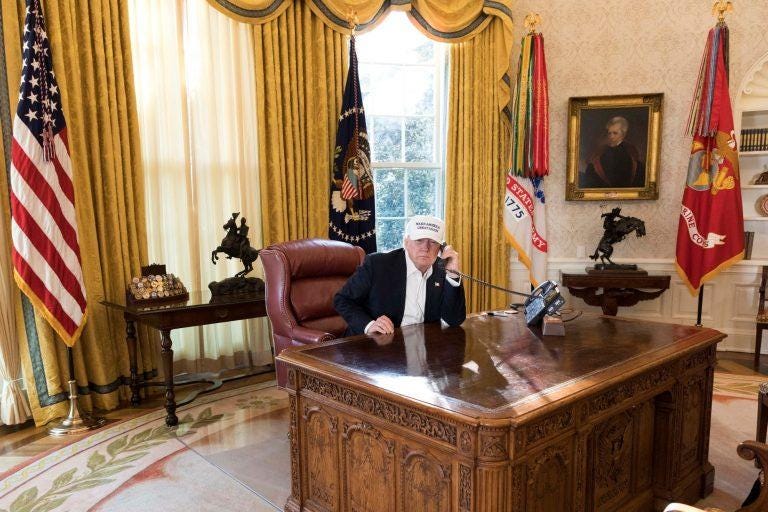
The controversy over Trump’s anti-weaponization fund is not an isolated case. It is part of a broader pattern in which money connected to presidential power is being raised, controlled, and spent through structures that operate outside traditional mechanisms of public oversight.
Trump’s $1.776 billion anti-weaponization fund has drawn outrage for good reason. Acting Attorney General Todd Blanche has told Congress that the administration is not moving forward with the fund. Yet he repeatedly declined requests to provide a written commitment that it had been abandoned. Whether that resolves the issue remains uncertain. But the deeper story is larger than a single fund.
During Trump’s second term, the administration has repeatedly created or controlled pools of money tied to the presidency without the ordinary legal, financial, and reporting controls that govern how money is raised, held, and spent under federal authority. The anti-weaponization fund is the most visible example. It is not the only one.
The Venezuelan oil proceeds structure. The Board of Peace to rebuild Gaza. The White House fund to build Trump’s ballroom where the East Wing used to be. Freedom 250, the private limited liability company established by Trump for the country’s semi-quincentennial. Different names. Different purposes. Same operating pattern. A public purpose is announced. Money begins moving. Trump or people close to him retain control. Then the public paper trail disappears.
That pattern breaks more than custom. It breaks the operational norms that allow Congress and the public to know what the executive branch is doing with money connected to presidential power. In ordinary federal operations, money leaves records. Congress appropriates it. The Treasury accounts for it. Agencies obligate it. Inspectors General audit it. The Government Accountability Office (GAO) reviews it. Courts can compel production. Reporters and investigators can reconstruct what happened after the fact. That chain exists for a reason. It is how constitutional oversight works in practice.
Trump’s financial structures repeatedly interrupt it.
Congress cannot determine how much money has entered these structures. It cannot identify where accounts are held, who has signatory authority, what governs expenditures, who approved transfers, or who ultimately received payment.
This matters not simply because secrecy invites abuse, but because secrecy itself becomes a method of power. When records are withheld, oversight stalls. Congress cannot subpoena documents it does not know exist. Inspectors General cannot audit accounts they cannot locate. Journalists cannot follow money through channels hidden from public view. Delay becomes strategy. Opacity becomes leverage.
The constitutional stakes are substantial. The Appropriations Clause gives Congress, not the President, the power of the purse. The Antideficiency Act bars executive officials from obligating government funds without appropriate authority. Federal fiscal law requires accountability for how money is handled once it enters the orbit of government action. Ethics rules govern financial relationships involving public office.
These are not technicalities. They are guardrails against a patronage government.
When a president can create financial structures around official policy while withholding the records needed to trace how they operate, those guardrails weaken quickly.
The closest modern warning is Iran-Contra. Congress prohibited appropriated funding for the Contras. Reagan administration officials responded by building an alternative financing system using foreign money, private intermediaries, and off-book transactions. Congress investigated because the executive branch had constructed a shadow funding mechanism around official policy.
Trump’s structures are different. But they trigger the same constitutional alarm: money moving around official policy outside the channels designed to make it visible and accountable.
What should happen next is not mysterious. Congress needs records. Treasury account records, and financial institution records for any funds not held by the Treasury. Donor agreements. Escrow agreements. Payment ledgers. Contract files. Disbursement approvals. Internal memoranda. Communications between agencies and outside intermediaries.
Major clearinghouse banks have records, as do any banks holding money connected to these five funds. Foreign contributors have records. Contractors have records. Traders have records. Treasury has records. State has records. Others know where this money went even if Congress does not.
Congress should compel production now—through subpoenas, hearings, GAO, Accounting Office, Inspector General investigation, and where necessary, forensic tracing through U.S. financial institutions.
The press has a parallel role. Congress can issue subpoenas. Journalists can follow the leads Congress misses, pressure agencies to answer questions they would rather avoid, cultivate sources inside institutions that possess the records, and compare what the administration says publicly against what banks, donors, counterparties, contractors, and foreign governments know privately. The paper trail here does not begin or end inside Washington. It runs through financial institutions, law firms, private contractors, foreign capitals, and intermediaries with records of their own.
No government official should ever be permitted to use the power of the United States government to create political slush funds operating in secrecy. Congress and the media should both be taking steps to strip the secrecy from all five of Trump’s visible slush funds and determine who has benefited, who stands to benefit, and why.
For A Deeper Dive, Click Here
Jonathan M. Winer is the former Special Envoy for Libya and Deputy Assistant Secretary of State for International Law Enforcement and a Distinguished Diplomatic Fellow at MEI. He is a member of The Steady State.
Founded in 2016, The Steady State is a nonprofit 501(c)(4) organization of more than 400 former senior national security professionals. Our membership includes former officials from the CIA, FBI, Department of State, Department of Defense, and Department of Homeland Security. Drawing on deep expertise across national security disciplines, including intelligence, diplomacy, military affairs, and law, we advocate for constitutional democracy, the rule of law, and the preservation of America’s national security institutions.
Powered by WPeMatico