
It’s a Free Country … Isn’t It?
By Annie Phorzheimer and Yulia Almazova
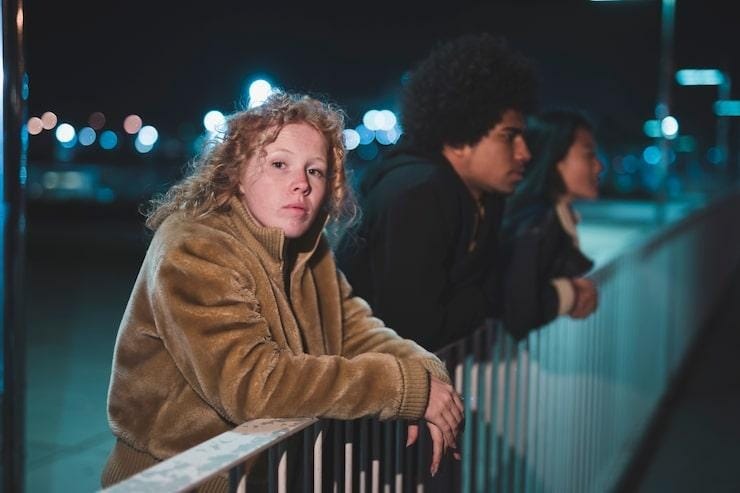
Freedom is not lost only through laws, arrests, or censorship. It also erodes when citizens begin to censor themselves, avoid dissent, and accept fear as a normal part of public life, surrendering freedoms long before they realize they are disappearing.
Annie: I was born and raised in the United States and grew up using the expression “it’s a free country” without giving it a second thought. It was the classic kid’s response when anyone questioned your choice, like a clothing or food combination that others found weird or new, or if someone told you that something was off-limits. But when I was a diplomat raising my child overseas, I noticed that, although he and his American friends used the phrase because they’d heard it from their parents, their local classmates didn’t use it at all. It is one of those cultural touchstones you don’t notice until it’s absent.
Yulia: Growing up in Russia, I never had a phrase like that to reach for. I had only ever known the concept of “freedom” and a “free country” in the context of describing life in other countries, especially the United States. That state of being was far from our reach, but we knew it was out there. I remember being 13 years old and watching an online broadcast of the 2012 Obama vs Mitt Romney debate on my laptop, alone in my bedroom. I barely understood what was being said, but somehow I remember being extremely moved by it.
I had just found out that I would soon be leaving to go to school in the United States, and I had this instant boost of excitement for my own future because I was going to have more say in it than ever before. I was going to be living in a place where I was going to be an individual and not a subject. Reflecting back, it is a bizarre worldview to develop as a child: to always be aware of just how much of your life does not belong to you, to know every limitation of your freedom; it does something to a kid.
Annie: The only limitation on my freedom was one I allowed. For 31 years working for the federal government, under six presidents, I accepted certain limitations on my own freedom because I was entrusted with a security clearance, official secrets, and representing the United States as a diplomat. I watched my words in public, and under the Hatch Act I was not allowed to be engaged in certain types of partisan political behavior. Once I retired, of course, I became a private individual again; “free”.
Yulia: I was born in Russia in 1999 – the same year Putin came into power. In many ways, I and my peers represent Putin’s legacy; one that will result in generations paying the price of sustaining an authoritarian government. The country he has been molding stands in grim contrast to what it once promised to become. In order to hold power, Putin transformed bureaucratic institutions meant to check power into instruments that served it. Courts, media, academic institutions, various state departments all had to either bend the knee to the Kremlin or suffer punitive consequences. Those who pushed back against the new government soon were portrayed as a threat to domestic security, and in just a few years, politically-motivated assassinations once again became routine.
Authoritarianism can be successful in erasing the lines between reality and propaganda. In due course, even those who are victimized most by an oppressive state become its most loyal supporters. Putin’s regime used violence on its own constituents to assert its power through fear tactics. And when that was not enough to contain the opposition and to mask the decaying economy of the state, international violence was deployed as policy; in Chechnya, Georgia, Syria, and now in Ukraine.
Annie: In the past two years, limitations on what I have always thought of as free speech are creeping into place in the United States. The second part of the expression, “it’s a free country, isn’t it?” was always meant to be a joke! Now, unfortunately, I am aware of people too afraid to march in peaceful protests; organizations that don’t sign petitions because they might want funding someday from the government; Op-Ed writers who pull political punches; my instinct to ask someone about their legal status before advising them whether or not to raise their profile in the media. And that’s just what I know about. What about the silent acquiescence all around me? I was a diplomat in countries that emerged from years of horrific repression with traumatized societies more liable to relapse, having never learned how to manage conflict peacefully, and with citizens unable to use democratic “muscles” that had atrophied through neglect.
Yulia: What you describe as creeping into the United States is, to me, painfully familiar; only further along. In Russia, fear is a learned reflex. What frightens me most is not the open repression but the silence that grows comfortable around it, and the way that a society stops noticing the shape of its own restraint.
A retired U.S. Department of State senior career diplomat with 30 years’ experience in security, human rights, and counter-narcotics policy, Annie Pforzheimer was Deputy Chief of Mission at the US Embassy in Kabul and is currently an adjunct professor of international relations. She is a member of The Steady State.
Guest Co-Author, Yulia Almazova is a Brooklyn-based journalist from Russia, blending a background in tech and political science in her reporting. She is a student at Craig Newmark Graduate School of Journalism and is a recipient of the WIRED Summer 2026 fellowship.
Founded in 2016, The Steady State is a nonprofit 501(c)(4) organization of more than 400 former senior national security professionals. Our membership includes former officials from the CIA, FBI, Department of State, Department of Defense, and Department of Homeland Security. Drawing on deep expertise across national security disciplines, including intelligence, diplomacy, military affairs, and law, we advocate for constitutional democracy, the rule of law, and the preservation of America’s national security institutions.
Powered by WPeMatico