
Jeremy Carl and the Road to Munich
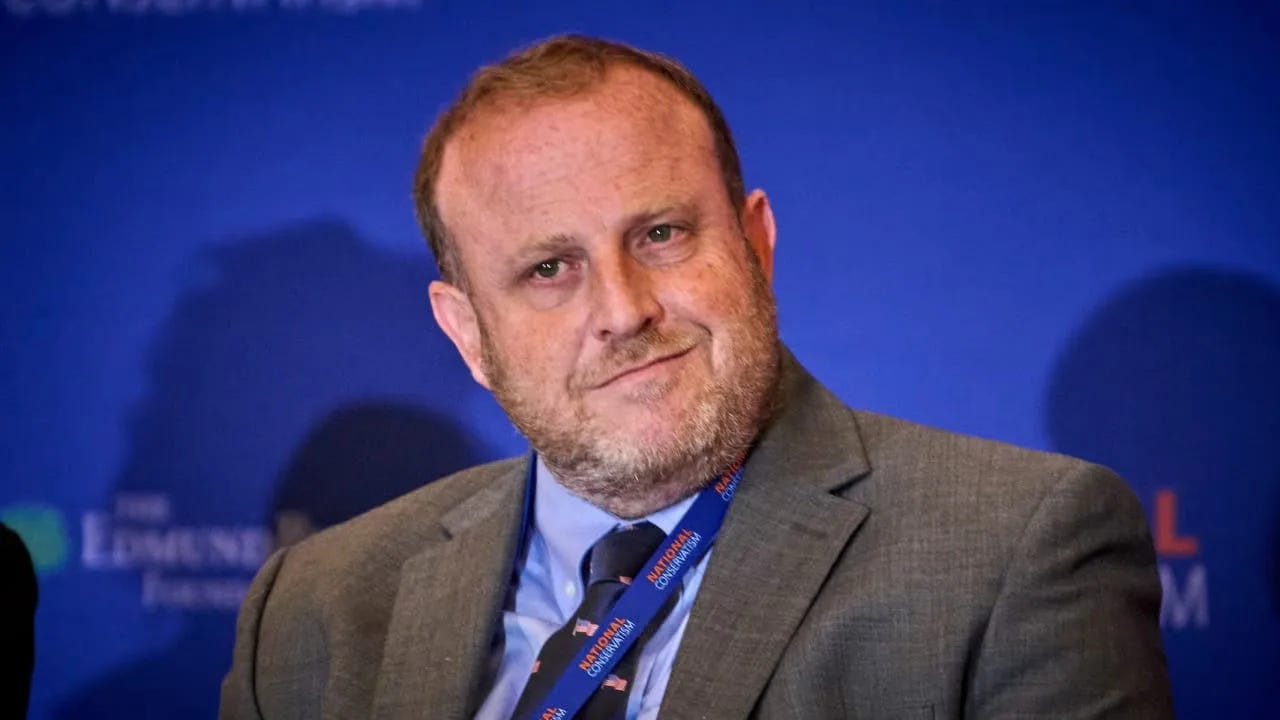
The Trump administration has from the start nominated some spectacularly unqualified people for senior jobs. A few were so preposterous, like Florida Congressman and sexual predator Matt Gaetz for Attorney General, that even the MAGA Republicans in Congress vetoed them. But others who were equally bad were duly approved and still inhabit top positions, including top national security positions. Pete Hegseth at Defense, Kash Patel at the FBI, and Tulsi Gabbard as Director of National Security come to mind.
Given those spectacular mishits, it is perhaps hard to get worked up about Jeremy Carl, the current nominee to be Assistant Secretary of State for International Organizations. This is a mid-level job that primarily deals with the United Nations. Carl’s nomination now appears to be doomed by his own intemperate remarks at his confirmation hearing, and the courage of at least one Republican Senator. But understanding why he was put forward at all reveals the mindset now at the heart of American foreign policy.
Mr. Carl has, to begin with, no background in diplomacy or foreign affairs. He is a conservative activist based at the right-wing Claremont Institute in California, where his expertise seems to be mostly about energy policy. In the first Trump Administration he served as a Deputy Assistant Secretary in the Interior Department. Just to get a sense of the difference in approach, in the Biden administration the position was filled by Ambassador Michele Sison, a career diplomat who had served previously as Deputy US Representative to the UN, among other senior jobs.
That Trump and his supporters are not exactly fans of the United Nations is not news. So perhaps picking someone who knows nothing about the UN is just a typical way to show your contempt. Past Republican presidents have often appointed people largely to underscore how little the US thought of the UN. Conservative flamethrower John Bolton, for instance, was Assistant Secretary for IO in the Bush I administration.
Still, Bolton was at least a foreign policy expert and professional. Carl is not. What then is behind his appointment? What does he bring to the table, from the MAGA standpoint?
What Carl seems to offer is his unvarnished embrace of ‘national conservatism.’ This is the shorthand for the MAGA wing that sees its mission as protecting America from the dangerous influence of internal and external forces that seek to weaken our national fundamentals. These fundamentals can be summed up in the word ‘whiteness.’ Hence our primary national security goals center around stopping and reversing immigration, except from white South Africa; supporting similar anti-immigrant movements in Europe, the white homeland; turning away from globalization and any hint of subservience to international organizations that give power to non-white peoples; and fighting to re-define what it means to be American, away from the Declaration’s creed that we are all equal, towards devotion to a largely mythic past that centers a story of white European success and expansion, downplays the contributions of African-Americans, and rejects any need to reflect on the nation’s shortcomings.
Carl is infamous for his full-throated warnings about the loss of white culture and the dangers of ‘liberal guilt.’ He has regularly endorsed the ‘Great Replacement Theory’ which says liberals are deliberately promoting immigration to make white people a minority. In dealing with the UN he could be trusted to fight tooth and nail against any loss of US sovereignty to an organization dominated by non-Western peoples.
National conservatives reject the idea that American identity is defined by an idea or commitment to a set of principles embodied in the Declaration and the Constitution. Instead they see the United States as the exemplar and defender of ‘Western civilization,’ transferred here from Europe, where it is now weak and under assault.
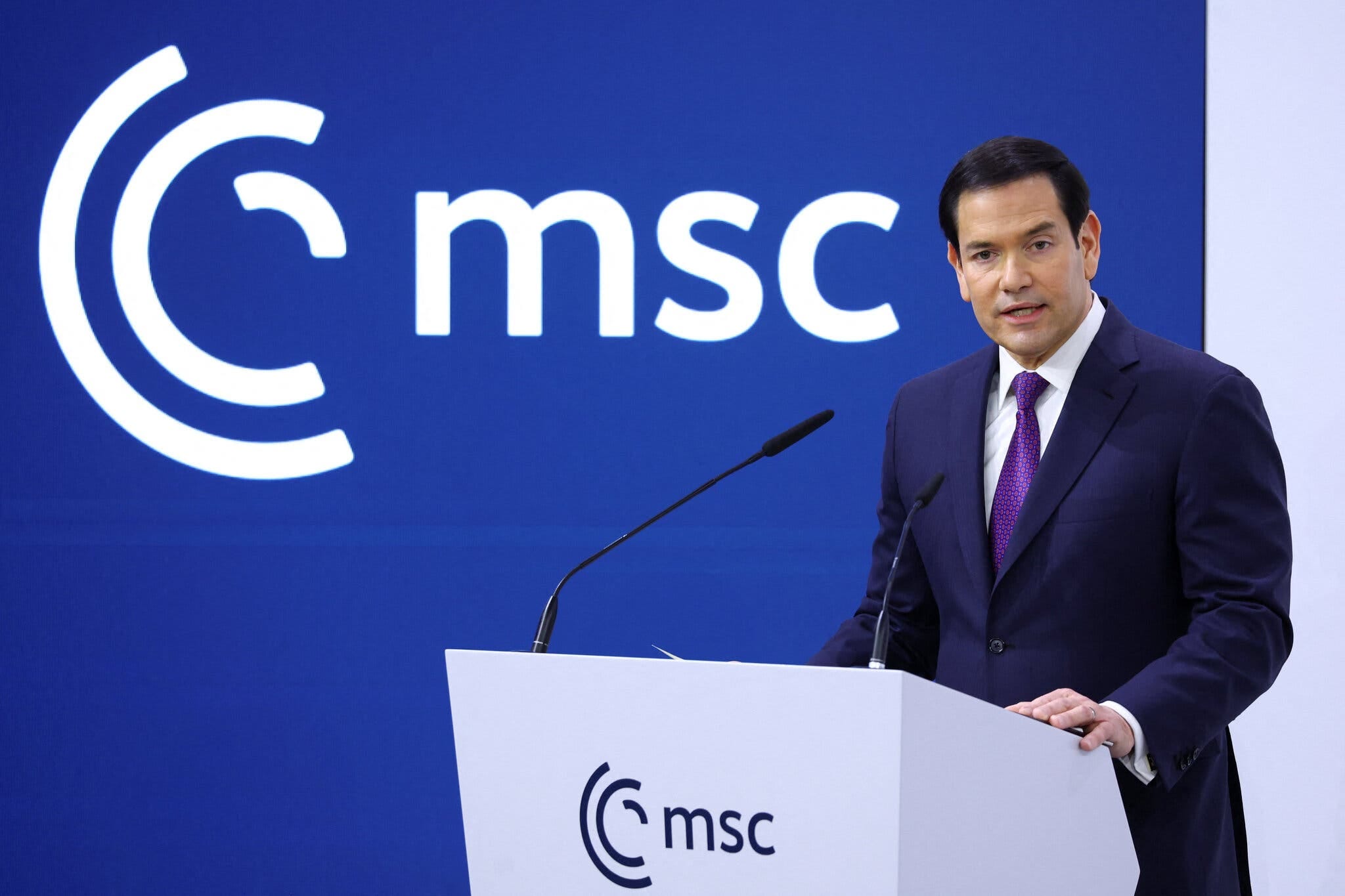
This understanding was front and center when JD Vance went to the Munich Security Conference a year ago and lambasted his European hosts for being weak on immigration and globalization. It turns out that a year later nothing has changed, even though Marco Rubio’s rhetoric on February 14 was slightly less incendiary:
“We are part of one civilization: Western civilization. We are bound to one another by the deepest bonds that nations could share, forged by centuries of shared history, Christian faith, culture, heritage, language, ancestry, and the sacrifices our forefathers made together for the common civilization to which we have fallen heir…. This is why we do not want our allies to be shackled by guilt and shame. We want allies who are proud of their culture and of their heritage, who understand that we are heirs to the same great and noble civilization, and who, together with us, are willing and able to defend it.”
Rubio, in his speech, painted a picture of American history as an unbroken extension of European strength and expansionism, from Christopher Columbus—no apologies, no sir!—through the spread of Christianity, to westward expansion across North America. The only thing to worry about in all this is the prospect of losing confidence in our right to continue to dominate, continue to expand, continue to prioritize our unique ethnicity and culture.
Rubio seems oblivious to America’s self-understanding, from its inception, as something fundamentally new, as a place and people not bound by the aristocracy and militarism and intolerance of the Old World. Would that Thomas Jefferson, an uncompromising advocate for America’s uniqueness, could return to refute Rubio and his fellow national conservatives with their nostalgia for European ways.
Europe and America have indeed grown closer over the last 250 years. This is largely because Europe has become more like us. European countries in the 19th century slowly threw off ancient aristocracies in favor of democratic institutions and guarantees of human rights. They haltingly embraced new identities tied to the creed of liberal democracy. At the same time millions of people fled from all corners of Europe to the New World, not to make America more European, but to escape from Europe’s miseries.
Not all of Europe, of course, moved in the same direction. In the 20th century, America stepped forward again and again and again to defend the Europe that resembled America from the Europe that didn’t: nationalist Germany, fascist Germany and Italy, the USSR. Yes, we were defending a shared tradition. A tradition largely made in the USA.
Carl may be rejected. But the national conservatism he represents is alive and well in the Trump administration. It is a dangerous and deeply un-American view, a view ironically resembling the blood and soil nationalism that flourished in the parts of Europe Americans sacrificed so much to oppose.
Adam Wasserman is a retired CIA analyst with experience on failing democracies in the former Soviet Union, the Middle East, and Southeast Asia. He served on the State Department Policy Planning Staff, the CIA Red Cell, and the National Security Council staff. He is a member of The Steady State.
Founded in 2016, The Steady State is a nonprofit 501(c)(4) organization of more than 390 former senior national security professionals. Our membership includes former officials from the CIA, FBI, Department of State, Department of Defense, and Department of Homeland Security. Drawing on deep expertise across national security disciplines, including intelligence, diplomacy, military affairs, and law, we advocate for constitutional democracy, the rule of law, and the preservation of America’s national security institutions.
Powered by WPeMatico