The Gateway Drug to War in Iran: How America’s “War on Narco-Terrorism” Became a War on Law Itself
Under the banner of “narco-terrorism,” the U.S. has embraced a doctrine of extrajudicial violence that weakens both the rule of law abroad and constitutional restraints at home.
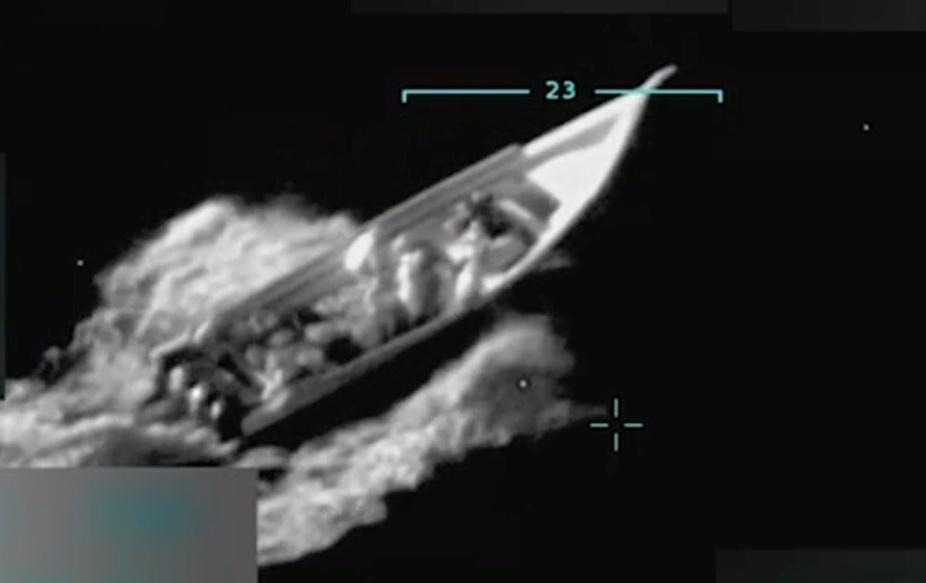
Every week or so, brief new blurbs appear in print and cable news shows – such as “US strikes alleged drug boat in the Pacific, kills two” – and then coverage moves on to larger conflicts on bigger global stages. But these brief stories actually are related to those larger conflicts; let’s go back and remember how we got here.
Using the U.S. military to kill suspected drug traffickers without detention or trial, which started in September 2025, was a “starter drug” for our current wanton disregard for international norms of minimal use of force or clear definition of ‘enemy combatants.’
Why is our nation still committing extrajudicial killings, basically murdering people at sea, and what does it mean for our democracy and national security? Without the permissive response that this Administration received when it first started violating clear international laws, would our world be different today?
As of May 5, the U.S. military had publicly claimed striking 53 boats and killing 188 people: a running tally is maintained by Airwars.org. After reporting a strike and resulting deaths, the U.S. generally has not provided further information about the evidence that provoked the strike, what was found in the wreckage, or potential linkages between those boats and larger trafficking organizations in the origin countries or in North America and Europe.
The executive branch has offered various justifications for this series of military actions, now in its eighth month, with no formal objection by Congress or much public reaction in the United States. These justifications center on defining drug cartels as terrorist organizations and calling drug couriers terrorists who are assaulting the United States and causing US deaths through overdoses. There is no clear rationale offered as to why lethal force is needed if no imminent danger is posed and other options (such as non-lethal disabling of the boat or warning shots) have always been available. In fact, legal experts have made it clear that these actions are better described as extra-judicial killings, because under both U.S. and international law, the military cannot be used to kill civilians for committing non-lethal crimes such as smuggling.
Some in the US military have questioned these actions and lost their jobs. In December, Southern Command head Admiral Alvin Holsey was forced to retire, reportedly for objecting to the lethal strikes.
The boat strikes fail even to achieve their ostensible purpose of stopping the flow of drugs to the United States. Evidence from survivors, and from washed-up remains on the shared Colombian-Venezuelan Guajira Peninsula, indicates that many of these may have been simple fishing boats or else boats running marijuana to neighboring islands. It’s unlikely that significant methamphetamine or cocaine cargoes would be sent on boats too small to have had any chance of reaching the United States.
None of this makes strategic sense. The Administration’s National Security and National Defense strategies emphasize the importance of the Western Hemisphere to U.S. interests and security, yet we are raising the political cost of securing Latin American alliances. We damage our broader security interests: Colombia and the United Kingdom (with significant presence in the Caribbean) have both suspended some counternarcotics intelligence-sharing over this issue. Worldwide, U.S actions grant tacit permission for China to sink vessels in the high seas in defense of whatever it chooses to define as terrorism or criminal behavior. And we can’t discount the risk to American citizens traveling abroad that our refusal to respect international norms entails: Our citizens will be subject to whatever rough justice any country chooses to mete out – as long as it’s in international waters.
Meanwhile, the United States’ reputation as a violator of international laws is taking shape. In January 2026, families of two Trinidad fishermen killed in a boat strike filed a lawsuit in Massachusetts against the United States government, using two federal statutes: the “Death on the High Seas Act” which allows family members to sue for wrongful deaths occurring on the high seas, and the Alien Tort Statute, which allows foreign citizens to sue in U.S. federal courts for violations of well-recognized human rights norms. And in response to a petition filed last December by a Colombian family, in March the Inter-American Commission on Human Rights held a hearing questioning the legality of U.S. actions. At that hearing, the U.N. Special Rapporteur for protecting fundamental freedoms while countering terrorism accused the U.S. of “lawless violence that flagrantly violates human rights, in its phony war on so-called narco-terrorism,” stating that the portrayal of suspected drug traffickers as responsible for “speculative drug overdoses” did not constitute a “permissible law enforcement action in personal self-defense or the defense of others.”
We have watched Congress repeatedly abrogate its responsibility to restrain the Executive’s use of force overseas. After failing to do so regarding the boat strikes, Congress remains mute regarding the extrajudicial rendition of the former Venezuelan president. It is no wonder that Congress is having difficulty remembering its War Powers Act responsibilities with respect to Iran.
These military actions are a human, legal, and security disaster, and are being conducted in a manner that is incompatible with our democracy, norms, and, likely, constitution.
We must not turn away from reports of yet more deaths. The point may never have been the drugs or the lives. It was the normalization of rhetoric that can be turned against any of us, lethally, without due process of law. And that’s just plain frightening.
A retired U.S. Department of State senior career diplomat with 30 years’ experience in security, human rights, and counter-narcotics policy, Annie Pforzheimer was Deputy Chief of Mission at the US Embassy in Kabul and is currently an adjunct professor of international relations. She is a member of The Steady State.
Luis G. Moreno, former U.S. Ambassador to Jamaica, with a 35-year career, spanning Latin America, the Caribbean, the Middle East and Europe. He is a member of The Steady State.
Founded in 2016, The Steady State is a nonprofit 501(c)(4) organization of more than 400 former senior national security professionals. Our membership includes former officials from the CIA, FBI, Department of State, Department of Defense, and Department of Homeland Security. Drawing on deep expertise across national security disciplines, including intelligence, diplomacy, military affairs, and law, we advocate for constitutional democracy, the rule of law, and the preservation of America’s national security institutions.
Powered by WPeMatico