America Last: Trump’s Trade Tantrums are Weakening U.S. Influence, and the World is Moving on Without Us
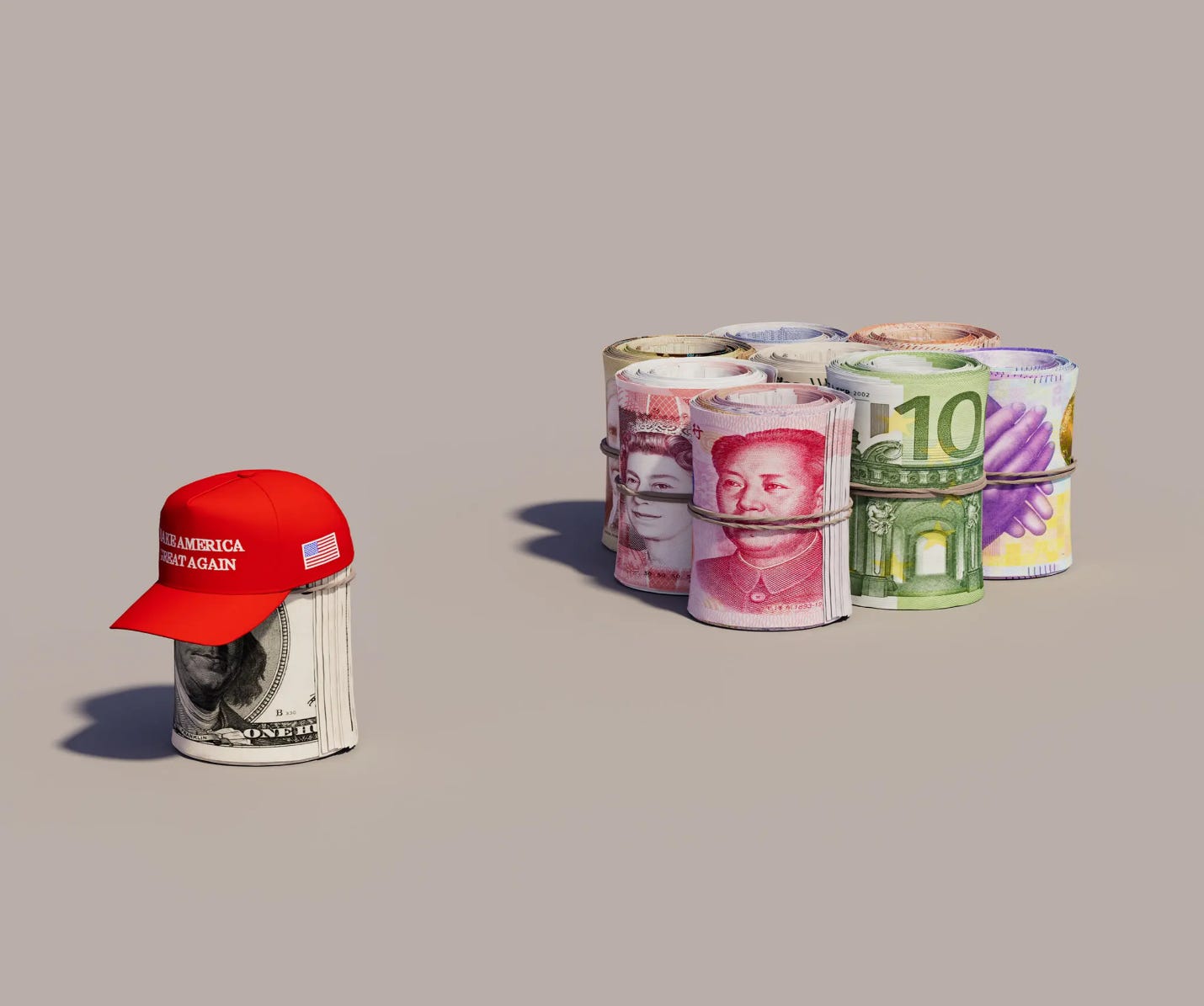
Contrary to the views of some in this administration, American power was never just about tanks, missiles or aircraft carriers. It was about trust. For decades, allies believed that the United States might be imperfect, sometimes frustrating, often slow but ultimately serious. That, when Washington made commitments, it meant them. That American leadership, while messy, was anchored in strategy rather than impulse.
That assumption is now collapsing in real time. Under Donald Trump, U.S. foreign economic policy has devolved into a series of public tantrums: tariff threats issued on a whim, allies treated like adversaries, and complex global relationships reduced to autocratic personal slights and wounded pride, where fealty to the dear leader is all that matters.
But while Washington lashes out, the rest of the world is doing something far more consequential. It is making plans, and doing so without us.
While Washington Postures, the World Partners
While the U.S. was removing Nicolas Maduro from Venezuela (more on that below), the European Union finalized a sweeping free trade agreement with four Latin American countries, including Brazil, by far the continent’s largest economy. After decades of negotiation, the deal lowers tariffs, expands market access, and deepens economic integration between two regions that understand the value of predictability.
This is precisely the kind of agreement the United States once championed, not only to grow markets but to shape geopolitics. Trade was never just commerce. It was leverage, alignment, and influence. Today, Washington is nowhere to be found. Instead of helping write the rules of the global economy, the United States is watching from the outside while others do it.
Even Our Closest Allies Are Hedging
Nowhere is this more alarming than in North America itself. As Trump renews tariff threats against Canada, one of America’s closest allies and largest trading partners, Ottawa has begun insulating itself from U.S. volatility. Canada and China have reached a new trade arrangement easing restrictions on agricultural exports and electric vehicles, protecting Canadian industries from the uncertainty created by Washington’s unpredictability.
This is not an ideological alignment with Beijing. It makes business sense. When the United States weaponizes trade against friends, those friends do what rational actors always do: they diversify their risk. And in a quiet, deliberate and possibly permanent way, the U.S. loses influence.
Back to Venezuela: Transaction Without Strategy
The same absence of vision is evident in Venezuela.
The administration trumpeted the capture of Maduro as a geopolitical victory, yet left the same corrupt system largely intact, with no credible plan for democratic transition, economic recovery, or regional stability. U.S. engagement now appears focused almost entirely on oil access, reinforcing the perception that American policy is transactional rather than strategic.
Latin American governments are watching closely. The lesson is unmistakable: U.S. involvement is episodic, personality-driven, and untethered from long-term commitments. So they are planning accordingly, with trade agreements and investment partnerships that will increasingly exclude Washington.
BTW, Tariffs Don’t Punish Foreign Countries, They Punish Americans
At the core of Trump’s trade worldview is a stubborn fiction: that tariffs are paid by other countries.
A new economic study confirms what economists have long known. Tariffs are overwhelmingly paid by American consumers and American businesses (at a rate of 96%). They function as a tax, raising prices, distorting supply chains, and draining purchasing power from households already under strain.
The rhetoric is nationalist. The result is self-inflicted economic harm. Protectionism may sound tough, but in Trump’s America, it weakens the country it claims to defend.
Playing Directly Into Putin’s Hands
The damage extends well beyond the Western Hemisphere. Trump’s tariff threats against European allies, combined with his fixation on Greenland and open contempt for multilateralism, undermine NATO unity at the precise moment it matters most.
Every trade fight weakens political cohesion. Every insult erodes trust. Every manufactured grievance distracts from the collective challenge posed by Russia. From Moscow’s perspective, this is not chaos. It is an opportunity.
Trade Is Security, Whether We Admit It or Not
Trade policy is not separate from national security. It is one of its foundations. For generations, the United States used economic integration to reinforce alliances, stabilize regions, and extend influence without firing a shot. That system was imperfect, but it was intentional. Trump has replaced it with impulse. There is no articulated strategy. No theory of influence. No sense of what comes next. Only the belief that threats alone will compel loyalty.
Sadly, none of this is accidental. The hostility toward alliances, the disregard for rules, and the insistence on personal dominance are not flaws in Trump’s approach; they are its defining features. Abroad, he treats treaties as inconveniences and partners as subordinates. At home, he proposes to do the same to courts, Congress, and the civil service.
The through line is unmistakable: a belief that power should flow from loyalty to the leader, not adherence to institutions. Foreign policy and trade chaos are not distractions from his authoritarian ambition. They are its clearest preview.
The world is not abandoning the United States. It is adapting to an America that no longer has a plan beyond the fantasies of a wannabe dictator. And once countries learn to live without American leadership, they may not feel compelled to invite it back.
Bruce Berton served as a U.S. diplomat for over three decades, ultimately rising to the senior ranks of the Foreign Service, including two years as Ambassador and Head of Mission at the Organization for Security and Cooperation in Europe’s (OSCE) Mission to Bosnia and Herzegovina. He is a native of the Pacific Northwest and a graduate of Pacific Lutheran University. He is a member of The Steady State.
Founded in 2016, The Steady State is a nonprofit 501(c)(4) organization of more than 360 former senior national security professionals. Our membership includes former officials from the CIA, FBI, Department of State, Department of Defense and Department of Homeland Security. Drawing on deep expertise across national security disciplines including intelligence, diplomacy, military affairs and law, we advocate for constitutional democracy, the rule of law and the preservation of America’s national security institutions.
Powered by WPeMatico