
Autocrats and the Broken Window Effect: Global Edition
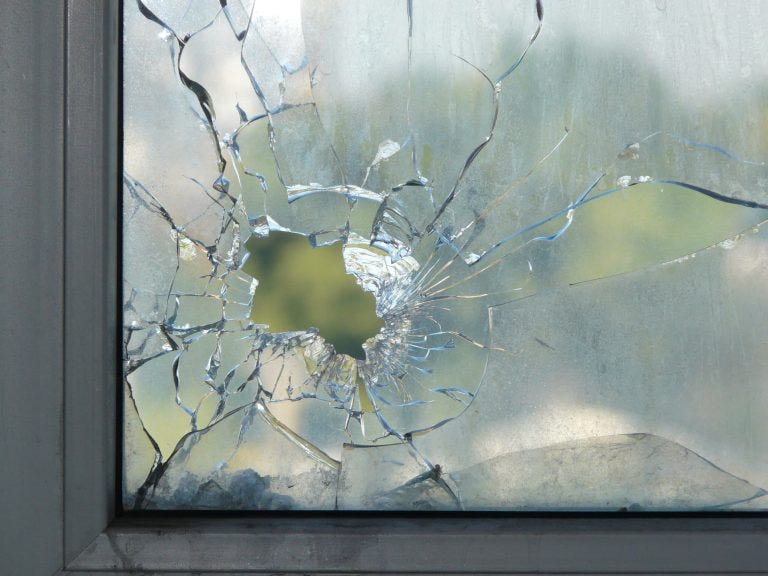
Applying the “broken windows theory” to international relations seems appropriate in this moment of riotous disorder – at least to explain why the weakening of the legal and customary architecture of the system in the hands of autocrats has so profoundly impacted individuals caught up in violence that they never wanted .
The broken windows theory states that visible signs of disorder and misbehavior in an environment encourage further disorder and misbehavior, leading to serious crimes. The principle was developed to explain the decay of neighborhoods, but it is often applied to work and educational environments.
When I tell my students that the international order is anarchic, with no supreme entity that has enforcement capability, they are skeptical of the utility of treaties, norms, and other kinds of moral codes. When those tools are withdrawn, however, we see that they have more psychological power than we had imagined. That is why they are under attack by autocrats around the world.
A high point of post-World War II international cooperation and rules-based order might be marked by the “Responsibility to Protect” (R2P) doctrine, enshrined in the 2005 UN World Summit agreement. The nightmares of the 1990s – Rwanda and the Balkans – had given birth to the idea that an international obligation existed that was even more compelling than the absolute sovereignty of nation states to do whatever they wanted. R2P exhorts national leaders to never carry out atrocities against their own population; to protect parts of their population from other parts seeking to harm them; and if national governments fail then other governments should help populations in grave risk.
Within a decade, as the Syrian war metastasized and Russia regretted supporting international intervention in Libya, the R2P doctrine took a knee and has not recovered. Now, two decades later, aggressive war and attendant harm to civilian populations is happening in Ukraine, Gaza, Iran, Sudan, Lebanon, the Democratic Republic of the Congo, Afghanistan, and elsewhere. Patients dying in hospitals; homes reduced to rubble.
In this moment of extremis, governments in the United States, Russia, Israel and Pakistan, to name only a few, are not only ignoring the “R2P” doctrine, but going even further and degrading longer-established international humanitarian law. International humanitarian law exhortations to belligerent nations convey what they should not do: targeting medical and other civilian facilities, cutting off clean water and energy to entire populations, and harming prisoners of war. Now, all are now looking like checklists.
The Geneva Convention and Protocols date to 1949. While there has never been an enforcement mechanism, they were observed more carefully in the past. What has changed is the concept of obedience to norms which grew out of the horror of World Wars I and II. Those in power in the U.S. are joining what we used to call pariah states in arguing that these rules are against the national interest, in the process affording the citizens of other nations as much attention as players give to tiny plastic pieces in the game of “Risk.”
Maybe it’s my years of living overseas as a diplomat, in war zones and countries emerging from conflict, but I am aghast every single day that a war of choice is waged in my name. Unanswerable autocrats consistently make poor choices with which the rest of us must live. War impoverishes this and future generations worldwide. It is not an effective counter-terrorism tool, but instead generates new adherents for extremist indoctrination. It degrades the environment and kills those most vulnerable to ruptures of electricity, food supplies, and clean water.
The broken windows theory posits that when someone is seen breaking the rules, the rules suffer and more destruction follows. Indeed, the people living amongst shattered glass also suffer, beyond the capacity of many of us to understand. Beset by negative reports, we are supposed to lose focus and care less. Those of us living in peace need to push back against the normalization of unchecked and illegal aggression by autocrats, and argue for the rules. Incredibly, those treaties, norms, and codes had the power to keep people alive.
Annie Pforzheimer is a retired senior Foreign Service Officer who served in the State Department for thirty years, including in Afghanistan, Colombia, South Africa, and El Salvador. She is an adjunct professor of international relations at the City University of New York and a member of The Steady State.
Founded in 2016, The Steady State is a nonprofit 501(c)(4) organization of more than 400 former senior national security professionals. Our membership includes former officials from the CIA, FBI, Department of State, Department of Defense, and Department of Homeland Security. Drawing on deep expertise across national security disciplines, including intelligence, diplomacy, military affairs, and law, we advocate for constitutional democracy, the rule of law, and the preservation of America’s national security institutions.
Powered by WPeMatico