Democracy Dies the Death of a Thousand Cuts
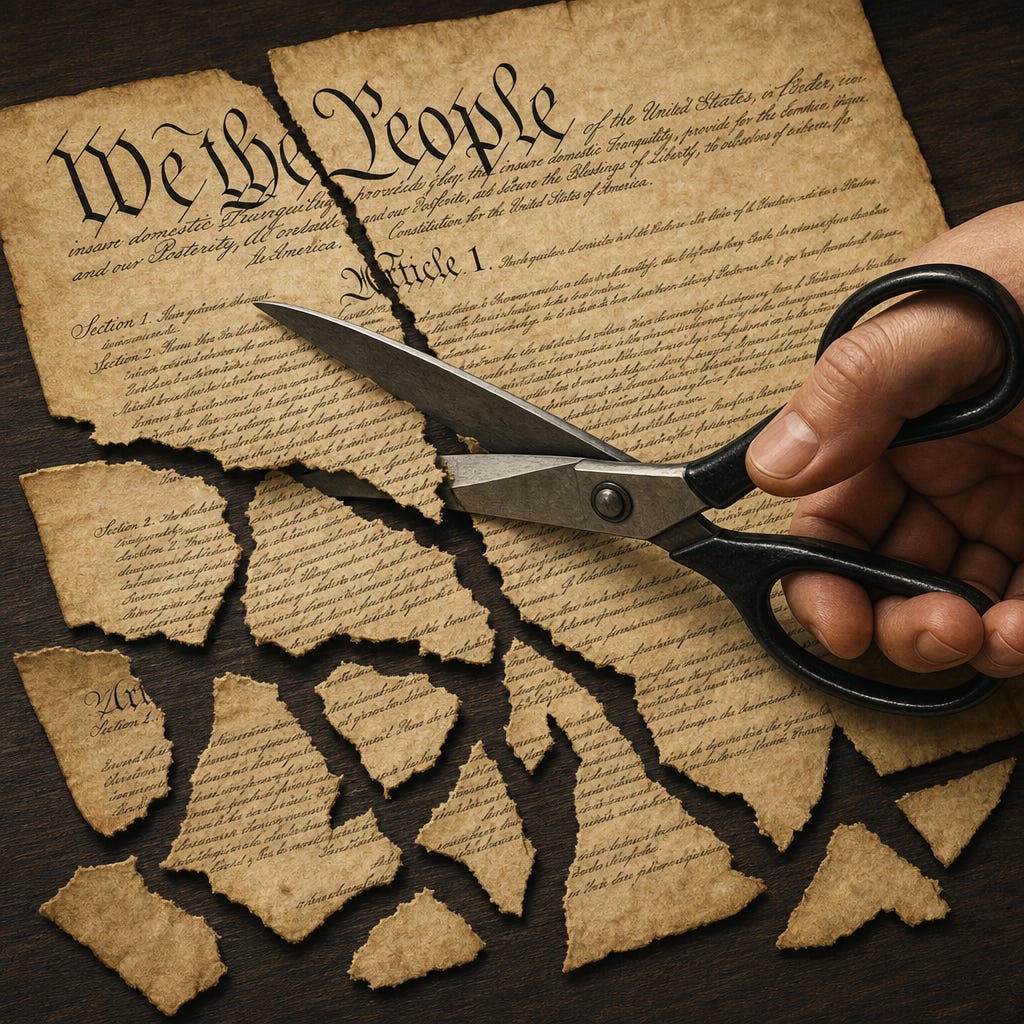
The death of democracy is rarely announced with a loud and dramatic blow. Instead, it often arrives through quiet normalization: a rule bent here, an institution weakened there. It descends upon a public so overwhelmed by spectacle that it misses the quiet activities that have undermined the democratic structure, as termites eat away the foundation of a building.
This is what makes the current moment in American democracy so dangerous. Under the second Trump administration, and in ways that often track the governing philosophy of the Heritage Foundation’s Project 2025, the most consequential threats to our democracy haven’t been only the loudest, most noticeable ones. They are also the quieter moves that make concentrated power feel routine, lawful, and eventually inevitable.
One of the subtlest shifts is the federal government’s ongoing transformation from a professional civil service into a more openly political instrument. Recent reporting on the revival of a Schedule F-style personnel framework describes a system in which thousands of career officials in “policy-influencing” roles can be stripped of longstanding employment protections and removed more easily.
Supporters call this accountability. But the democratic danger lies in what follows: when expertise is replaced by ideological loyalty, public agencies become less able to serve the law impartially and more likely to serve the preferences of one leader. Democracies depend not just on elections, but on an administrative state that can carry out policy without becoming a partisan weapon.
There has also been the slow hollowing-out of oversight. Inspectors general, internal watchdogs, and independent review mechanisms are rarely the stuff of banner headlines, but they are among the systems that keep democratic government honest. When those offices are left vacant, defunded, or politically pressured, the damage is not always immediately visible. There is no single television moment that tells the public that accountability has been weakened. Instead, wrongdoing becomes harder to uncover, retaliation becomes easier to hide, and abuses of authority face fewer internal constraints. The result is not an instant dictatorship. It is a government increasingly insulated from scrutiny.
Another subtle sign of an eroding democracy is the administration’s tendency to ignore judicial decisions it doesn’t like, either through delay, interminable and empty appeals, or outright refusal to comply. The foot dragging in complying with a judge’s order to remove Trump’s name from the JFK Center for the Performing Arts is a case in point. With three days left on the deadline the judge set for the removal of Trump’s name from signs, websites, and any other places, it delayed removing the name from the website for a week, and as of June 10, with just two days left to be in compliance, Trump’s name is still on the façade of the building.
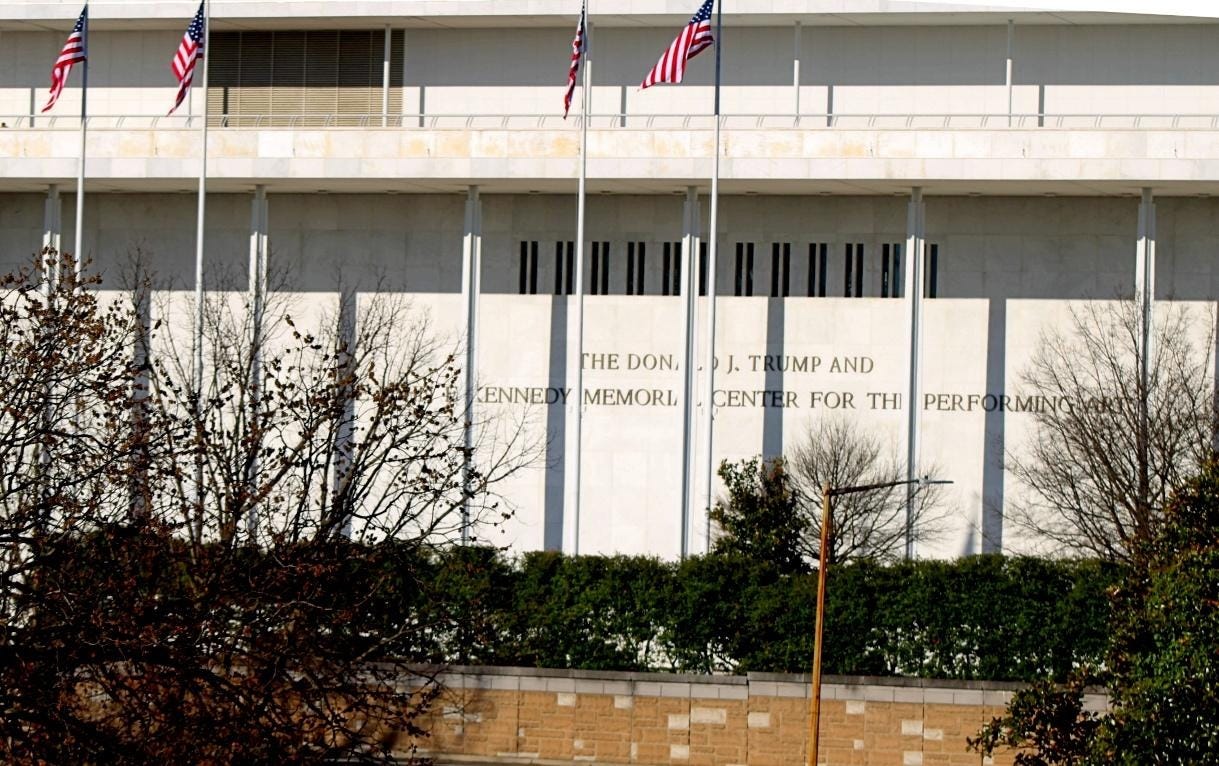
Trump’s name is still on the front of the Kennedy Center building on June 10, 2026
(Photo by Charles A. Ray)
This is where distraction becomes politically useful to a wannabe authoritarian. Democratic backsliding often advances through a flood of controversies, provocations, legal fights, and inflammatory statements that dominate public attention. Citizens focus on the outrageous because outrage is easy to recognize. But while the spotlight stays fixed on scandal, quieter changes in personnel rules, enforcement priorities, agency procedures, and legal interpretations accumulate in the background. A democracy does not become authoritarian only when elections vanish. It begins to slide when power is centralized, dissent is chilled, neutral institutions are politicized, and the public is taught to see all of that as ordinary governance.
That is why the most alarming developments may be the least theatrical. A democracy can survive loud rhetoric longer than it can survive the steady destruction of the norms that make self-government possible. Once loyalty matters more than competence, once oversight is treated as sabotage, once independent institutions are recast as obstacles, and once exceptional measures become routine, autocracy no longer arrives as an abrupt rupture. It settles in as a habit. The real warning sign is not simply that democratic rules are being broken, but that they are being rewritten in plain sight while the public is conditioned to accept the change. By the time the slide is obvious to everyone, the underlying architecture may already have been remade.
We are no longer at the top of the autocratic slide. We are careening down and the question is whether America will notice in time to avoid irreversible damage when we hit bottom.
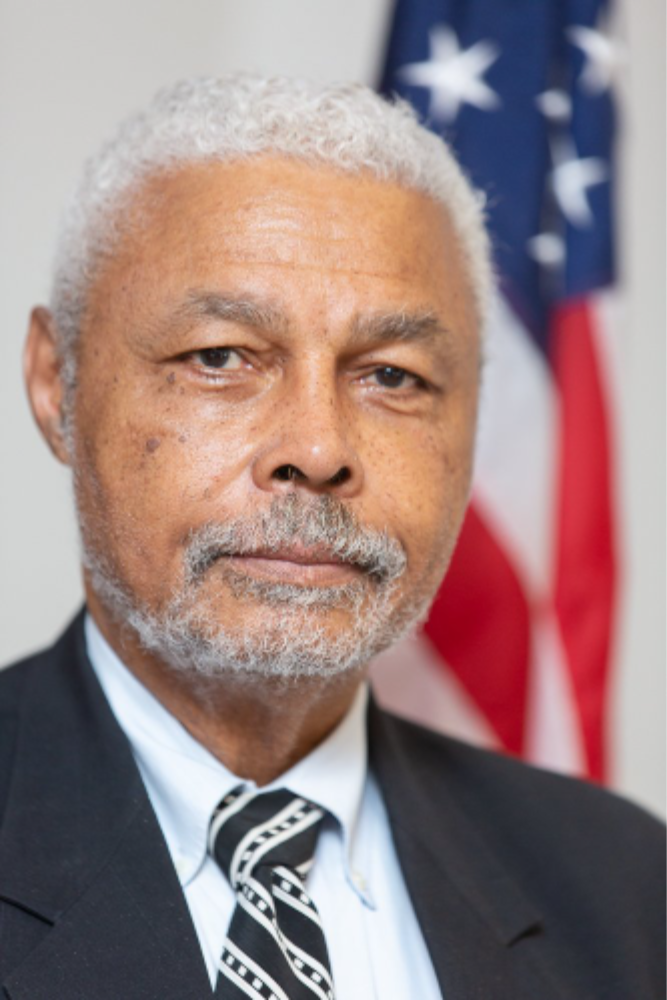
Charles A. Ray served 20 years in the U.S. Army, including two tours in Vietnam. He retired as a senior US diplomat, serving 30 years in the U.S. Foreign Service, with assignments as ambassador to the Kingdom of Cambodia and the Republic of Zimbabwe, and was the first American consul general in Ho Chi Minh City, Vietnam. He also served in senior positions with the Department of Defense and is a member of The Steady State.
Founded in 2016, The Steady State is a nonprofit 501(c)(4) organization of more than 390 former senior national security professionals. Our membership includes former officials from the CIA, FBI, Department of State, Department of Defense, and Department of Homeland Security. Drawing on deep expertise across national security disciplines, including intelligence, diplomacy, military affairs, and law, we advocate for constitutional democracy, the rule of law, and the preservation of America’s national security institutions.
Powered by WPeMatico