
The Cowardice of Congress
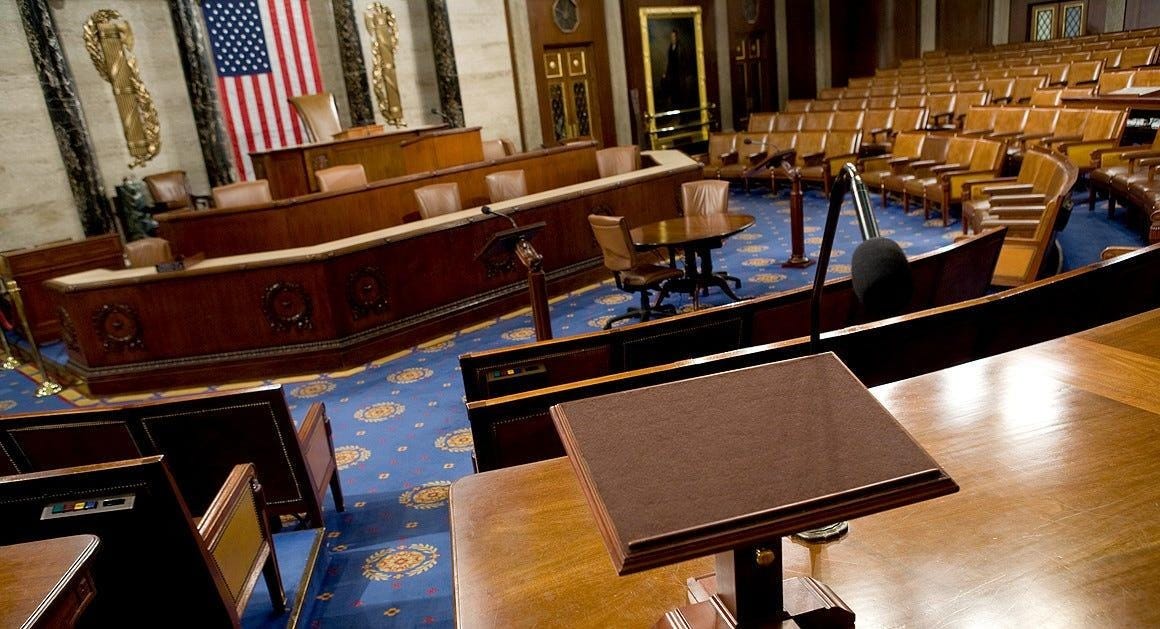
Congress was created to check presidential power. Instead, it is quietly surrendering its own.
Photo with thanks to Medium, March 2026
The most dangerous constitutional failure in America today is not simply an increasingly powerful presidency. It is a Congress that has abandoned the oversight, independence, and institutional courage the Framers expected from the first branch of government. The result is a republic whose safeguards are weakening not because they were defeated—but because they were left unused.
We are living through a time of extraordinary stress on our American republic: its institutions, its norms, and the faith Americans place in both. That stress stretches beyond our borders and is felt in other countries and institutions. Many of us feel a bit like hostages as we see this country going in the wrong direction at an ever-faster pace. The Constitution set forth checks and balances exactly for this situation. It does not have to be this way.
The Constitution
After years in public service, working hard like other public servants to make America what it can be, it is galling at best when those elected by their constituents seem to be content to do as little as possible to save this country, and ignore a fundamental aspect of the Constitution itself: that Congress is meant to check and balance the President.
Legislative oversight is one of the foundations meant to safeguard all Americans against tyranny. In this 250th year of a country born out of the desire to prevent any person from being another King over America, the congressional majority is doing the exact opposite, leaving the rest of America shaking our heads in confusion.
The Framers of the Constitution crafted the presidential responsibilities with modesty, deliberately making the powers of the President in Article II more limited than those of Congress in Article I. That was done for a reason. Congress, the courts, and the President are to keep the American experiment intact and balanced. However, executive power has expanded over time. And, in the last 18 months, has burgeoned while Congress has quietly allowed its own authorities to be taken by the executive. Even the Supreme Court, which is not known for opposing President Trump’s actions, has had to remind Congress of its powers under Article I, due to Congress’ lack of challenge to the President. Maybe a short civics class could be helpful?
The Cowardice of Congress
This moment is not just about a constitutional debate over the scope of executive power. It is also a crisis of representation, where those charged with speaking and acting on behalf of everyday Americans are hesitant to do so. When leaders of Congress place party, profits, or personal safety above accountability to the public, the balance of power shifts and our system of checks and safeguards frays.
This is not a partisan matter. It is a matter of civic responsibility. Every senator and representative swore an oath to defend the Constitution. Defending the Constitution does include ensuring that the executive branch works on behalf of the public. It does require standing up for your constituents’ economic, political, and civil rights. And it does require guarding democratic norms from those who would abuse them for personal gain. When Congress acts with independence and transparency, it can right the ship.
Fortunately, we have examples of some members of Congress who understand their constitutional duty and are willing to speak out, and we can be grateful to those with the courage to do their jobs. But for the majority who would rather sit and/or defend the Executive Branch as it takes away their powers, the necessary question is: what will it take to convince them it is time to exercise their constitutional authorities?
What motivates members of Congress to act is often complex. Senators and House members are influenced in many ways: through voters, donors, and party leaders. Fear of physical violence to themselves and their families, and adverse media coverage can also play a role in how members of Congress make decisions. But then again, if it is that difficult to do what is asked of them, maybe they should not be there; instead, they should step away so others more willing to represent their constituents take their place.
No one forces anyone to run for Congress. If they are not going to do the job, then they should go home.
It is no secret that wrongdoing by the executive branch has caused direct and undeniable harm to the public. When constituents understand that they have been harmed by the lack of oversight or by executive malfeasance, they demand that Congress act. So, when is it enough?
History remembers those with the fortitude to do what’s right, and Americans want members of Congress who will fight for them.
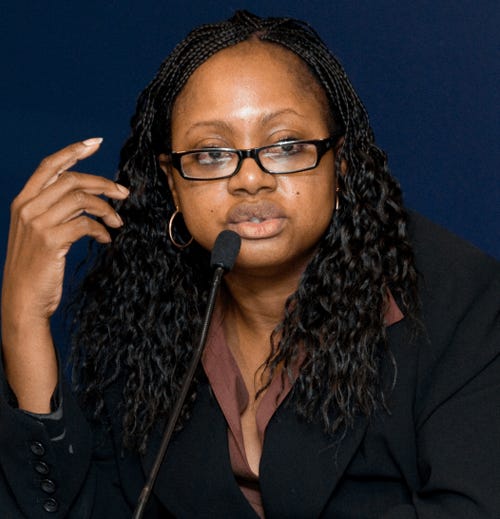
Bonnie D. Jenkins, Ph.D., is the former Under Secretary of State for Arms Control and International Security and has 22 years in the Air Force and Navy Reserves, retiring as a Naval Intelligence Officer. She also served as the Coordinator of Threat Reduction Programs at the Department of State with the rank of Ambassador. She is a specialist in arms control and nonproliferation of weapons of mass destruction, as well as in public international law. She is the Founder and Executive Director of Women of Color Advancing Peace and Security. She is a member of The Steady State.
Founded in 2016, The Steady State is a nonprofit 501(c)(4) organization of more than 400 former senior national security professionals. Our membership includes former officials from the CIA, FBI, Department of State, Department of Defense, and Department of Homeland Security. Drawing on deep expertise across national security disciplines, including intelligence, diplomacy, military affairs, and law, we advocate for constitutional democracy, the rule of law, and the preservation of America’s national security institutions.
Powered by WPeMatico