
The Decisions and Consequences of War
On Saturday, 28 February 2026, President Trump declared war on Iran. He may not have been thinking about the likelihood of destabilization of that whole region. He may not have considered that attacking Iran would make oil prices, and therefore US prices for gasoline, skyrocket. He may not have wanted the attack to turn into another of the forever Mideast wars that he campaigned against and speaks about. And, he may not have considered how many US service people are likely to die as a result of his sole decision. But after only three days, each of those scenarios has begun to play out.
We join together to mourn the deaths of our service people that result from this military action. We join together to mourn the deaths of innocent Iranians and people of any nationality who will perish as a result of this action. And, it is incumbent on us all to continually question and analyze the rationale, decision-making and the consequences of both that result in these tragic losses.
The Trump administration went to war without obtaining a Declaration of War or a War Powers Resolution from Congress thereby initiating an undeclared conflict. As of March 3, 2026, Trump and his administration have given many different reasons for the attack. Per Trump himself, “They (Iran) weren’t willing to say they will not have a nuclear weapon. Very simple.” No, Mr. President, this is not simple. If, as we were all led to believe last week, negotiations were still continuing, it is not normal to begin hostilities while negotiations are underway, and it is not unexpected for one of the negotiating parties to concede a major issue until the bitter end of a negotiation.
Trump has also said that the reason for this action was regime change; killing the Supreme Leader of the country, Ayatollah Ali Khamenei, so Iranian citizens could take over their government. The Iranian Revolutionary Guard Corps (IRGC), which is tasked with internal and external security, often violently suppressing dissent, is still in place. It holds significant economic power and is expected by experts in terrorism, Iran, and the Middle East in general, to wield significant power in the new government, whatever form that finally takes. The continued presence of the IRGC is reason enough to make an Iranian citizen takeover of the Tehran government extraordinarily difficult and possibly unlikely.
Other members of the US administration have assured American citizens that the decision was taken: to eliminate the Iranian capability for imminent threats to American citizens; to dismantle the security apparatus of Iran (per U.S. Central Command); to deny Iran a ballistic missile program (per Secretary of State, Marco Rubio); and to end the program of proxy warfare in which Iran has been engaged for a very long time.
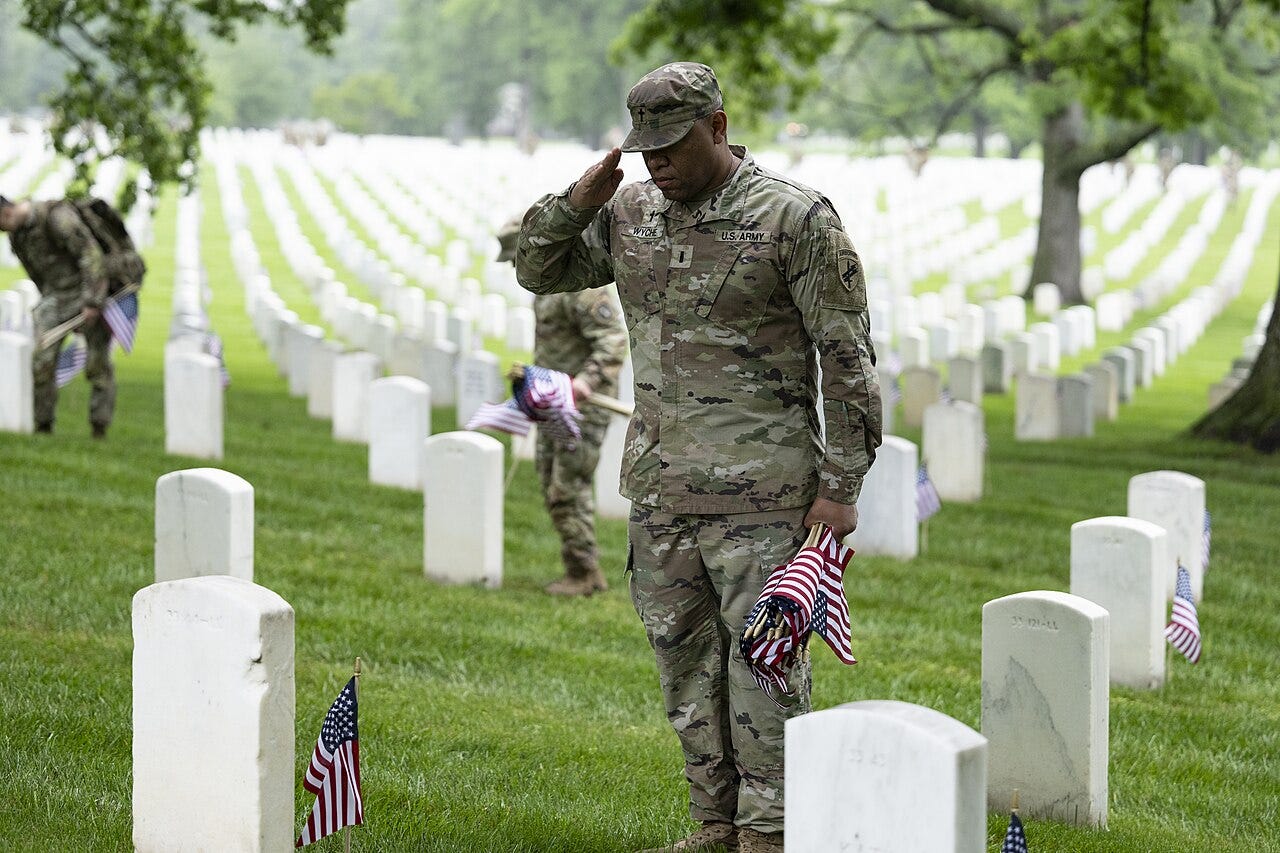
Whatever the actual reasons for the United States’ attack on Iran, and regardless of when we finally understand why President Trump took our country to war, as of this moment we know that six service members have been killed. Six of our fellow citizens serving their country have made the ultimate sacrifice
We honor all our military personnel and civilians who serve, who put themselves in harm’s way to protect our nation. We mourn those who are killed in action, grieve those who are wounded, and hold all their family members in our prayers. Our respect for all is unwavering.
And, we will continue to keep daily watch on our decision-makers in Washington who have placed our fellow-citizens in harm’s way. At moments like this, clarity of mission, constitutional legitimacy, allied support, and disciplined strategy are not abstractions. They are obligations owed to those who risk and, in some cases, give their lives in our name.
Founded in 2016, The Steady State is a nonprofit 501(c)(4) organization of more than 390 former senior national security professionals. Our membership includes former officials from the CIA, FBI, Department of State, Department of Defense, and Department of Homeland Security. Drawing on deep expertise across national security disciplines, including intelligence, diplomacy, military affairs, and law, we advocate for constitutional democracy, the rule of law, and the preservation of America’s national security institutions.
Powered by WPeMatico