
The Return of War as Plunder
By Steven A. Cash
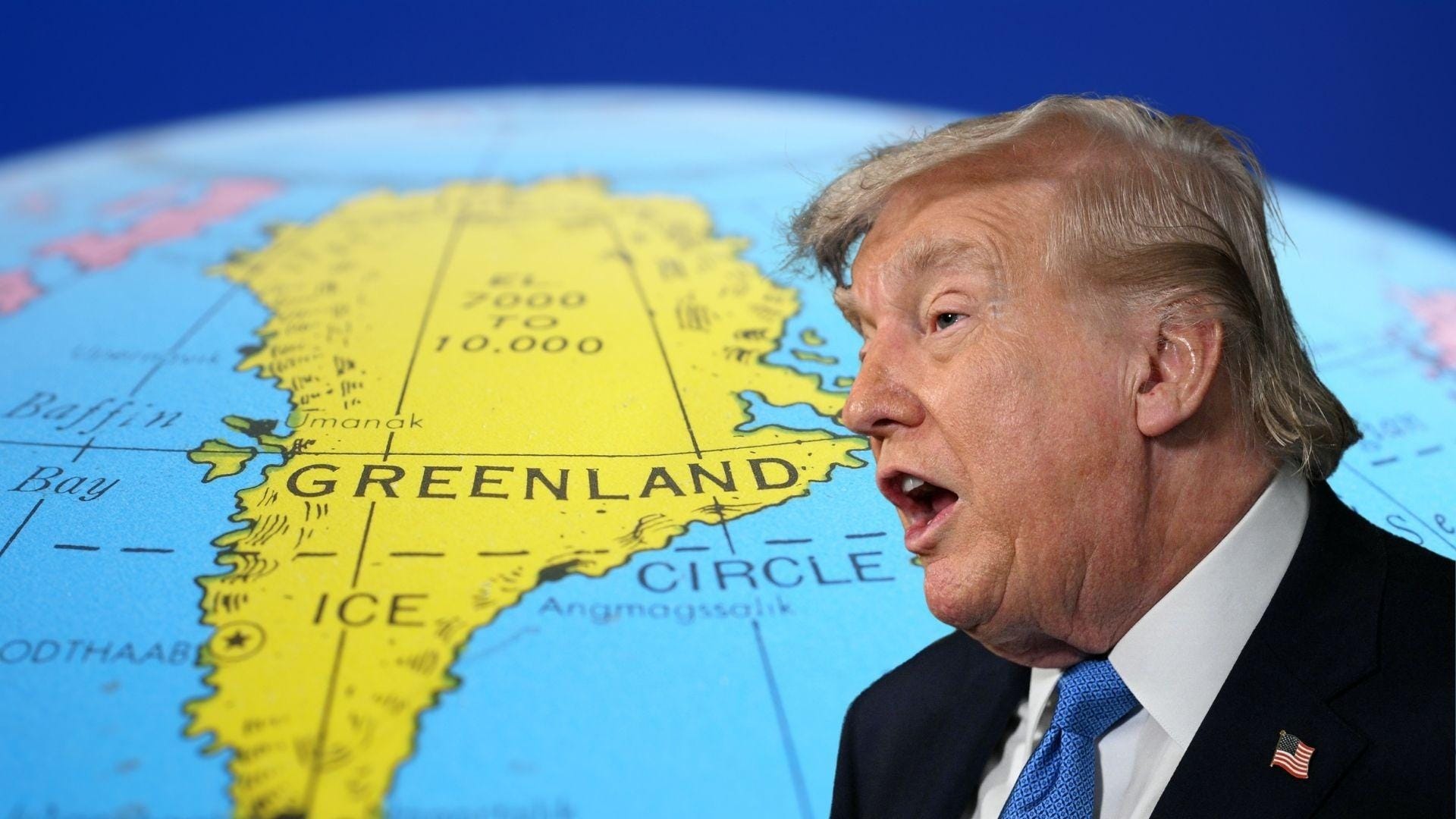
When war becomes a means of acquisition, sovereignty becomes a privilege of the strong. Trump’s transactional foreign policy risks taking America—and the world—back toward the age of conquest and plunder.
For more than a millennium, Western political thought has insisted that war requires a cause—a casus belli. The tradition stretches from Augustine through medieval just-war doctrine and into modern international law. Its standards have varied enormously, and rulers have often manipulated them. Wars have been justified as self-defense, the recovery of wrongfully seized territory, the protection of the faith, punishment for an injury or even redress for an insult. Some of those rationales were cynical or absurd. But the underlying principle mattered: organized violence could not be publicly justified simply by saying, “They have something valuable, and we are strong enough to take it.”
That principle did not end conquest or greed. Medieval kings coveted land. Colonial powers pursued gold, labor and markets. Modern states have fought for oil, strategic territory and commercial advantage. The United States is hardly innocent: profit, access to resources and corporate interests have repeatedly shaped American foreign policy.
But material appetite generally required moral camouflage. Nations claimed to be defending themselves, liberating others, preserving order or protecting civilization. The hypocrisy was often glaring, yet even hypocrisy acknowledged the existence of a standard. Leaders understood that naked plunder was not an acceptable justification for war.
After 1945, that standard became law. The United Nations Charter prohibited force against another state’s territorial integrity, permitting it principally in self-defense or with Security Council authorization. Conquest ceased to be merely disreputable; it became illegal. A country’s resources belonged to its people, not to whichever power possessed the largest army.
President Donald Trump is now attacking that consensus at its foundation. His rhetoric treats the American military less as the defender of a republic than as the enforcement arm of a corporation. Venezuela has oil; Greenland has minerals and strategic real estate. America has overwhelming military power. It’s the Art of the Deal as foreign and economic policy and in Trump’s telling, the United States is entitled to the deal, and the spoils.
Trump has spoken of Venezuelan oil as though it were American property waiting to be repossessed. He has repeatedly connected Greenland to its minerals and commercial value while declining, at points, to rule out military force to obtain it. He has even described military action in financial terms, boasting that oil revenue had already repaid its cost. These are not hostile interpretations imposed by his critics. They are the president’s own categories: assets, leverage, ownership, cost and return.
This is foreign policy imagined as a hostile takeover. Call it “U.S. Inc.:” the armed forces supply the leverage, other nations become acquisition targets, and natural resources are entered on the balance sheet. War is no longer presented as a tragic last resort. It becomes another business venture; more violent than most, but justified by the same question Trump appears to ask of everything: “What’s in it for me?”
There is a savage historical familiarity to this worldview. It resembles the raiding economy of societies in which armed groups took horses, treasure, land and captives because power itself conferred the right to possess them. Empires from Rome to the Mongols extracted tribute and carried away wealth. So did Hitler’s Germany. Trump’s innovation is not the pursuit of material advantage, which is ancient. It is his willingness to discard the centuries of moral and legal development that made naked plunder unacceptable as a public doctrine.
That distinction is important. American leaders have frequently concealed greed beneath noble language. Trump does something more dangerous: he rehabilitates greed as nobility. He does not merely tolerate the profit motive in war. He celebrates it as evidence of toughness and business acumen.
The irony is especially bitter because this administration dismisses serious discussion of economic interests in American foreign policy as “woke” or un-American. Yet Trump himself advances the crudest economic interpretation imaginable. He does not argue merely that commerce influences national strategy. He suggests that military superiority creates a commercial entitlement to other peoples’ possessions.
That is not strength. It is the ancient law of the raider dressed in a business suit.
American power has never perfectly conformed to American principles. But those principles still matter: government by consent, national self-determination, the rule of law and the conviction that “might does not make right.” A president who regards another country’s oil or minerals as sufficient reason for coercion is not defending those values. He is repudiating them.
The danger is greater than any particular barrel of oil or deposit of rare earths. Once war becomes an acceptable means of acquisition, no border is secure except by force, no alliance rests on trust, and no smaller country truly possesses anything a stronger one desires. That is the world the just-war tradition sought, however imperfectly, to leave behind.
Trump would take us back to it.
Steven A. Cash served as a prosecutor in the Manhattan District Attorney’s office before joining the CIA in 1994 as Assistant General counsel and subsequently serving as an intelligence officer in the Directorate of Operations. In 2001 he joined the Senate Select committee on Intelligence as Counsel and designee-staffer to Senator Diane Feinstein). He later served as a senior staffer in the House Select Committee on Homeland Security, the Department of Energy, the Senate Judiciary Subcommittee on Terrorism, Technology and Homeland Security and the Department of Energy. In the private sector he has advised on national security, counterintelligence, and technology policy and served on the Biological Sciences Experts Group under the Director of National Intelligence. Mr. Cash is currently the Executive Director of The Steady State.
Founded in 2016, The Steady State is a nonprofit 501(c)(4) organization of more than 400 former senior national security professionals. Our membership includes former officials from the CIA, FBI, Department of State, Department of Defense, and Department of Homeland Security. Drawing on deep expertise across national security disciplines, including intelligence, diplomacy, military affairs, and law, we advocate for constitutional democracy, the rule of law, and the preservation of America’s national security institutions.
Powered by WPeMatico