
Trump, Big Talker, Pitiful Leader, Playing With Fire
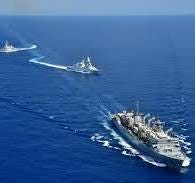
Once again, the President of the United States is contemplating the use of American military might overseas and has prepared an enormous force for attack, this time on Iran. And yet once again, despite the seriousness of doing so, he has not consulted Congress, explained to the American people why such a step might be in the American national interest, or made any effort to solicit support from either. (It is conceivable that he might attempt to make up for this lack during his State of the Union speech, but based on past behavior, the likelihood does not seem great.) These facts alone demonstrate Presidential malpractice and endanger both Americans – at home, living and working in the Middle East, and in uniform – as well as citizens of the region.
Iran, it is true, deserves little American sympathy. Since the 1979 Revolution, Iran’s leadership has chanted death to the U.S., posed a threat to neighboring Arab states, exported terrorism, sponsored proxy wars, vowed to erase the State of Israel, and assembled a stockpile of enriched uranium that has far exceeded anything necessary for, as it claims, a strictly peaceful nuclear program. Yet Iran has changed: impoverished by international sanctions and government mismanagement, its population has skewed younger (half is under the age of 35), and, as the recent mass uprisings against the theocratic regime have demonstrated, is fed up with years of unfulfilled promises of a better life. The regime’s harsh suppression of those protests, killing thousands, has demonstrated for all to see that it has nothing more to offer Iranians than more hardship and repression.
It is perhaps understandable that Trump and his people see a particular opportunity to break the regime’s grip on the country. But what we have unfortunately learned is typical of this Administration: its approach to the issue is dangerously muddled. Trump, whose record demonstrates that he favors brief, splashy actions to achieve his objectives, with the hard work of planning to deal with the consequences saved for later, has not taken the trouble to explain to Congress or the American people why he has assembled in the region an enormous force, including two aircraft carrier battle groups and land-based air assets, in the Mediterranean, in the Persian Gulf, Egypt, Jordan, Saudi Arabia, the UAE, Bahrain, Qatar, and off the Omanis’ southern coast.
We also have to ask, by what right could we take such action? Exactly what international authority would be invoked to justify it? Doubtless Israeli Prime Minister Netanyahu, who has his own agenda (but would also be putting his own people at risk if Iranian retaliation for any attack also targets Israel), has been egging Trump on, but that hardly provides a satisfactory answer.
The idea seems to be, in typical Trump fashion, to cow the Iranians into submitting to American demands to abandon uranium enrichment, send any remaining stocks overseas, abandon its missile programs, and cut off all support to its proxies in the region. Trump has threatened vaguely that “we’ll get an agreement (on nuclear issues), one way or the other.” But not only do the Iranians not seem to be following the script, the Washington Post also reveals telling American haplessness in consequence. “(Mid-East envoy) Witkoff told Fox News over the weekend that the president is ‘curious’ why Iran hasn’t ‘capitulated’ to U.S. demands, given the looming threat of a military attack. “Why, under this pressure, with the amount of sea power and naval power over there, why haven’t they come to us and said, ‘We profess we don’t want a weapon, so here’s what we’re prepared to do?’” And, yet, it’s sort of hard to get them to that place,’ Witkoff said. But it is not Witkoff’s job to be puzzled. He is supposed to know his adversary, what drives him, what his red lines are, what he can and cannot be persuaded, and what he can and cannot persuade his superiors to do. And once a negotiator understands that, it is his or her job to inform the President so that the latter no longer is forced to wonder why something has or hasn’t happened.
Does Trump think that air power and missile attacks will frighten the Iranians into “capitulation?” Does he think that force will be the last straw that breaks a weakened regime’s back? Does he think that air power alone can eliminate both the clerics and the powerful Iranian Revolutionary Guard Corps (which itself possesses great political, military, and economic power)? If so, whom, if anyone, does he foresee capable of assuming power in Iran? What kind of Iran emerges from such turmoil? And how long does Trump think force would continue to be necessary in order to bring about any of these still undefined objectives? What does Trump think the risks to the U.S. and to American lives (including Americans already in the region, or forces in combat) of what is likely to be an open-ended effort might be? Has anyone planned how to minimize or counter those risks? In short, what is the goal? And what is the price likely to be?
That same “Post” article reported that General Dan Caine, Chairman of the Joint Chiefs of Staff, has told Trump he has reservations, citing munition shortages and the increased difficulty of any military mission without the assent of friendly regional states (many of which have their own doubts and several of whom have declined to allow use of their bases in any attack). By law, the President’s chief military adviser, Caine, is supposed to voice any concerns he might have. But four-star generals don’t just salute; they also do strategy, and one hopes that Caine is raising more profound questions about Trump’s kinglike view of how to wield “his” military might.
Similarly, the civilians around Trump and Senate Republicans should be asking the same questions. But the former are at a two-fold disadvantage; reluctant to cross Trump or tell him things he might not like, they also have no experts to advise them (the normal policymaking and evaluating structures having long since been deliberately dismantled). The latter, having blotted out any existing Congressional prerogative related to war powers, has also been remarkably quiet. All seem poised to just wait and see what Trump will do and then figure it out from there.
It should go without saying that such amateurism, and Trump’s own caprice and vainglory, are extremely dangerous. And yet we find ourselves in the unfortunate position of having to say it again and again.
Tom Wolfson is a former senior U.S. diplomat who has lived and worked in six foreign countries, occasionally multiple times. His work representing the U.S. has included assignments at the United Nations, in the U.S. Congress, and with an international democracy-building organization. He is a member of The Steady State.
Founded in 2016, The Steady State is a nonprofit 501(c)(4) organization of more than 340 former senior national security professionals. Our membership includes former officials from the CIA, FBI, Department of State, Department of Defense and Department of Homeland Security. Drawing on deep expertise across national security disciplines including intelligence, diplomacy, military affairs and law, we advocate for constitutional democracy, the rule of law and the preservation of America’s national security institutions.
Powered by WPeMatico