Fearing the Stranger: The Autocratic Logic (and the Danger) of Ending Refugee Admissions
Almost one year ago, one of the Trump Administration’s first actions on Inauguration Day was to suspend indefinitely the entry of all refugees under the US Refugee Admissions Program, a statutory body established by the 1980 Refugee Act. Refugees already approved for arrival, including Afghan allies, some of whom even had plane tickets and had sold their belongings and homes, were left stranded around the world. The State Department, Department of Homeland Security, and other agencies involved in vetting and processing these cases, suspended flights, visas, and congressionally approved funds for resettlement agencies throughout the United States and even refused to provide reimbursement for already-performed resettlement work.
As a former U.S. diplomat who served in Afghanistan and now researches the situation of the country we left behind, I saw the horror of this action at close range. I had traveled to Pakistan and Qatar in early January 2025 and heard from former judges and military officials that they faced a devastating reality. They had worked in tandem with us to pursue Taliban offenders, so they could not go back. They could not go forward to the United States, even though they had been qualified as refugees under our law. And they were no longer able to stay where they were, as most countries hosting them were not offering safety or settlement.
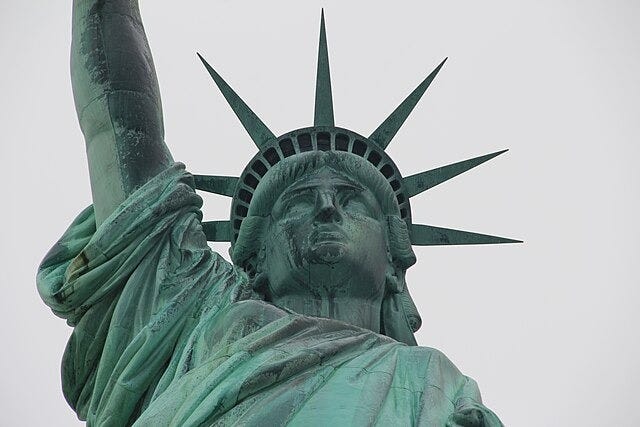
This action against refugees, besides ripping our national moral fabric (Statue of Liberty, anyone?) and giving potential allies every reason to refuse to help us fight terrorism, is yet another facet of authoritarianism.
First, using an Executive Order to enact a so-called suspension amounts to a permanent ban since it has no stipulated method of ending, violating the Constitution per a lawsuit (Pacito v Trump) filed February 10, 2025, on behalf of a group of refugees and resettlement nonprofits. The lawsuit challenges the suspension because it usurps Congressional power of spending and appropriations; the Executive Branch may not refuse to spend money already designated for a specific purpose.
Secondly, the U.S. is a signatory to the 1951 Refugee Convention, which requires states to allow refugees seeking protection to enter the country and prohibits states from sending a refugee back to a place where they will be killed or otherwise harmed. Along with the January 2025 suspension of processing, other Executive Orders and statements by the Administration have threatened to review and revoke humanitarian asylum which has been lawfully achieved. The Refugee Act, reflecting a different and generous American response to those displaced by the Vietnam War compared to those now facing danger from our Afghanistan conflict, enshrines those obligations.
Third, the Administration is demonstrating selective compliance with rulings throughout 2025 which required it to at least resettle refugees whose cases were well advanced and particularly those who had risked everything, and sold their possessions, before being ‘frozen’. In July, a U.S. District Court denied the government’s motion to dismiss the case, citing the Refugee Act, the Administrative Procedure Act (APA), and constitutional principles. But the Administration has repeatedly used legal delaying tactics and tools such as defining “refugees” only to mean White Afrikaners from South Africa. It also has used other mechanisms such as a worldwide travel ban to block refugee pathways for Afghans, Haitians, and 18 other countries, mostly African, so the lawsuit process may never restore the refugee program as envisioned by Congress.
Finally, authoritarian rule thrives on nativism, as narrowly defined as possible, with the theory that self-protection during a national emergency can – and must – override constitutional principles. This idea underpinned two occasions of U.S. national shame during World War II: internment of Japanese-American citizens, and denial of safe harbor to the Saint Louis, a ship with Jewish refugees fleeing Nazi Germany on the eve of World War II. But no national emergency could justify those actions in the past, or what is being done now to people who relied on our promise of safety. Instead, authoritarianism has come to destroy what makes America actually great, and even wonderful: our belief in the rule of law, our acceptance of our international treaty obligations, and our embrace of those “yearning to breathe free.”
Annie Pforzheimer is a retired senior U.S. diplomat who served in six foreign countries, including as Deputy Chief of Mission at the U.S. Embassy in Kabul, Afghanistan. She specialized in human rights and security issues during her thirty-year career, and is currently an adjunct professor of international relations. She holds degrees from Harvard University and the National War College. She is a member of The Steady State.
Founded in 2016, The Steady State is a nonprofit 501(c)(4) organization of more than 360 former senior national security professionals. Our membership includes former officials from the CIA, FBI, Department of State, Department of Defense and Department of Homeland Security. Drawing on deep expertise across national security disciplines including intelligence, diplomacy, military affairs and law, we advocate for constitutional democracy, the rule of law and the preservation of America’s national security institutions.
Powered by WPeMatico