When Walking Away Wasn’t an Option
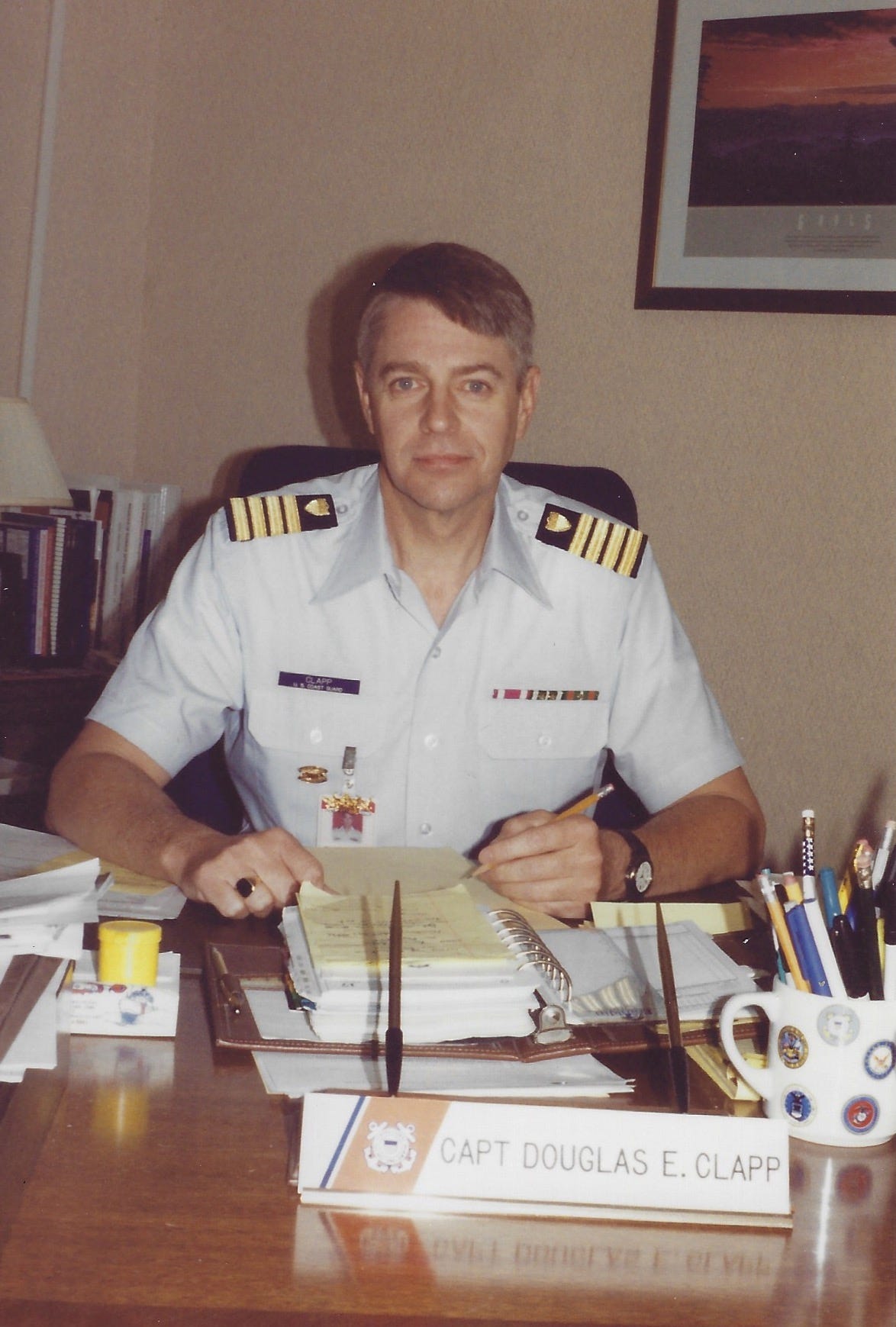
In the fall of 2001, I was approaching my 30 year active duty mandatory retirement date. I had been serving as the Deputy of the Coast Guard’s Reserve & Training Directorate at Headquarters in Washington. My fifth floor office looked out across Ft McNair to the Potomac River and the Pentagon beyond.
On the morning of 11 September, staff members rushed into my office with a report that a plane had just flown into the World Trade Center. I immediately went to our shop and watched in disbelief as the second plane flew into 2 WTC, the south tower. Returning to my office, I looked out the window and saw a plume of black smoke rise from the far side of the Pentagon. Knowing the Pentagon had been undergoing some major renovation work, I thought to myself that perhaps it was an accidental construction fire.
I was wrong.
I called my flag level boss who had left earlier for a meeting of the Guard and Reserve Component Chiefs at the Army-Navy Country Club in Virginia, just over the hill from the Pentagon. He was unreachable in the moment because communication lines in the National Capital area were immediately swamped. He later told me the third plane (AA flight 77) passed very low directly over him as he was exiting his vehicle to attend his meeting. We continued to monitor news reports as the day proceeded and it became clear this was a coordinated terrorist attack on the American Homeland. News reported a fourth plane apparently also headed for Washington had crashed in Pennsylvania.
The roads were reportedly choked with people not knowing where to flee to avoid becoming part of the next target. Rumors abounded of explosions around the National Capital Area, which turned out to be sonic booms from the combat air patrol (CAP) fighter jets that had scrambled to protect the City. Despite palpable tension and angry frustration, my staff remained in place and remarkably calm.
The events of that day caused us to quickly examine the strategic impacts on our Service missions. Defense of the Homeland was suddenly a priority and while we couldn’t abandon our port safety mission, we needed to agilely ramp up our ability to protect high value facilities/assets and waterborne commerce in our seaports from an entirely new perspective: the threat to our port security. That strategic and tactical shift was going to require major adjustments in both the employment of Coast Guard Reserve forces and throughout the Coast Guard training system itself.
On 14 September President Bush signed Executive Order 13223, allowing selective temporary suspension of mandatory military retirements. My boss asked me if I would stay on another two years beyond my mandatory retirement date to help see these changes through. I immediately agreed, reflecting that I’d served for three decades countering various threats against America, and now when the most serious of imminent threats presented themselves, I could not see walking away from serving as part of the response.
Two years later, the Coast Guard had adapted to the new threats and I moved on to a second career at the nascent U.S. Northern Command in Colorado Springs, a new combatant command with dual responsibilities of Homeland Defense and Defense Support of Civil Authorities (DSCA). The Coast Guard, cooperating with DOD, the interagency community and private enterprise, was by then far better positioned to keep American seaports secured from terrorist actors, all without significantly impeding the massive flow of commerce in our ports and waterways.
Today we face yet another rapidly changing threat picture for both the Homeland and internationally brought about by, inter alia, evolving offensive and defensive cyber capabilities and drone technology. These new threats to critical infrastructure and government and military installations will require another generational shift in our entire national defense strategy, now in the hands of a new generation of Coast Guard officers. Hold Fast.
Douglas Clapp, Captain USCG (Ret.) is a member of The Steady State. His career service in Maritime Safety & Security culminated as Deputy Director of the Coast Guard’s Training & Education System, Reserve Component, and Leadership/Diversity functions. In his post-military career, he served as Senior Analyst for the Operations Directorate, USNORTHCOM as a missions expert in Defense of the Homeland and Defense Support of Civil Authorities for emergencies and disasters.
Founded in 2016, The Steady State is a nonprofit 501(c)(4) organization of more than 400 former senior national security professionals. Our membership includes former officials from the CIA, FBI, Department of State, Department of Defense, and Department of Homeland Security. Drawing on deep expertise across national security disciplines, including intelligence, diplomacy, military affairs, and law, we advocate for constitutional democracy, the rule of law, and the preservation of America’s national security institutions.
Powered by WPeMatico