
Common Sense, Take 2: The Why Before the How- Equality of Opportunity
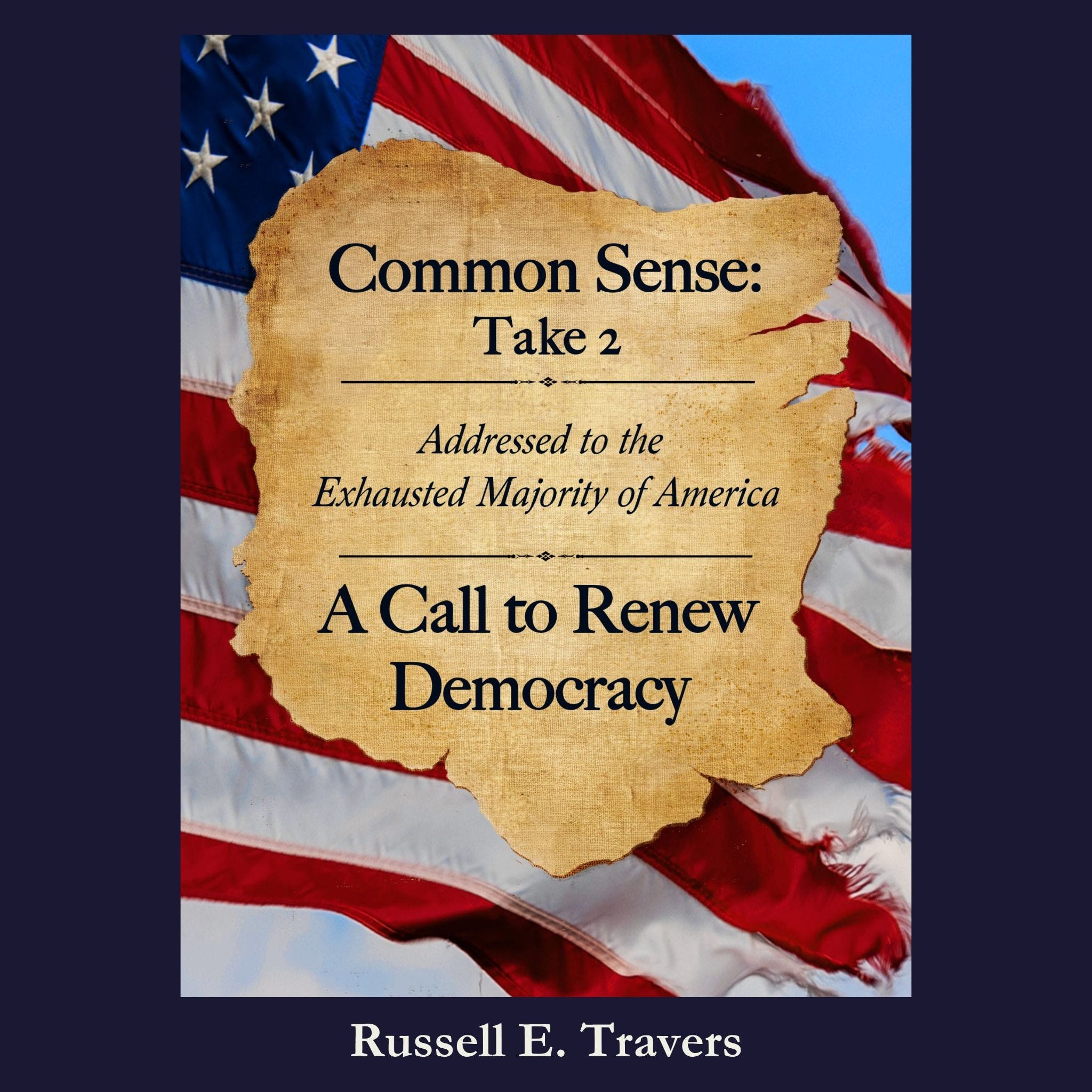
A new book, Common Sense: Take 2, A Call to Renew Democracy, contends that the United States is confronting not simply a political crisis but a deeper crisis of democratic capacity. Written by Russ Travers, a career public servant across multiple administrations who retired as Acting Director of the National Counterterrorism Center, the book focuses on the institutional, civic and cultural work needed to address this crisis.
Over a period of five weeks, members of The Steady State provide commentary on each of the book’s five themes. This essay, written by Katherine Culliton-Gonzalez, addresses the third theme: The Why Before the How- Equality of Opportunity
Harkening back to the principles embodied in the preamble of the Constitution, Russ Travers’ new book, Common Sense: Take 2, rightly calls equal opportunity “the moral heartbeat of the Republic” and “the thread that ties together justice, welfare, and liberty, and the promise of a more perfect union.” He warns that “too many Americans know that opportunity today is not equal,” and that democratic renewal will remain out of reach if the country fails to confront the inequalities that leave many Americans doubting whether the system works for them.
As a former DHS, DOJ, and U.S. Commission on Civil Rights official, I could not agree more. Our future depends on renewing trust in our democratic systems. We cannot revitalize civic engagement, the rule of law, or trust in democratic institutions while communities are targeted, dehumanized, intimidated, or excluded from the full protection and promise of democracy. I would add that we cannot ignore racism as a major fault line in American democracy. Racism was embedded in our founding, contributed to the Civil War, and necessitated the Reconstruction Amendments: the 13th, 14th and 15th Amendments. Resistance to racial integration and voting rights led to the Civil Rights reforms of the 1960s, often called the Second Reconstruction.
We may now be entering a Third Reconstruction: a moment that requires renewed attention to whether our institutions protect equal access to citizenship, democratic participation, and the promise of equal opportunity for all.
The most serious threats to democracy cannot be separated from questions of inequality and race. Today, billionaires manipulate our government, and President Trump’s allies evade accountability for political violence–including the events of January 6, 2021, which were steeped in antisemitism and racism. Rather than protect the rule of law, DOJ has increasingly yielded to the president’s demands, while DHS has defied legal norms, particularly through ICE’s brutal attacks targeting families and communities of color. A recent analysis found that courts ruled against the Trump administration in more than 10,000 immigration and detention cases. At the same time, the administration has repeatedly failed to follow court orders.
Both DHS and the White House have shown a repeated pattern of official messaging criticized as racist or dehumanizing, raising concerns about how government rhetoric can normalize exclusion and erode equal protection. Colorado police warned that alleged white supremacist signals in ICE recruitment messages could lead to violence and endanger the public. The White House depicted an immigrant as an “alien,” being beamed up into a spaceship and used language such as “They walk among us” and “They don’t belong here,” reinforcing a dehumanizing frame that DHS had previously moved away from. Taken together, these examples suggest a broader pattern of portraying entire groups of people as threats based on identity rather than conduct.
Holocaust survivor and Nobel laureate Elie Wiesel famously stated “No human being is illegal,” while rejecting the term “illegal alien.” The Holocaust was preceded by laws and propaganda that stripped Jewish people of rights, blamed them for social problems, and dehumanized them as a lesser race that did not deserve equal protection or belonging,and fabricated danger to German society. The Reich Citizenship Law stated that only those of “pure blood” could be German citizens, and therefore stripped Jewish people and other minorities of citizenship and legal equality, excluding them from full protection and belonging to the nation-state. The underlying racial myths were then used by the Nazis to justify the growth of an authoritarian state with extra-legal policies used against six million Jewish people and millions of others, including people of color, LGBTQ people, people with disabilities, political dissidents, the Roma and other groups deemed to be inferior.
Few Americans realize that Nazi legal architects studied American racial policies when constructing Germany’s authoritarian system in the 1930s. Historians have documented how the Nazi regime drew lessons from U.S. segregation laws, anti-miscegenation statutes, discriminatory immigration policies, and tribal law, which demonstrated how racial hierarchy could be embedded within legal institutions. Through the subsequent Nuremberg Race Laws, the Nazi regime expanded those ideas into a genocidal system that ultimately deported millions of people to detention and death camps based solely on identity.
The United States is not at that point, and historical analogies should be used with care. But these histories remain warnings about how dehumanization and unequal protection can weaken democratic norms. Family separation policies and mass detention and deportation of noncriminal immigrants, many from communities of color, to places where they may face serious danger raise serious rule-of-law and equal-protection concerns. In 2025 alone, the Trump administration terminated Temporary Protected Status for more than one million individuals and moved to end Humanitarian Parole for 532,000 others, meaning that more than 1.5 million people have either lost or will lose temporary legal status, work authorization, and deportation protections. These policies also echo earlier American practices that targeted, excluded, or dehumanized Asian, Black, Latino, and Native American communities, many of which were later repudiated, repealed, or ruled unconstitutional.
Trump’s rhetoric and official messaging have included extremist terminology that has been linked to incidents in which individuals invoked his narrative in connection with threats or violence, including white-supremacist extremism and hate crimes. At the same time, his administration has used national security and counterterrorism authorities in ways that raise serious concerns about politicization, overreach, and the targeting of perceived opponents.
These issues also help shape democratic participation. Communities that experience governments as hostile, unequal, or indifferent are less likely to trust the democratic process. Further, there are measurable concerns about safety at voting sites, and public opinion surveys also show a growing distrust that each vote will be counted equally. Despite all this, elections remain democracy’s surest safeguard, but that safeguard depends on protecting the rights, safety, and confidence of all eligible voters, including citizens of color, who were over-represented among the 91 million Americans who did not vote in the last presidential election.
Too many people have been left outside the full protection and promise of American democracy. For reasons of justice, national security, and democratic survival, we must bridge the fault lines of inequality, racism, and dehumanization that authoritarian movements exploit. Only by renewing equal protection, expanding participation, and ensuring every community has a meaningful voice can we rebuild the trust necessary to preserve our democracy and its values.
Katherine Culliton-González is a veteran civil and human rights lawyer, a widely published expert on inclusive democracy in the Americas, and chair of the Hispanic National Bar Association’s Committee on American Democracy. A former Fulbright Scholar who contributed to the transition to democracy in Chile, she also served as lead attorney for immigrants’ rights and access to justice at the Mexican American Legal Defense and Educational Fund during the post-9/11 era. She also served as Director of the Office of Civil Rights Evaluation in the U.S. Commission on Civil Rights, as a Senior Attorney in the Civil Rights Division of the Department of Justice, and as a Presidential Appointee in the Biden-Harris Administration, where she led the Office for Civil Rights and Civil Liberties for the Department of Homeland Security. She is a member of The Steady State.
Founded in 2016, The Steady State is a nonprofit 501(c)(4) organization of more than 400 former senior national security professionals. Our membership includes former officials from the CIA, FBI, Department of State, Department of Defense, and Department of Homeland Security. Drawing on deep expertise across national security disciplines, including intelligence, diplomacy, military affairs, and law, we advocate for constitutional democracy, the rule of law, and the preservation of America’s national security institutions.
Powered by WPeMatico