
The Price of Pride
For years, military barrier-analysis teams helped identify and remove obstacles that drove talented people away from service. Their elimination—and the broader purge of transgender personnel—has sent a different message: belonging is conditional. That message carries a readiness cost that will outlast any single administration.
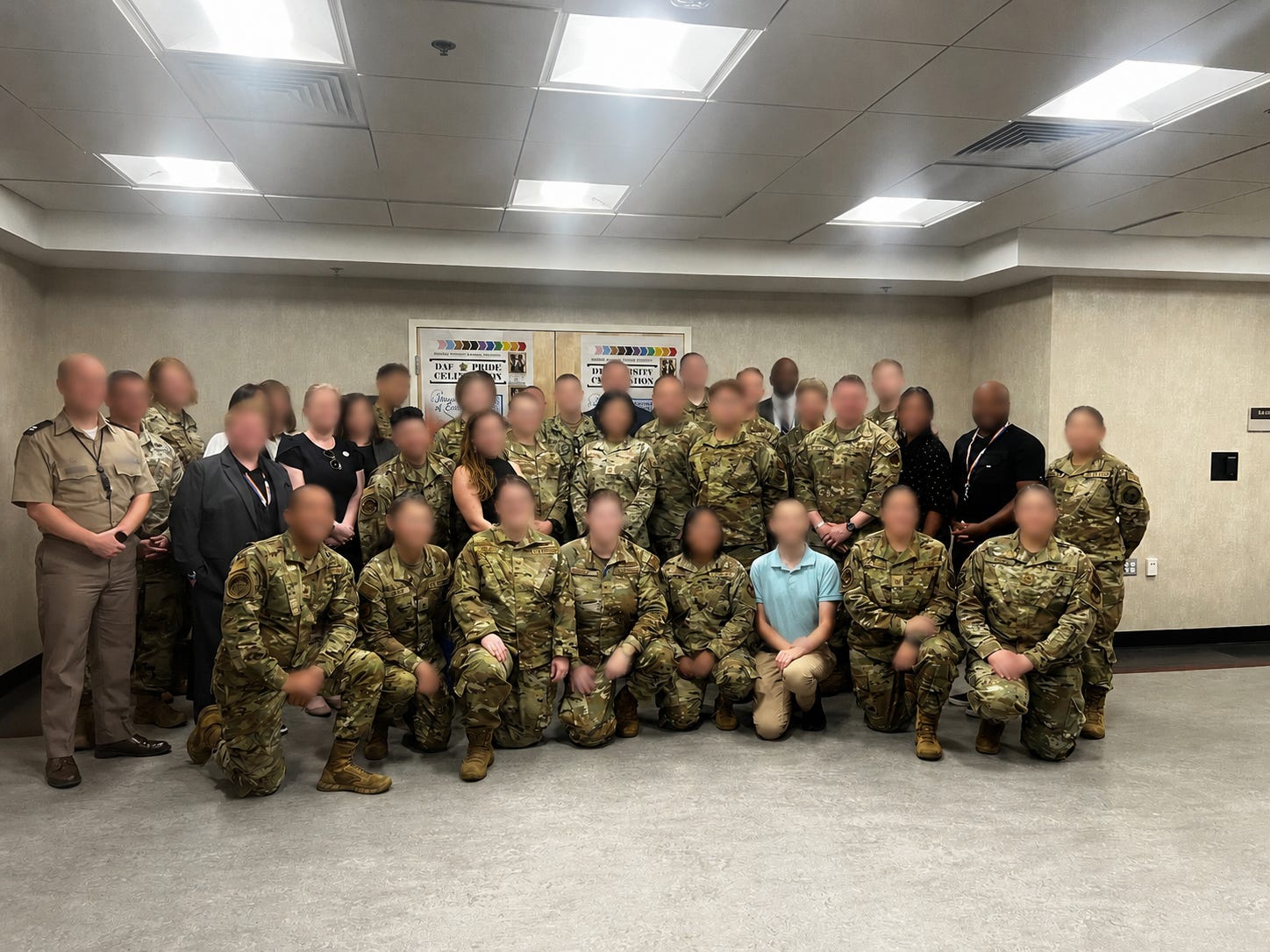
In June 2024, around fifty people, most in uniform, a few in civilian clothes, gathered in a Pentagon conference room for the Department of the Air Force LGBTQ+ Initiative Team’s (LIT) professional development symposium. In the group photo, they’re smiling, kneeling in the front row and standing shoulder to shoulder in the back, the way every unit photo has ever been taken.
I’m in that photo, and I helped lead the team that built the event. Now, before it appears anywhere, every face has to be blurred. Some of the people in it have since been separated from the military for being transgender. Others still serve but can no longer afford to be recognized standing where they stood. A record of professional pride has become a liability. The blur also is evidence of institutional damage.
A readiness tool, not a social club
The LIT was one of the Air Force’s Barrier Analysis Working Groups: formally chartered teams with direct channels to senior leadership, built to find and remove the barriers that keep capable people from joining, staying, and advancing. Improved readiness was the goal. A more diverse and dedicated force was not a side effect; it was part of how readiness improved. Groups like the LIT were the search and rescue systems for the issues causing the service to lose talent it spent years and fortunes to train or that they were never able to attract.
When these teams worked, they delivered concrete military results. The Women’s Initiative Team (WIT) drove changes to standards that had quietly screened out qualified aviators and left Airmen wearing gear designed for a body that wasn’t theirs. Those weren’t comfort measures. They are capability and safety fixes that made the force more effective.
What the symposium did was the work itself. Airmen and Guardians flew in from across the force. Some had never met another queer person in uniform; some felt entirely alone at their home stations. During one panel, a civilian described years building cyber and IT systems for the military as a contractor before she could finally interview for a federal job. Unsure whether being a lesbian was disqualifying, she asked the question during the hiring process and was met with surprise: “Why would it be?” On her first day, she found a rainbow gift basket on her desk with a card: “Welcome Home Airman.” That is retention in a sentence. When the institution feels like home, people pour more of themselves into it.
What was removed
The LIT could never produce data similar to what drove changes on WIT issues. The reason is part of the story. The services don’t track LGBTQ identification on personnel records. We argued they should, so we could show disparities with data instead of anecdotes. Many members, justifiably, feared that any such identification could one day be turned against them. So the program ran on testimony rather than statistics. Then the fear came true. The identification people dreaded became the blur on a photograph, separation orders, and medical-record searches.
During the first week of the new administration, and less than one year after the symposium, the LIT and every other barrier analysis team was terminated. Transgender people were barred from military service by an executive order which argued that they harmed readiness. Yet when challenged in court, the government could not identify evidence demonstrating such harm. Even so, the policy moved forward while legal challenges continue, leaving lives and careers in the balance. Set the rationale aside and see what the order actually took. Those service members separated included cyber operators, intelligence analysts, medics, instructors, and pilots with clearances, deployments, and years of taxpayer-funded training. The military did not remove underperformers; it removed proven performers by category. Expertise that takes years to build can disappear overnight. That is the first cost, and it is the smallest one.
Loyalty over merit
Before the administration took office, outside groups assembled lists of “woke officers” and delivered them to the Secretary of Defense with demands for removal. Strip the politics from that sentence and what remains is a professional military being screened for political conformity rather than competence. A force selected that way is not only less capable; it is less independent. An officer corps that learns political disfavor can end a career is a corps that chooses silence over giving best military advice. A military that defers to a person rather than to the Constitution is the precise instrument every authoritarian project requires, and every healthy democracy is built to prevent.
Everyone still serving in that photograph absorbed the lesson: service is conditional, categories of teammates can be removed wholesale, and association itself can become a liability. Cohesion depends on trust. For many, the blur represents that trust breaking in real time. Cohesion runs on trust: the belief that the person beside you has your back, and that you won’t be sacrificed for standing beside him or her. For those in the photo who still wear the uniform, the blur is that trust breaking in real time. It is the closet, rebuilt at government expense, and it cannot coexist with an institution that says it needs talent.
It can happen again
Once removal-by-category is established as a tool, proven performers cut not for what they did but for what they are; the tool is indifferent to which category it’s aimed at next. Everyone who isn’t white, male, cisgender, and Christian, or even Christian enough as the recent categorization of Mormons made clear, wonders if they might be next. A military that can be purged by identity once can be purged by identity again, on whatever line the moment finds convenient, and each pass leaves it smaller, more cautious, and more loyally dependent on whoever holds the list.
In 2021, at the tenth anniversary of the repeal of Don’t Ask, Don’t Tell, the Undersecretary of the Air Force looked around a small Pentagon ceremony and remarked that most of those gathered couldn’t be old enough to have served under the law. One of us answered: “No, ma’am. These folks are here because DADT went away.” Barriers falling brought a generation in. Barriers rising will keep one out, and not only the queer kids. Anyone who is different is watching an institution end careers over identity, while calling itself a meritocracy, and drawing conclusions about whether to raise his or her hand.
My lasting takeaway from the 2024 symposium was that when the military feels like home, people invest even more of themselves, building a stronger, more ready force. For everyone in that photograph, it felt that way. The blur records what it now costs to have been there.
An institution can survive losing an argument. I’m less sure it survives teaching its own people to hide that they were ever proud to call it home.
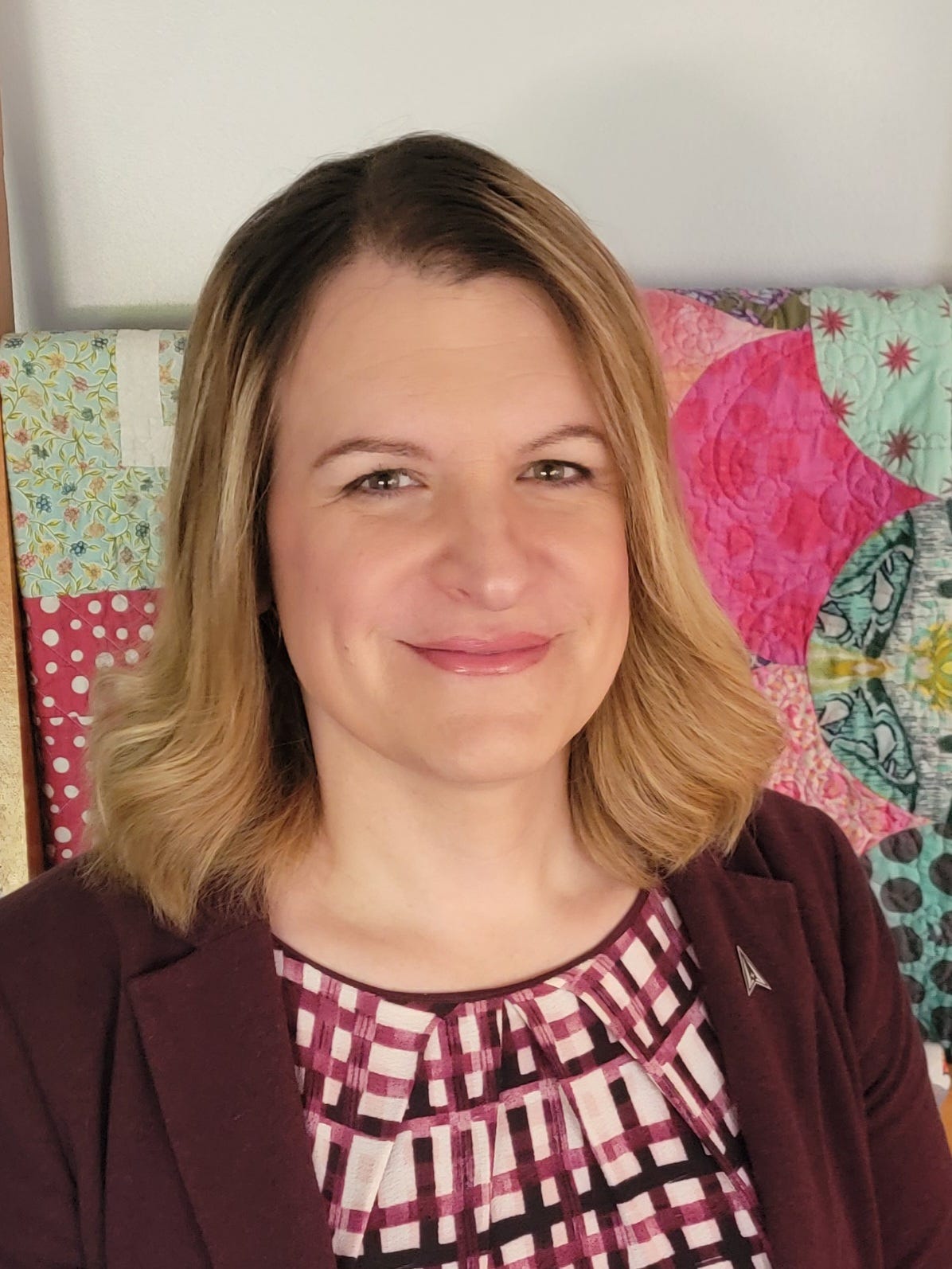
Bree Fram is an astronautical engineer, public policy expert, author, speaker, former Congressional candidate, and retired U.S. Space Force colonel. She was forced to retire from the military in 2025 after 23 years I’d service due to Trump administration policy regarding transgender people.
Founded in 2016, The Steady State is a nonprofit 501(c)(4) organization of more than 400 former senior national security professionals. Our membership includes former officials from the CIA, FBI, Department of State, Department of Defense, and Department of Homeland Security. Drawing on deep expertise across national security disciplines, including intelligence, diplomacy, military affairs, and law, we advocate for constitutional democracy, the rule of law, and the preservation of America’s national security institutions.
Powered by WPeMatico