More Burden than Privilege
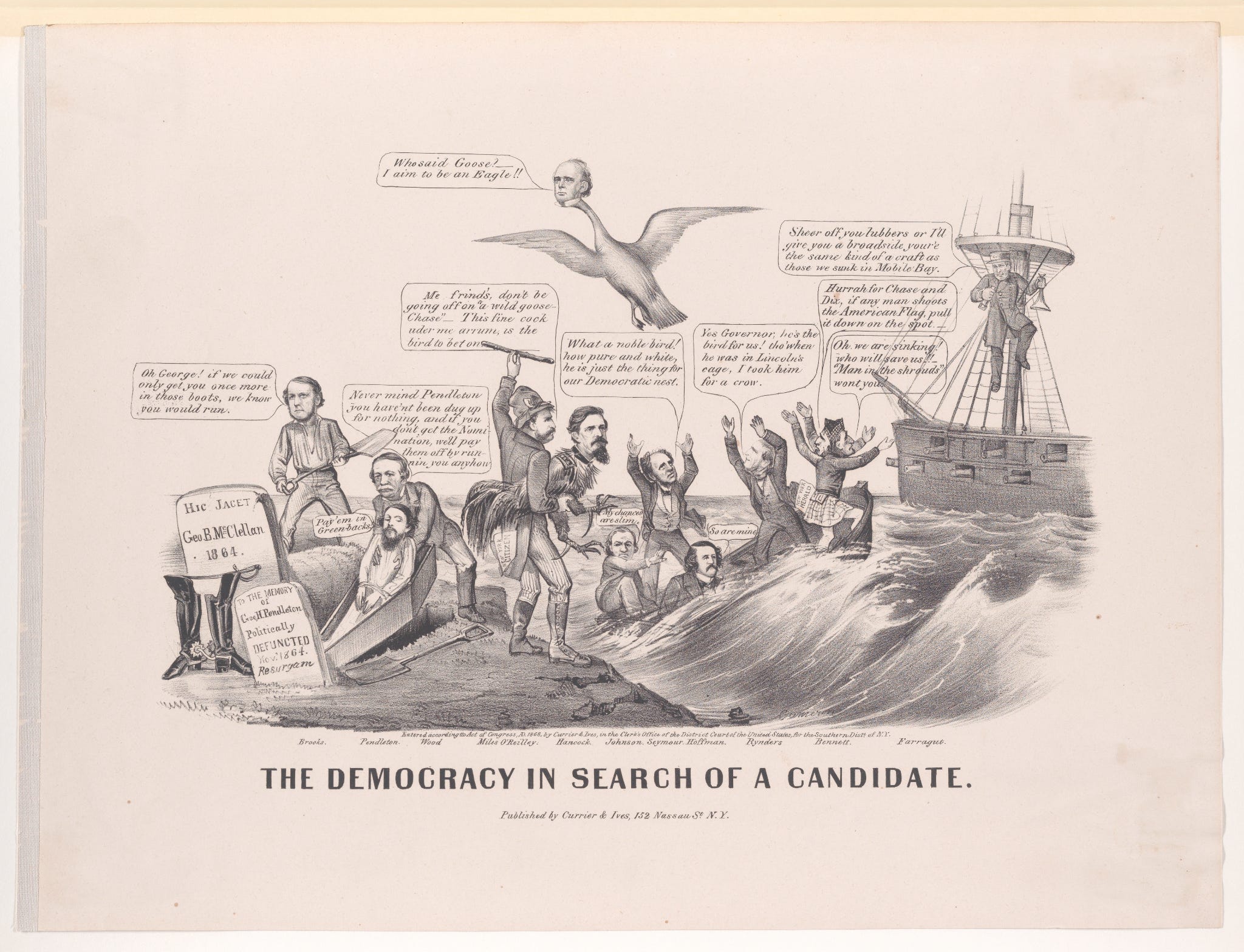
From the Metropolitan Museum of Art Collection
When leaders face no consequences, democracy depends on voters—and the window to enforce accountability is closing.
When I saw the video of Kash Patel splashing beer around an Olympic locker room, two things struck me: I’m so thankful I’m no longer serving in the FBI, and Julius Caesar was right to divorce his wife.
To indulge in a little Roman history: it’s 64 BCE, and Julius Caesar has just won election to pontifex. Meanwhile, another nobleman, Clodius, is pursuing his wife, Pompeia. While Pompeia attends a religious ceremony barred to men, Clodius sneaks in, confessing he waits for Pompeia when the women find him. Caesar immediately divorces Pompeia in the fallout, providing no evidence against Clodius at the subsequent trial. When the judges ask how he can divorce her without proof to share, Caesar answers, “because my wife ought not even to be under suspicion.”
Now, as a newlywed myself, I disagree with Caesar’s approach to marriage. But the concept that those holding office must be held to standards so high that power becomes more burden than privilege is one we should embrace. Demanding and upholding standards of behavior from our public officials at the ballot box is among the most powerful ways we can reinforce the fundamental premise of our governmental system – our officials work for us.
Decline into Kakistocracy
Americans have a well-earned cynicism about those leading the institutions charged with safeguarding our health, economic future, and national security. That cynicism significantly predates the kakistocracy of 2026. Indeed, our nation’s highest officers already abdicated standards of conduct. How else to explain the Senate confirming a cabinet member who allows her husband to allegedly assault civil servants in government buildings, or a Director of National Intelligence whose affinity for Kremlin talking points is so ludicrously inappropriate? Supreme Court justices apparently personally decided lavish gifts from individuals aren’t bribes long before Snyder v. United States, and people regularly invest in the stock market using dashboards duplicating trades by Congressional members who sit on the affected committees. Our refusal to confront such behavior has made it easier to accept an increasingly venal political system, and that system naturally paved the way for opportunistic authoritarians.
The Onset of Authoritarianism
This administration, like all authoritarian regimes, demands that the population adhere to strict rules susceptible to change at any moment. The White House runs roughshod over both law and what turns out to be just norms and not actual laws; it’s the people who must adjust. This administration tells us we must not exercise our right to protest or to carry a gun. Don’t remind our servicemembers of their rights and obligations. Don’t take a scenic drive. The administration lulls people into self-soothing with the lie that if you just follow directions, you’ll be okay. If you aren’t an immigrant or don’t look like an immigrant, you won’t be deported. If you don’t get between an untrained ICE agent in sneakers and an “illegal,” you won’t be killed. If you aren’t transgender, or if no one thinks you’re transgender, you’ll be safe. If you have your birth certificate on hand, you’ll still be allowed to vote.
But these expectations only go one way. Such regimes do not consider themselves beholden to the people, and so the only behavior that matters is how deferential an official is to the leader. When Kash Patel makes a fool of himself in Milan and wastes our tax dollars for his girlfriend’s security detail, he’s showing us this new playbook. He’s telling Americans that the position he occupies is not worthy of dignity. He doesn’t work for us. He works for President Trump. And Trump, who sees himself as a king, as a pontifex, and as a pilot dumping feces on Americans, certainly doesn’t consider himself a public servant.
President Trump and his circle interpret government as something to use for self-enrichment, not something precious to steward. He won’t change.
Forging Something Better
But it’s not too late to forge something better. With midterms upon us, we have the opportunity to evaluate the character and capabilities of the people we trust to make decisions on our behalf. If the last year taught us anything, it’s that citizens have limited tools to confront flagrant abuses of power. We are, to a frightening extent, at the mercy of a cohort of legislators who either endorse the abandonment of a functioning republic or are too weak to confront it.
We cannot settle for voting in a status quo that facilitated this active dismantling of our republic. We must instead seize this opportunity to express this fundamental democratic principle that all power is derived from the people, and that each of those people, from the poorest to the most privileged, are of equal inherent value.
The White House is telling us we aren’t citizens, but subjects to be ruled. We cannot accept that demotion.
Max Estevao is a former FBI Intelligence Analyst who covered Latin America and Middle East counterintelligence issues. He left federal service in 2025 and now works in private strategic intelligence and security consulting.
Founded in 2016, The Steady State is a nonprofit 501(c)(4) organization of more than 400 former senior national security professionals. Our membership includes former officials from the CIA, FBI, Department of State, Department of Defense, and Department of Homeland Security. Drawing on deep expertise across national security disciplines, including intelligence, diplomacy, military affairs, and law, we advocate for constitutional democracy, the rFounded Rule of law, and the preservation of America’s national security institutions.
Powered by WPeMatico