A View from An Iranian Observer: Strategic Pressure or Dangerous Precedent?
By Guest Author: H.E. Emmett Imani
When pressure sounds like permission to target civilian lifelines, it stops deterring adversaries and starts inviting escalation—with consequences that won’t stay theoretical.
The current tone surrounding Donald Trump and Iran is not simply another episode of political pressure. It is moving into a territory where language itself begins to shape outcomes.
Recent remarks referencing the destruction of bridges and electrical generation systems deserve careful attention. These are not abstract targets. They’re parts of civilian life. Hospitals, water systems, communications, and food distribution are sustained by power grids. Bridges are not just transportation routes. They are arteries for civilian movement, evacuation, and economic continuity.
Under the framework of the Geneva Conventions, actions affecting civilian infrastructure are subject to longstanding international legal standards governing proportionality and distinction. Public statements that seem to endorse or normalize attacks on such systems without clearly defined military necessity could risk being interpreted as inconsistent with these obligations. Even when no action follows, the signaling itself carries weight.
This is where misinterpretation begins to expand beyond intent.
Other nations, particularly those already skeptical of U.S. strategic posture, may read such language not as conditional or tactical, but as permissive. A willingness to degrade civilian infrastructure can be interpreted as a lowering of thresholds. That perception does not remain contained. It travels through diplomatic channels, intelligence assessments, and alliance discussions. It shapes reactions.
The strategic consequences are immediate, even if they are not always visible.
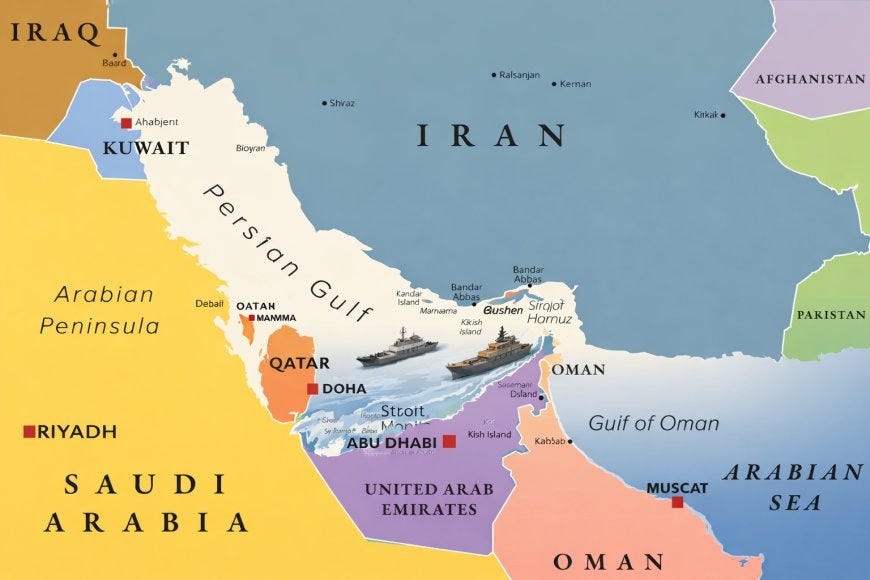
Escalatory rhetoric increases regional risk. It raises the probability of miscalculation across the Gulf. It places pressure on already fragile balances involving energy transit routes, particularly around the Strait of Hormuz, where even limited disruption has global economic implications. It complicates alliance cohesion, especially among partners who must publicly reconcile security cooperation with adherence to humanitarian norms.
At the same time, history suggests something more grounded, almost predictable. Broad threats against civilian systems rarely produce negotiation leverage. They tend to consolidate internal resistance. They narrow political space inside the targeted country. They make compromise look like surrender.
If the objective is to influence Iran’s leadership, this approach works against that goal.
There are alternatives, and they are not theoretical. They are practical, available, and consistent with both strategic and legal considerations.
First, recalibrate public language. Clarify that U.S. objectives remain limited and do not target civilian systems. Precision here is not cosmetic. It directly affects how messages are received and interpreted.
Second, signal conditional restraint. Pair any pressure with a visible boundary that reassures both allies and adversaries that escalation is not open-ended.
Third, open or reaffirm a diplomatic channel. Pressure without a pathway leads nowhere. Even adversarial engagement requires a defined exit ramp.
Fourth, reaffirm adherence to international humanitarian principles in both rhetoric and operational planning. This is not only a legal position. It is a strategic one. Credibility depends on consistency.
It is also important to acknowledge the reality facing leadership at this level. Decisions are not made in isolation. They are shaped by competing pressures, incomplete information, and urgency. That is understood. But it is precisely under those conditions that restraint becomes a strategic asset rather than a limitation.
As the Guardian of the House of Afshar, I emphasize that Iran is not reducible to its governing structure. It is a society with continuity, complexity, and a civilian population that cannot be abstracted into strategic targets. As an Ambassador of Peace, I emphasize that conflict prevention begins before conflict itself. It begins with language that does not unintentionally authorize escalation.
President Trump’s words, particularly regarding infrastructure, sit in a space where they can be understood in more than one way. That ambiguity is the risk. When references to disabling a nation’s lifelines enter public discourse without clear limitation, they begin to resemble, even if unintentionally, the language associated with prohibited conduct.
There remains a narrow window to recalibrate. To clarify intent. To restore precision in communication and preserve diplomatic options that have not yet fully closed
Because the question is no longer rhetorical.
When a leader speaks of dismantling the essential systems that sustain civilian life, even as a form of pressure, the world is left to decide how to interpret it. Whether as strategy, or as something closer to the edge of what international law was designed to prevent.
And once that line begins to blur, it does not stay theoretical for long.
Guest Author H.E. Emmett Imani is Guardian of the House of Afshar. Guardian of the House of Afshar, Ambassador of Peace, UNESCO Center for Peace. Founded by his descendants, [the House of Ashar] seeks to preserve, promote, and share the rich cultural, historical, and familial heritage of the Afshar dynasty, ensuring it is passed on to future generations. The House of Afshar stands as a symbol of unity, pride, and the enduring legacy of a remarkable history.
Founded in 2016, The Steady State is a nonprofit 501(c)(4) organization of more than 400 former senior national security professionals. Our membership includes former officials from the CIA, FBI, Department of State, Department of Defense, and Department of Homeland Security. Drawing on deep expertise across national security disciplines, including intelligence, diplomacy, military affairs, and law, we advocate for constitutional democracy, the rule of law, and the preservation of America’s national security institutions.
Powered by WPeMatico