
A Kremlin Talking Point Becomes an American Accusation
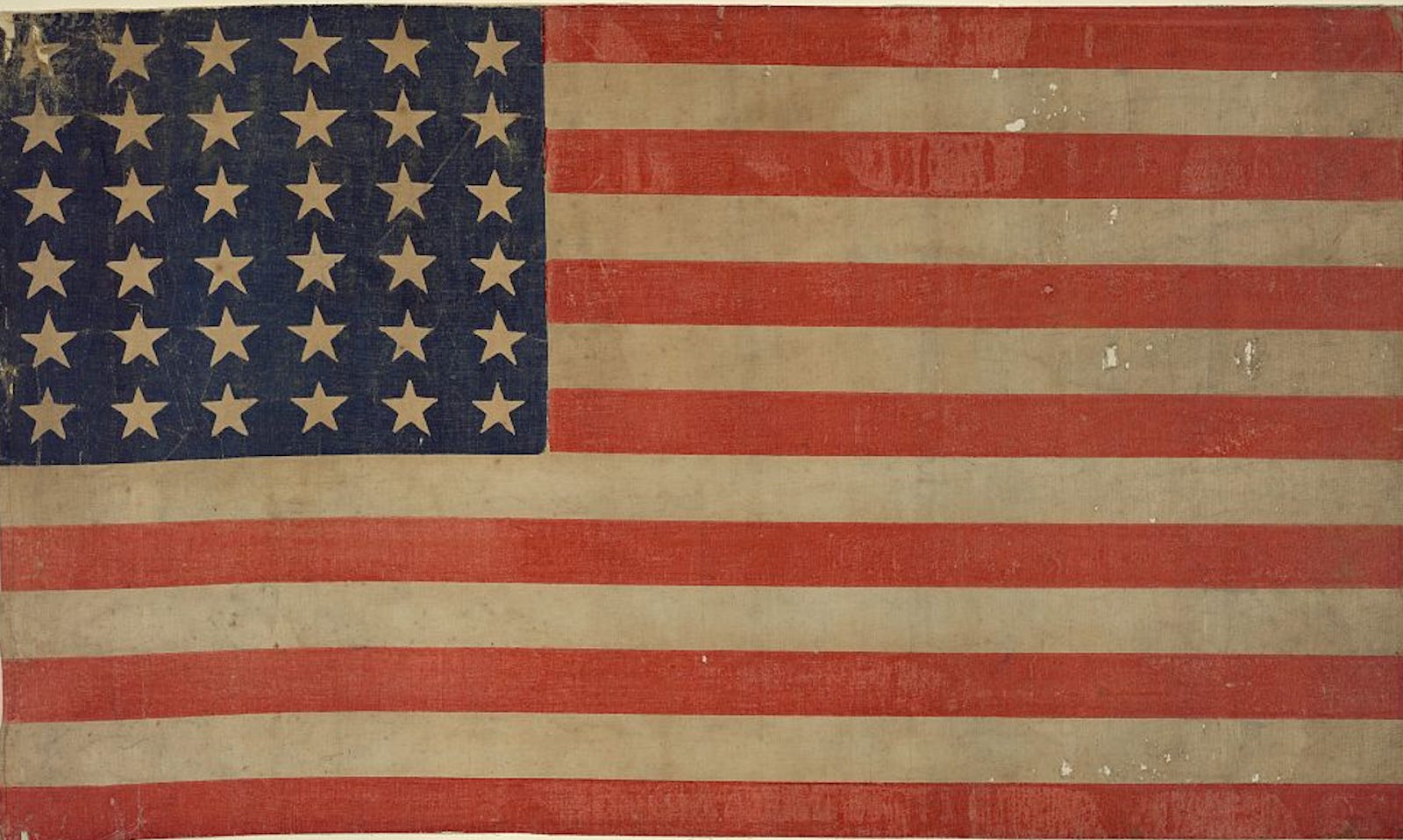
Labeling democratic protest a ‘Color Revolution’ doesn’t protect America—it imports a narrative designed to weaken it.
If you’ve spent any time on social media lately, you may have seen accusations about organizations fomenting a “color revolution” in the United States, and being amplified by conspiracy theorist influencers to their followers. That term, “color revolution,” is thrown around like a negative, as though it describes something violent, undemocratic, or fundamentally treasonous.
Let’s be clear: it’s not, and it doesn’t. And the fact that so many Americans are now repeating this accusation shows more about our current discourse than it does about understanding its origins.
So, let’s take a second to talk about what the “Color Revolutions” actually were.
Between 2000 and 2005, citizens in several post-Soviet bloc states took to the streets to protest stolen elections and corrupt authoritarian governments. In Serbia, hundreds of thousands marched after Slobodan Milošević tried to falsify election results. In Georgia, the Rose Revolution peacefully ousted Eduard Shevardnadze after fraudulent parliamentary elections. In Ukraine, the Orange Revolution mobilized millions when Viktor Yanukovych’s allies rigged a presidential vote. In Kyrgyzstan, the Tulip Revolution followed the same pattern.
These movements shared some common features: they were largely nonviolent, they were in large part triggered by election fraud, and they sought to replace corrupt regimes with democratic governance. Citizens organized, they marched, they demanded that their votes be counted. No militias. No insurrections. Masses of citizens standing in public squares holding signs, insisting on the right to choose their own leaders.
Here’s what most people repeating the “Color Revolution” as a smear don’t seem to know: the idea that these movements are sinister, violent – or in some way illegitimate – is a Russian talking point.
Vladimir Putin has been explicit about this, and has had a particular obsession with Color Revolutions for years: in November 2014, he declared that Russia must prevent any color revolutions on Russian soil, calling them “tragic” and “destabilizing.” Russia has long blamed pro-democracy global organizations, such as the U.S. Agency for International Development (USAID) and NGOs like the National Endowment for Democracy (NED), and the International Republican Institute (IRI) as being fronts for a vast U.S.-led western conspiracy to generate color revolutions in the former Soviet states. In 2022, he repeated the claim, asserting that Western elites had used color revolutions as tools of manipulation around the world. Russia’s Chief of the General Staff, General Valery Gerasimov, formally classified color revolutions as a form of “warfare” — not as popular democratic uprisings but as manufactured threats from abroad – orchestrated to achieve regime change.
Russia’s Defense Ministry even introduced a course at its General Staff Academy specifically designed to develop countermeasures against color revolutions — studying information warfare, cultural policy, and techniques to neutralize civil society organizations. The Kremlin views citizens peacefully demanding free elections as an existential threat, not because those citizens are violent, but because democratic accountability is incompatible with Putin’s dictatorship. When a movement in Georgia or Ukraine succeeds in replacing a corrupt, Moscow-aligned regime with a democratic government, Russia loses a loyal client state. That’s the real threat. Not violence. Not chaos. Democracy is the threat.
Even the term ‘Color Revolution‘ is a tell. Originating as a shorthand for pro-democracy protest movements in the former Soviet sphere, it is not a term that had been used to describe Western political movements before 2019, when Kremlin-backed RT began publishing op-eds applying it to U.S. politics. The term had no background in our domestic political lexicon before then. Now used predominantly by Eastern authoritarians as a propagandistic boogeyman, its adoption and use by American far-right online influencers is a clear signal that the messaging can be traced to its genesis at the Kremlin. Considering the 2024 federal indictment that revealed Russian state media had funneled nearly $10 million to prominent far-right online pundits through a Tennessee-based media company, it strains credibility that the sudden introduction of a long-held authoritarian talking point just came up organically in American political discourse.
The pattern tracks with the Kremlin’s strategy, going back decades. In 2020, the bipartisan Senate Intelligence Committee — led at the time by Republicans, notably now-Secretary of State Marco Rubio — concluded that Russia’s operations against the United States sought, and continues to seek, to undermine the integrity of elections and American confidence in democracy itself. The weaponization of ‘Color Revolution’ rhetoric is simply the latest iteration of a long-standing Russian strategy.
So when American influencers accuse their fellow citizens of plotting a“treasonous” “Color Revolution”, they need to understand whose vocabulary they’re borrowing. They are making Vladimir Putin’s argument for him, and are adopting a framework invented by an authoritarian government to discredit the very concept of citizens holding their leaders accountable. And those attempting to inject a dictator’s definition of protest into our vocabulary would be wise to remember that the United States is a client to none but our own citizens and constitution.
If history teaches anything, it’s this: when people lose the ability to speak, write, and be heard within the system, that’s when real tyranny has arrived. If advocating for free elections, accountability, and basic rights makes us “Color Revolutionaries,” then we’ll wear that label eagerly and proudly — because our colors are red, white, and blue. They always have been. They always will be.
Ken Syring served as Deputy Chief of Staff at U.S. Customs and Border Protection and is a former San Francisco police officer and forensic investigator. He is a Returned Peace Corps Volunteer (Mongolia, 2006–2008). His research on mitigating authoritarian traits through national service has been published in the National Civic Review, and his work on countering extremism in law enforcement presented at the Cambridge Disinformation Summit. He is a member of The Steady State.
Founded in 2016, The Steady State is a nonprofit 501(c)(4) organization of more than 400 former senior national security professionals. Our membership includes former officials from the CIA, FBI, Department of State, Department of Defense, and Department of Homeland Security. Drawing on deep expertise across national security disciplines, including intelligence, diplomacy, military affairs, and law, we advocate for constitutional democracy, the rule of law, and the preservation of America’s national security institutions.
Powered by WPeMatico