
“Maybe” Is Not A Strategy
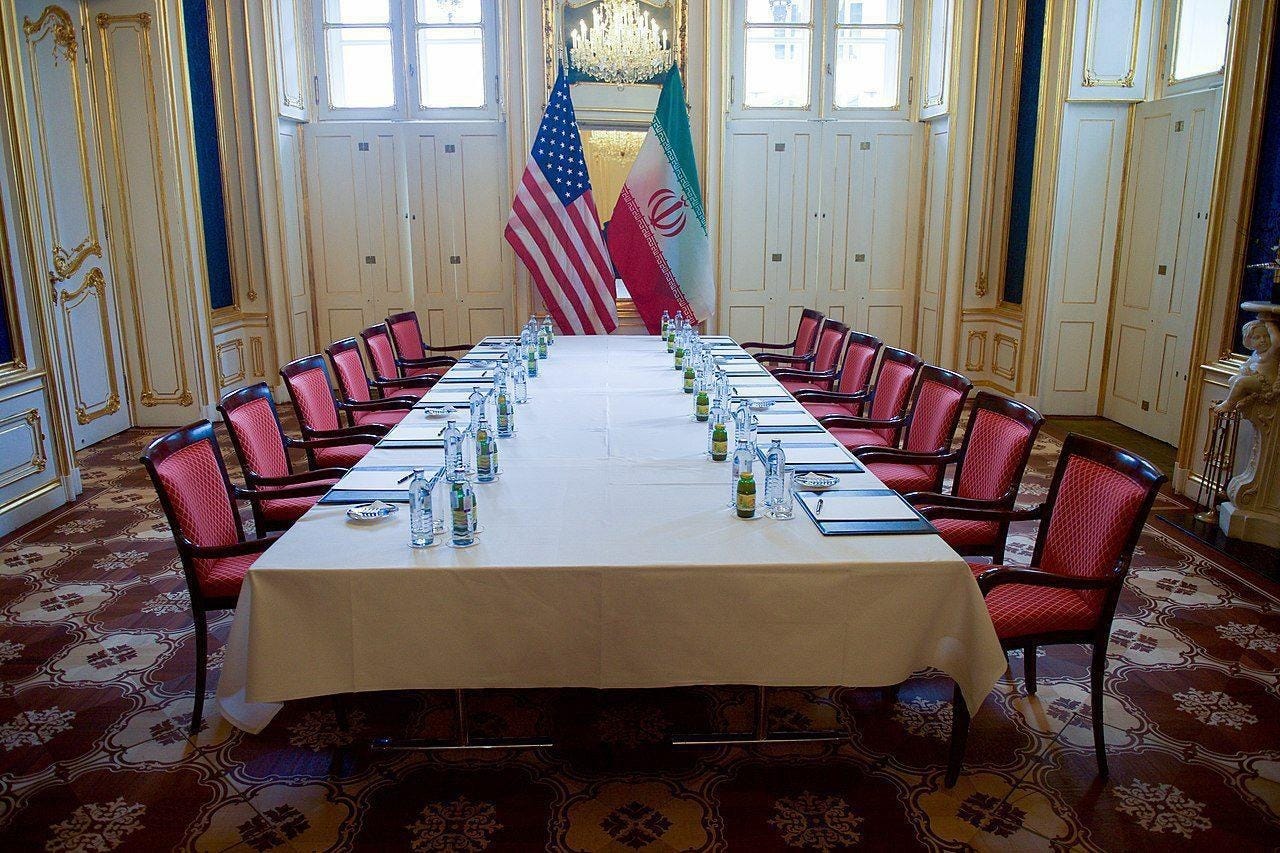
Iran has survived the initial campaign, negotiations remain stalled, and American military power has yet to produce a clearly defined political outcome. “Perhaps” is hope. Strategy requires something more.
President Donald Trump offered an extraordinary assessment of the war with Iran this week. Asked whether the United States might return to negotiations with Tehran, he responded, “Maybe at some point,” before adding: “But right now, I think the situation is so good.” So good? Perhaps the President has a crystal ball the rest of us cannot see, because the observable indicators point to something considerably less reassuring.
Nearly six months after the conflict began, the United States and Iran remain locked in what increasingly looks like a strategic stalemate. Iran has not capitulated. Diplomacy has stalled. The Strait of Hormuz remains at the center of a dangerous confrontation. Oil prices have climbed amid renewed Middle East tensions. Iran is threatening further offensive action, while regional governments are confronting the economic and security consequences of a war whose endpoint remains uncertain. That does not sound like a situation that can responsibly be described simply as “so good.” It sounds like a war without a clearly visible path to termination. A President’s optimism is not an intelligence assessment.
During my years in intelligence, we were trained to distinguish between desired outcomes and evidence-based judgments. That is not simply good practice; it is a foundation of analytic tradecraft. Intelligence exists in part to tell decision-makers what the evidence indicates, even when that assessment is inconvenient or contradicts what they want to hear.
Intelligence analysts do not have the luxury of telling policymakers that conditions are favorable merely because that is the preferred outcome. Commanders cannot measure success by presidential rhetoric. They must assess capabilities, intentions, resources, vulnerabilities, adversary behavior and the trajectory of the conflict. And those indicators deserve attention.
U.S. intelligence assessments reported in July concluded that additional American strikes were unlikely, by themselves, to force Tehran to soften its negotiating position. Those assessments described Washington and Tehran as caught in an indefinite space between peace and war, essentially a stalemate.
Even the senior American military commander responsible for the Middle East reportedly advised that bombing around the Strait of Hormuz had reached the limits of its effectiveness and recommended halting that campaign. Meanwhile, the war is placing significant demands on American military resources. Those are not partisan observations. They are indications and warnings.
Iran is playing a different game. Retired Gen. Jack Keane recently made an important observation: Iran understands that warfare is ultimately a test of wills. That matters. Iran does not necessarily have to defeat the United States militarily in the conventional sense. It can attempt to survive, impose costs, prolong the conflict, disrupt energy markets, threaten American forces and allies, and wait for American political support for the war to erode.
Independent assessments similarly indicate that elements of Iran’s military establishment believe they can outlast the United States.
Reuters has described Tehran pursuing a calibrated pressure campaign designed to increase the economic and geopolitical costs to Washington and its regional partners. That is an adversary strategy. And wishing it away does not defeat it.
What does “winning” look like?
This is the question that should be asked in Washington. What constitutes victory? Is victory destroying Iran’s nuclear capabilities? Regime change? Freedom of navigation through the Strait of Hormuz? Ending Iranian attacks against American forces? A negotiated settlement? Or simply inflicting enough punishment that Tehran eventually decides it has had enough, which appears to be what the president thinks.
Those are very different strategic objectives requiring very different military commitments. If the United States cannot clearly articulate the political objective for which American military power is being employed, then Americans cannot reasonably judge whether we are winning, losing, or merely continuing. A tactical success is not necessarily strategic success. Destroying targets is not the same as achieving political objectives. And possessing overwhelming military superiority does not guarantee that an adversary will surrender on the timetable we prefer. Vietnam should have taught us that. Afghanistan should have reminded us.
The Middle East does not share the crystal ball. The region itself is behaving as though the situation is anything but settled. The UAE has imposed a financial and economic embargo on Iran following an alleged Iranian missile threat. Gulf governments continue to confront threats to maritime commerce. Iran is reportedly considering potential military targets beyond the immediate region if the conflict escalates further. And the war is contributing to significant realignment among Middle Eastern states concerned about what prolonged instability means for their own security. These governments cannot govern according to optimistic predictions. Neither can military commanders. Neither should the United States.
War is Complicated; So is Strategy
The Commander in Chief has a different responsibility. Presidents understandably try to reassure the public during wartime. There is nothing inherently wrong with projecting confidence. But there is an important difference between confidence and certainty. A Commander-in-Chief bears responsibility not merely for telling Americans that things are going well, but also for demonstrating how current military operations are advancing an achievable political objective; this has never been articulated to the American people. This requires acknowledging unfavorable information as readily as favorable information. It requires listening when intelligence assessments challenge assumptions. It requires listening when commanders identify the limits of military power. And above all, it requires recognizing that the enemy also gets a vote. Iran has demonstrated that it intends to exercise that vote.
After decades working in national security, I have learned to become uncomfortable whenever extraordinarily complicated international problems are described in extraordinarily simple terms. War rarely cooperates with predictions. Adversaries adapt. Resources diminish. Alliances shift. Public support changes. Unexpected events alter calculations. And wars that were supposed to be short have an unfortunate history of becoming long ones.
President Trump may ultimately prove correct. Maybe pressure on Tehran will again produce negotiations. Maybe Iran’s leadership will determine that continued conflict is unsustainable. Maybe an agreement will emerge that advances American security. But “maybe” is not a strategy.
Americans deserve something more substantial than assurances that the situation is “so good.” They deserve to know the objective. They deserve to know the costs. They deserve to know the risks. They deserve to know what conditions would constitute victory, and what conditions would cause our leaders to reconsider the strategy. And they deserve leaders willing to distinguish between what they hope will happen and what the evidence says is happening; because the most dangerous moment in a prolonged conflict may not be when leaders recognize that they have reached a stalemate. It may be when everyone else recognizes the stalemate, but the person making the decisions still sees victory just over the horizon.
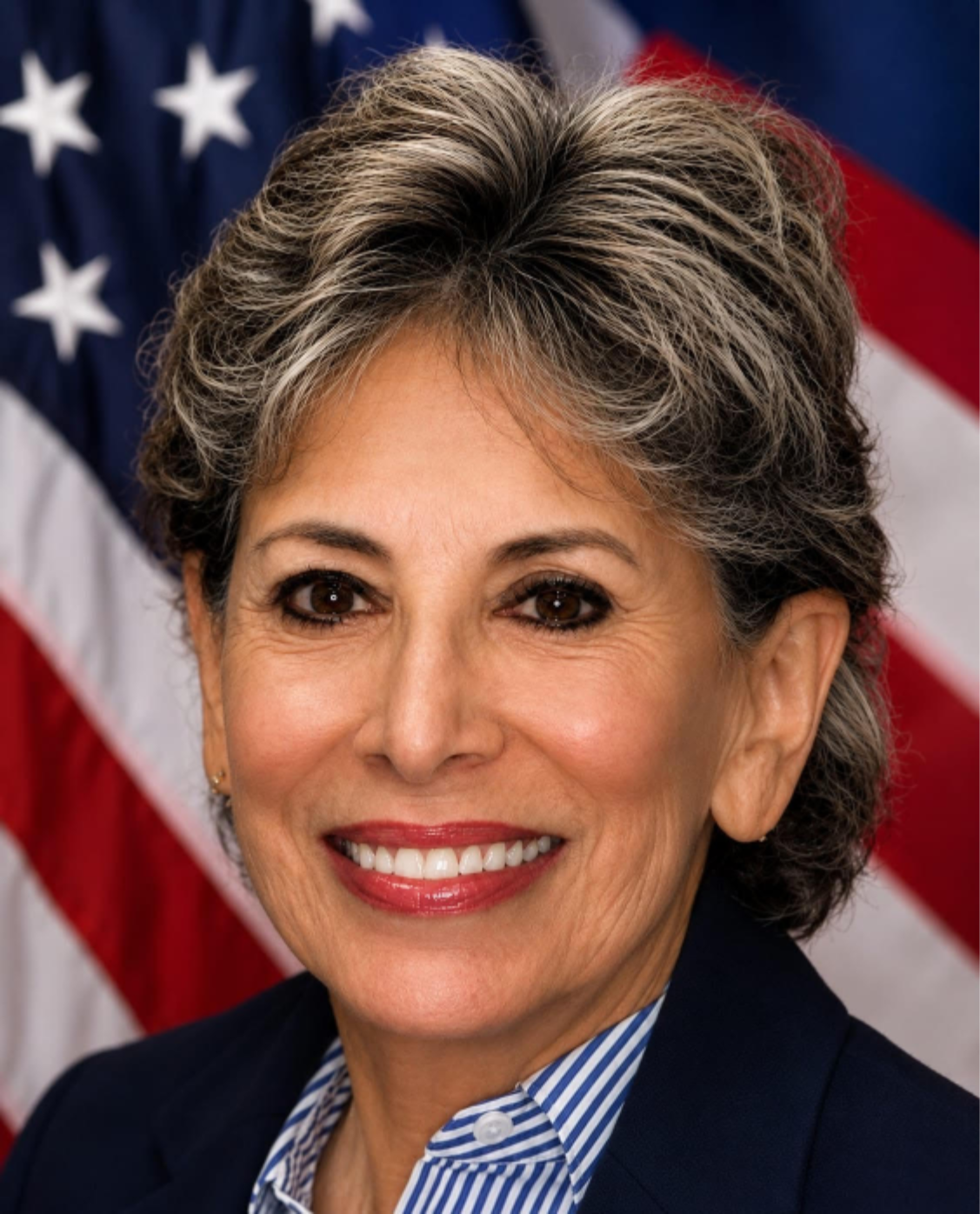
Martha Duncan is a retired U.S. Department of Defense senior executive with 37 years of service, including 23 years as an officer in the U.S. Army Reserves, where she also served as Reserve Attache. She had three operational deployments to Panama, Bosnia, and Afghanistan. At DIA, she worked as a Latin American analyst for 11 years. A specialist in human intelligence (HUMINT), she is recognized for her leadership in intelligence operations, coalition-building, and enterprise-level policy development across the Defense Intelligence Agency (DIA), the U.S. Army, and the broader Intelligence Community. She grew up in Panama during the rise of Manuel Noriega and was instrumental in his capture. She is a member of The Steady State.
Founded in 2016, The Steady State is a nonprofit 501(c)(4) organization of more than 400 former senior national security professionals. Our membership includes former officials from the CIA, FBI, Department of State, Department of Defense, and Department of Homeland Security. Drawing on deep expertise across national security disciplines, including intelligence, diplomacy, military affairs, and law, we advocate for constitutional democracy, the rule of law, and the preservation of America’s national security institutions.
Powered by WPeMatico