
Robert S. Mueller III: Servant Leader
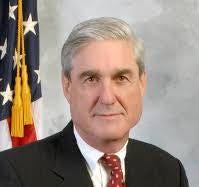
With Thanks to Wikipedia
March 20, 2026, a true servant leader, Robert S. Mueller III, died. To many people, Mueller was one of his titles: FBI Director, Federal Prosecutor, Special Counsel, but to thousands of us in the FBI, he was our boss. And some of us had the privilege of working closely with him during our careers.
Mr. Mueller’s leadership reflected personal discipline and a deep alignment with the principles that underpin a democratic system: independence, accountability, adherence to the rule of law, and respect for dissent. He was demanding and had a remarkable recall of investigative details. He was also a deeply decent human being.
I vividly recall my first interaction with him. I was in professional limbo because of a difficult U.S. Ambassador. Rather than rely on the views of others, Director Mueller asked to meet me. I’m certain he recognized that I was apprehensive. He asked very direct questions. Then he acted, and what had been a stalled and uncertain situation was resolved. Just like that.
Later, while I was serving as the FBI’s Legal Attache in Paris, Director Mueller was scheduled to travel to France for his first in-person meetings with his counterparts. His trip was abruptly cancelled. I learned later that it was because his wife, Ann, was dealing with a medical situation. He continued to work his usual long days, but he was at his wife’s side every day during her treatment.
Director Mueller was consistent in his expectations of us, and he was always thinking ahead. He routinely shared his view on the importance of our liaison relationships. He often said, “You don’t want to be shaking hands for the first time in the middle of a crisis.”
The Illusion of Cooperation – Tunisia
Late at night in Tunis, in 2003, after a long trip through the Middle East, Director Mueller arrived to assess whether the FBI should establish a presence in North Africa, in the aftermath of the Casablanca terror attacks. At the time, I was covering the North Africa region from Paris.
On the drive from the airport, Director Mueller raised a question that I thought had already been decided. FBIHQ wanted to open an office in Tunisia. He wanted to know what I thought. I hesitated. He looked at me and said, “They told you not to talk to me about it.” “Yes, sir,” I said. He smiled lightly, then asked me again. So I told him the truth.
Tunisia, at the time, was not a place where meaningful cooperation happened; we called it the place “where leads went to die.” Everything was tightly controlled in the authoritarian regime of President Zine El Abidine Ben Ali, and they were exceedingly difficult to work with.
“If we’re going to be in North Africa,” I told him, “we should be in Rabat, Morocco .” He listened.
The next day, in a meeting with Tunisian officials, they began discussing a potential terrorist plot. He leaned toward me and quietly asked, “Did they share this with you?” “No,” I said. “I’m trying to read it from their notes.”
He stopped the meeting and asked them directly if they had provided me with this information. They said they were planning to share it. Their classic response; deflection and delay. He let it play out for a moment longer, just long enough to confirm what he was seeing.
Then he closed his notebook and said, “We’re done here.” He stood up. No speech. No posturing. His clear message was that cooperation is imperative when lives are at stake.
What followed was almost surreal. The usual diplomatic gestures of gifts proceeded at a rapid pace. We then had unexpected free time before we flew onward to Morocco, so our group went on a walk through Sidi Bou Said in blistering midday heat, on hilly cobblestone streets in business attire.
The episode was characteristic on so many levels, including that he would not accept the appearance of partnership if there was no substance.
Real Cooperation in Morocco
Morocco was a stark contrast to Tunis, and made clear the reasons I had recommended Morocco as a location for our Legat office was quickly apparent. At the last minute, the King changed the location of our meeting from the capital, Rabat, to Agadir, which caused great concern for the Director’s security detail. I felt confident in assuring both the security detail and the Director that they could trust the Moroccans.
A police-escorted motorcade awaited us, and the Ambassador met us at our staging area, a hotel. As the Director exited the vehicle, the path from the car to the hotel entrance was covered with rose petals. He turned and gave me a glance with one eyebrow partially raised. And I said, “This is Morocco.” The meeting with the King was cordial and focused on mutual cooperation and the importance the king placed on our relationship, stressing the imperative for cooperation and collaboration. The King expressly said he would welcome an FBI office in Morocco, something the Ambassador and I had talked about before the Director’s arrival.
A few hours later, during a Moroccan-hosted meal, the Ambassador told me we needed to move on the establishment of the office. She reiterated that as we stood side by side on the tarmac, watching the Director mount the steps to the aircraft.
In a previous conversation, I had raised concerns about the size of the territory that our office covered. At the time, Director Mueller dismissed it. As he said at the time, this was a common Legat complaint. But the conversation in Tunis opened the door. He had asked that I sit with him during our flight to Morocco, where we were scheduled to meet with King Mohammed VI. When the opportunity arose, I talked with him about it. He listened. He asked for the plan directly—and then told me, with characteristic clarity, to send it to him as Director, knowing full well it disrupted the chain of command that would not appreciate being bypassed.
Director Mueller was open to learning more and not simply accepting what FBI headquarters managers were telling him. He wanted to understand the ground realities and make the best decision for the FBI and for the security of our country. Even in tightly controlled environments, like Morocco, he looked for and responded to genuine cooperation when it was there. In all the years I knew him, he recognized good partnerships – and he knew they were vital – wherever they were. He didn’t hesitate to walk away—or to move forward. He was willing to challenge internal assumptions and invite input from many levels—something that depends on an environment where information can flow upward, not just down, and be heard.
Leadership depends on something larger than any one person. It depends on institutions that encourage independence and insist on accountability, and respect for the rule of law.
Robert S. Mueller III embodied that standard.
It is a standard we should demand from all our leaders.
Lauren C. Anderson is a former FBI executive with more than 40 years of experience in national security, serving in operational and leadership roles in the United States and overseas, as well as in advisory capacities across the government. A member of the Council on Foreign Relations, she co-hosts The Steady State Sentinel podcast and writes What We Choose to Defend, focused on national security, the rule of law, and institutional trust.
Founded in 2016, The Steady State is a nonprofit 501(c)(4) organization of more than 400 former senior national security professionals. Our membership includes former officials from the CIA, FBI, Department of State, Department of Defense, and Department of Homeland Security. Drawing on deep expertise across national security disciplines, including intelligence, diplomacy, military affairs, and law, we advocate for constitutional democracy, the rule of law, and the preservation of America’s national security institutions.
Powered by WPeMatico