Tag Archive for: The Steady State

Former pilot, astronaut and now candidate for Congress Terry Virts draws on a lifetime of service to assess the current chaos in our institutions and government.

Founded in 2016, The Steady State is a nonprofit 501(c)(4) organization of more than 360 former senior national security professionals. Our membership includes former officials from the CIA, FBI, Department of State, Department of Defense, and Department of Homeland Security. Drawing on deep expertise across national security disciplines, including intelligence, diplomacy, military affairs, and law, we advocate for constitutional democracy, the rule of law, and the preservation of America’s national security institutions.

Powered by WPeMatico

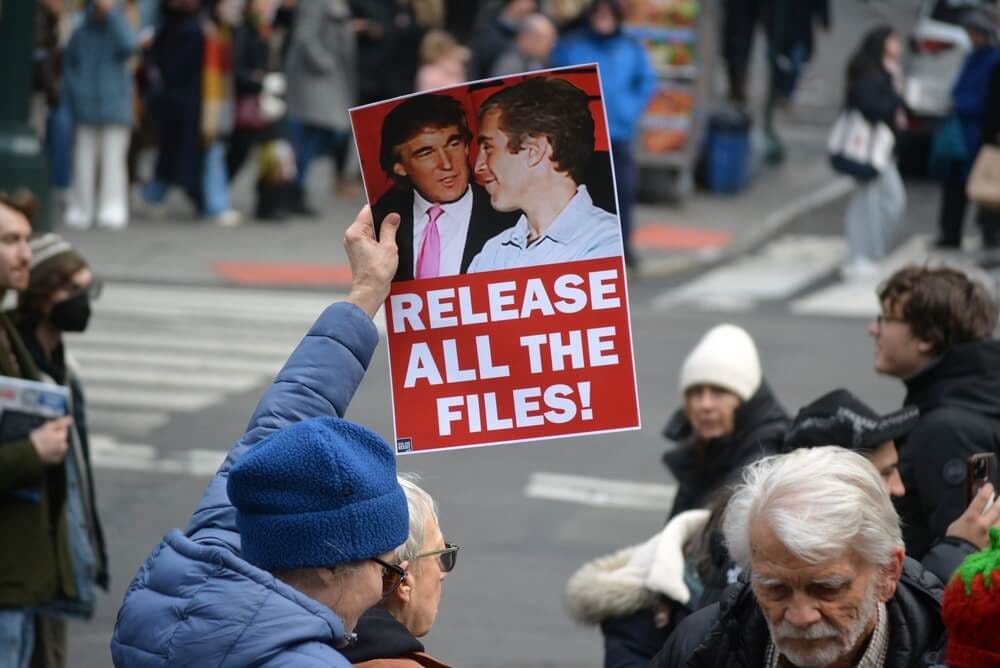
The phrase “release the Epstein files” has such rhetorical power because it promises moral clarity. It offers the public a cathartic moment, exposure, accountability, a sense that the powerful can’t hide behind the system.

And in a political culture that increasingly treats outrage as both a pastime and a strategy, it can feel especially satisfying: like we’re sticking it to our opponents and shaking loose a network of predators.

But the pleasure should instead signal a warning light.

The bigger danger in an all-at-once “files” release isn’t that we’ll learn something uncomfortable about famous people. It’s that we’ll further damage the one thing a society cannot function without: credible trust in the rule-of-law process, law enforcement, prosecutors, courts, and the professionalism that makes those institutions something other than weapons.

If our standard for justice becomes “dump everything and let the internet sort it out,” we are not strengthening accountability. We’re degrading it into a spectacle.

The process is the point

We’ve built a serious, rights-protecting system over many decades because we learned, often the hard way, that justice is fragile.

It requires rules. It requires restraint. It requires a chain of custody, evidentiary standards, defense rights, judicial oversight, and accountability mechanisms that are boring precisely because they are meant to be fair.

That system is not perfect. But it’s the only system designed to produce outcomes that can be defended as legitimate rather than simply popular.

Please read here the entire article published by Tomorrow’s Affairs on February 2, 2026

John Sipher ( @johnsipher.bsky.social ) is a non-resident senior fellow at the Atlantic Council and co-founder of Spycraft Entertainment. He worked for the CIA’s Clandestine Service for 28 years and is the recipient of the Agency’s Distinguished Career Intelligence medal. He is also a host and producer of the “Mission Implausible” podcast, exploring conspiracy theories. He is a member of The Steady State and a host of The Steady State Sentinel Podcast.

Founded in 2016, The Steady State is a nonprofit 501(c)(4) organization of more than 360 former senior national security professionals. Our membership includes former officials from the CIA, FBI, Department of State, Department of Defense, and Department of Homeland Security. Drawing on deep expertise across national security disciplines, including intelligence, diplomacy, military affairs, and law, we advocate for constitutional democracy, the rule of law, and the preservation of America’s national security institutions.

Powered by WPeMatico

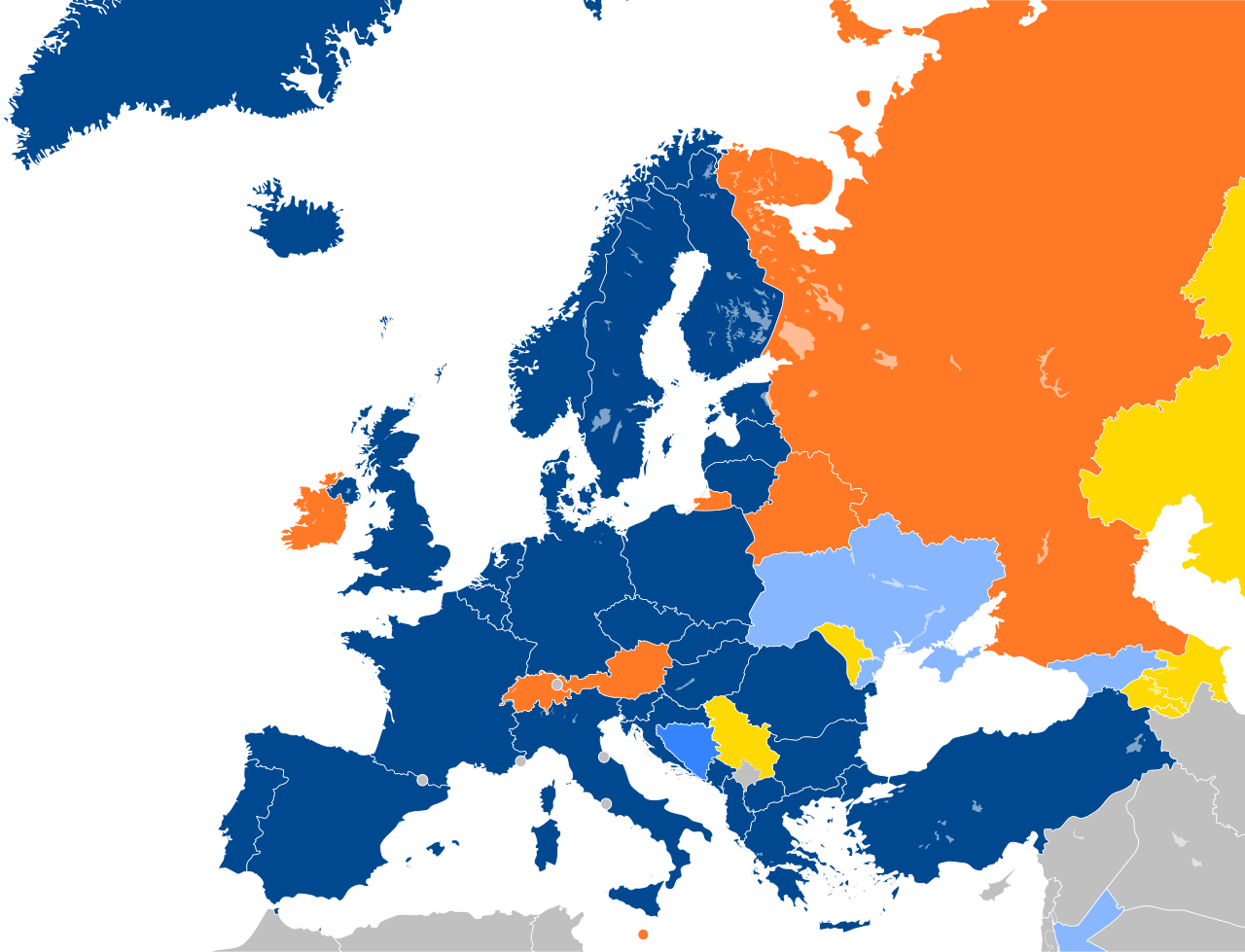
Major NATO Affiliations in Europe (2025)

The United States has long led the most successful, enduring alliances in modern history. The North Atlantic Treaty Organization has grown from 12 states in 1949 to 32 now. Its attraction to democratic states is well shown by the fact that all former members of the Soviet-led Warsaw Pact (except for the now-defunct Soviet Union) have joined NATO. The Alliance as a whole has grown in economic and military power over the years, but now it is profoundly threatened. And that threat might spread in time to our other close allies, Japan, South Korea and Australia.

The threat to NATO does not come from its original nemesis, the Soviet Union, or from Putin’s Russia. Instead it comes from the United States, the undisputed leader of the Alliance for almost 77 years. Until the past year, all Presidential Administrations had strongly supported NATO. In the early years, we worked hard for the political and economic growth of our European allies, knowing that their power would not threaten, but directly benefit, us. Increasingly in this century, American Presidents, Republican and Democratic alike, have called for greater burden-sharing from our now prosperous European allies. The allies have been slow to respond, but have greatly increased their defense spending in response to Russian aggression in Ukraine.

In berating our European allies, President Trump has sought to rewrite history to a degree worthy of George Orwell. He has called the European Union an enemy and said that it was formed to undermine the United States. Any student of modern European history knows that the United States strongly encouraged the creation of the first European Communities that ultimately led to the European Union. We believed, rightly, that unification would help Europe to prosper economically and work together peacefully. The United States so strongly supported European unification that Secretary of State Dulles called for an “agonizing reappraisal” of US-European relations after the French parliament voted against the proposed European Defense Community.

In his January 2026 speech at Davos, the President complained that “what we have gotten out of NATO is nothing except to protect Europe from the Soviet Union. I mean, we’ve helped them for so many years, we’ve never gotten anything.” He later publicly doubted whether NATO allies would come to the U.S.’ aid “if we ever needed them.” Article 5, the core provision of the NATO Treaty, provides that any “armed attack against one or more of them [NATO members] in Europe or North America shall be considered an attack against them all,” and that the members will take whatever means necessary to restore North Atlantic security. Is it actually possible that the President does not know that the Alliance has invoked Article V only once – after the 9/11 terrorist attack on the United States?

After Davos, the President said that “we’ve never needed them [NATO troops.] We’ve never really asked anything of them.” He added that “they sent some troops to Afghanistan,” but “they stayed a little back, a little off the front lines.” In reality, we asked for, and received, considerable NATO help in the First Gulf War and Afghanistan. Twenty-four NATO members sent troops to Afghanistan. The United States had the greatest absolute number of deaths, but Danish per capita losses were nearly identical to ours, and the United Kingdom and Estonia were not far behind.

U.S. entry into World War I marked a huge departure from traditional American policy, but we retreated into isolationism immediately after. Just over 20 years later, with the outbreak of the Second World War we learned what a huge mistake that had been. U.S. leaders after the war were determined not to repeat that error, and well understood that our safety and security was completely entwined with that of Europe and Asia. And the American people strongly agreed. At Davos, the President spoke about the war in Ukraine in terms that have not been heard from any responsible American politician since the 1930s: “What does the United States get out of all this work [on Ukraine], all of this money – other than death, destruction, and massive amounts of cash going to people who don’t appreciate what we do? … I’m talking about NATO, I’m talking about Europe. They have to work on Ukraine, we don’t. The United States is very far away. We have a big, beautiful ocean separating us. We have nothing to do with it.”

Of course, it gets worse. The President has periodically threatened to take Greenland by force. This would turn Article V on its head: if that happened, we would be the armed attacker. And on one of our closest, most steadfast allies. Moreover, the only reason for the United States to acquire Greenland is to satisfy the President’s real-estate-developer ego. He has publicly admitted that fact, acknowledging that the US-Denmark defense agreement allows us to build as many military bases in Greenland as we would like.

Official U.S. government policy toward our alliances in the President’s first term was very different, The December 2017 National Security Strategy stated: “Allies and partners are a great strength of the United States. They add directly to U.S. political, economic, military, intelligence and other capabilities. …allies and partners magnify U.S. power and extend U.S. influence. They share our interests and responsibility for resisting authoritarian trends, contesting radical ideologies, and deterring aggression.”

The 2017 National Security Strategy was drafted by a policy professional on the National Security Council Staff, and probably approved by the professionals who were the Secretaries of State and Defense, National Security Advisor and Director of Central Intelligence. Now those professionals are gone, replaced by sycophants who will neither oppose the President nor give him sound advice grounded in knowledge, experience, and a true understanding of U.S. national security interests. Further, the President now has moved right over to Putin’s and other authoritarians’ distrust of, and inability to cooperate with, proven allies. The result of all that is a dire threat to U.S. as well as allied, security that would have been unthinkable just one year ago. The only interests served are those of Russia and China.

During a 30 year career with the Federal Government, the writer served in the National Security Council Staff and State and Defense departments, and is now a member of The Steady State.

Founded in 2016, The Steady State is a nonprofit 501(c(4) organization of more than 360 former senior national security professionals. Our membership includes former officials from the CIA, FBI, Department of State, Department of Defense, and Department of Homeland Security. Drawing on deep expertise across national security disciplines, including intelligence, diplomacy, military affairs, and law, we advocate for constitutional democracy, the rule of law, and the preservation of America’s national security institutions.

Powered by WPeMatico

The world’s longest land border is the over 5000 miles between the United States and Canada. It is also the world’s longest unguarded border.

This may be changing. Last week Canada revealed its military is modeling a US invasion. The Canadian response would reportedly involve mimicking the Afghan mujahideen and using Canada’s size and harsh terrain to tie down invading forces and inflict unacceptable casualties.

Americans take for granted the advantages the United States gains from living in a peaceful neighborhood. But other major powers face potentially hostile countries next door and have to plan accordingly. Russia borders China in the east—friendly for now, but not in the past—and NATO countries in the West. China faces Russia, plus bitter enemy Vietnam to the south, nuclear-armed India to its west, and rich and powerful adversaries nearby, including South Korea and Japan.

Unfriendly neighbors require extensive border infrastructure. The Russian Border Guard Service, for instance, numbers some 170,000 troops. In countries with dangerous neighbors, the military must continually plan, train, and equip for possible hostile action from next door. There are almost always unresolved territorial disputes that can quickly escalate into armed confrontation.

The United States has been protected by two oceans but also by the absence of any threat from Canada or Mexico. Neither country maintains forces designed to threaten the US, and the US is not postured to carry out operations in either country.

Until now. Trump’s reckless statements about making Canada the 51st state have alarmed Canadians. Trump and senior administration officials have made frequent hints about the need to intervene unilaterally in Mexico to fight criminals and terrorists. The new National Security Strategy asserts an American right to rule the Western Hemisphere. Tariffs on Canada and Mexico have been threatened, imposed and rescinded for blatantly political ends. Unilateral action against Venezuela and threats to annex Greenland are further convincing Canadians and Mexicans that the United States could turn on them without warning.

Americans may be surprised to know that Canada—Canada!— has emerged as perhaps the most outspoken opponent of the Trump administration’s vision for the world. Two weeks ago at Davos Canadian Prime Minister Mark Carney (who is ironically only in power because Trump angered Canadian voters so much they turned against the Conservative Party in last spring’s elections) delivered a widely praised speech that distilled what Canada and many other countries fear, and how they plan to push back.

Carney said what we are experiencing now is not temporary, but a ‘disruption’ in the global order. The United States is abandoning or weaponizing the multilateral institutions it helped create, and no longer sees itself as acting for the good of anyone other than itself.

“…great powers have begun using economic integration as weapons, tariffs as leverage, financial infrastructure as coercion, supply chains as vulnerabilities to be exploited. You cannot live within the lie of mutual benefit through integration when integration becomes the source of your subordination.

Canadians know that our old, comfortable assumptions that our geography and alliance memberships automatically conferred prosperity and security, that assumption is no longer valid.”

Canada is responding immediately by reducing its dependence on the US and strengthening ties with other economic and strategic partners.

“We are fast-tracking $1 trillion of investments in energy, AI, critical minerals, new trade corridors and beyond. We’re doubling our defence spending by the end of this decade, and we’re doing so in ways that build our domestic industries. And we are rapidly diversifying abroad.”

“We’ve agreed to a comprehensive strategic partnership with the EU, including joining SAFE, the European defence procurement arrangements. We have signed 12 other trade and security deals on four continents in six months.”

“In the past few days, we’ve concluded new strategic partnerships with China and Qatar. We’re negotiating free trade pacts with India, ASEAN, Thailand, Philippines and Mercosur.”

The long term response is for ‘middle powers’ like Canada to cooperate and work around the United States to shore up the rules-based international system.

“Our view is the middle powers must act together because if we’re not at the table, we’re on the menu.”

“In a world of great power rivalry, the countries in between have a choice: compete with each other for favour, or combine to create a third path with impact. We shouldn’t allow the rise of hard power to blind us to the fact that the power of legitimacy, integrity and rules will remain strong if we choose to wield it together.”

The United States has always been willing to occasionally use its domination of international finance and its global military power for its own advantage. Other countries have chafed but until now considered the benefits outweighed the costs, because the US was seen as committed to a system of mutual benefit. But under Trump that is no longer the case. Middle powers like Canada are actively seeking alternatives; over time, American power will drastically decline. The power of rivals such as China will increase.

One clear implication of Carney’s approach will be less defense cooperation. Canada is reportedly reconsidering whether to buy 88 American F-35 fighters, with Swedish Gripen aircraft as the likely alternative. Canada’s new Defense Investment Agency is prioritizing purchases from non-US suppliers, and Sweden is offering Canada a co-production agreement that would create 12600 Canadian jobs.

Many European countries have voiced concerns that military dependence on the US is no longer safe. The American supply chain may be abruptly broken for political reasons. US weapons could be designed with built-in kill mechanisms allowing the US to disable them when it pleases. Canada shares these fears.

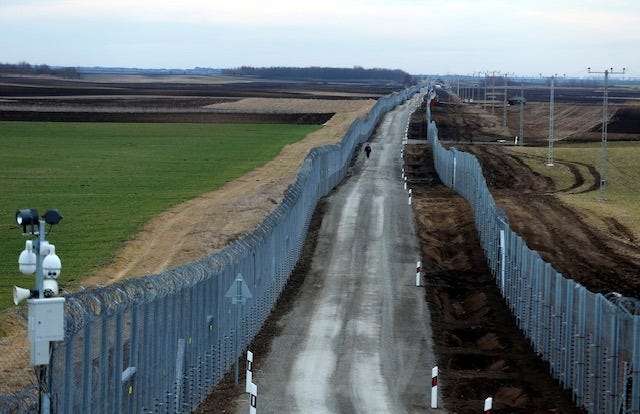
Back to that long border. Today it is barely noticeable. But tomorrow it may bristle with barbed wire, watch-towers, and sophisticated sensors. Americans will miss the old Canada when it’s gone. We will have only ourselves to blame.

Adam Wasserman is a retired CIA analyst with experience on failing democracies in the former Soviet Union, the Middle East, and Southeast Asia. He served on the State Department Policy Planning Staff, the CIA Red Cell, and the National Security Council staff. He is a member of The Steady State.

Founded in 2016, The Steady State is a nonprofit 501(c)(4) organization of more than 360 former senior national security professionals. Our membership includes former officials from the CIA, FBI, Department of State, Department of Defense, and Department of Homeland Security. Drawing on deep expertise across national security disciplines, including intelligence, diplomacy, military affairs, and law, we advocate for constitutional democracy, the rule of law, and the preservation of America’s national security institutions.

Powered by WPeMatico

Availability of TikTok in the World

Over the past weekend, like many other organizations and users, The Steady State experienced significant disruptions in our TikTok service.

For nearly a full day, videos could not be loaded at all. When service appeared to resume, content that would ordinarily reach tens of thousands of viewers was registering only single digit views, despite our account having more than 35,000 followers. At various points, posted videos were replaced with notices stating that the content violated TikTok’s “Community Guidelines,” without further explanation.

Yesterday, The Steady State hosted a TikTok Live “Ask Me Anything” event. In the middle of the live discussion, a red banner appeared stating that the stream had violated Community Guidelines by discussing “potentially harmful misinformation.” At the moment that banner appeared, the discussion was focused on how to avoid misinformation and propaganda, specifically by relying on authoritative sources such as the Congressional Research Service.

For at least a period of time following the warning, viewer comments appeared to stop entirely. Comments later resumed, but the interruption was noticeable to both hosts and viewers.

We are continuing to assess what occurred and whether these disruptions reflect technical issues, automated moderation errors, or changes in platform enforcement practices.

Founded in 2016, The Steady State is a nonprofit 501(c)(4) organization of more than 360 former senior national security professionals. Our membership includes former officials from the CIA, FBI, Department of State, Department of Defense, and Department of Homeland Security. Drawing on deep expertise across national security disciplines, including intelligence, diplomacy, military affairs, and law, we advocate for constitutional democracy, the rule of law, and the preservation of America’s national security institutions.

Powered by WPeMatico

Political analyst shares three red flags with The Steady State Sentinel podcast guest host , warning that Iran, attacks on the judiciary, and targeting of U.S. citizens by the government are potentially incendiary threats to U.S. democracy and national security.

Listen on Apple Podcasts or your preferred platform.

New episodes every Tuesday, special features on Fridays until March 2026.

AI-supported summary follows.


Steady State Sentinel – Conversation with Jack Hopkins


Introduction

Margaret Hennock:
Good day. This is Margaret Hennock from The Steady State. I’m a 25‑year veteran of the CIA’s clandestine service, and I’m now working with The Steady State, a political advocacy group.

My guest tonight is Jack Hopkins — Navy veteran, behavioral consultant, and author of the Substack Jack Hopkins Now. I recommend it to everybody; it’s terrific.


How Jack Entered Political Writing

Margaret:
How did you get into the political writing business? When did you decide to do it? Was it a major change for you?

Jack Hopkins:
It was a major change. I sort of entered into it without realizing it. In 2018, I made a hard pivot.

I’d been a Republican for many years — though I voted for Obama in 2008, so I was always a bit of an odd case. Raised Republican, thought of myself as Republican, but never had a problem voting for the better candidate in a given race.

And then COVID happened.

As a former Navy hospital corpsman, EMT, and nurse — with family still in nursing — I pay close attention to medical issues. I subscribe to nursing journals, track medical trends.

Watching top epidemiologists get trashed — personally attacked — at a moment when millions were predicted to die? That lit a fire inside me. A fire I couldn’t have put out even if I wanted to.

I didn’t decide to write; I just started. And then suddenly I had a following. So I kept going.


Top National Security Threats Today

Margaret:
What do you think are the three most important or frightening national security challenges today?

1. Domestic threats

We didn’t used to talk about domestic threats as a national security issue, but now it’s front and center.
A toxic mix of:

  • rising domestic enforcement, and

  • collapsing public trust

…is extremely dangerous.

A subcategory is the escalation of ICE, which everyone has seen in recent months.

2. Threats to federal judges

We don’t have to like every judicial decision, but a functioning republic requires judges who can rule without fear of violence. Threats are rising, correlating with political rhetoric.

3. The Netanyahu–Trump–Iran triangle

Many see it as a regional issue — for now. But Netanyahu has signaled willingness to use military force against Iran. Trump signals the same daily.

One misstep could globalize the conflict.

What worries me most are the actors not on stage — players with vested interests we don’t see.


Digging Deeper Into the Netanyahu–Trump–Iran Nexus

Margaret:
Can you give a few more words on how that triangle might blow up?

Jack:
There’s a strange, ambiguous relationship between Netanyahu and Trump. Shared interests, overlapping agendas. Netanyahu has taken more openly Trump‑like positions recently.

But the bigger concern isn’t those two — it’s the people offstage. The ones who don’t like the spotlight but have power.

The domestic issues here at home are actually clearer because the president is openly describing his actions, defending the indefensible, and leaning into inflammatory behavior.

Meanwhile, in communities across the country, American citizens — not just migrants — are being beaten, injured, even killed in ICE‑adjacent incidents. That’s shifting public perspective dramatically.


On Public Anger and the Temptation Toward Violence

Margaret:
How do you see your influence on people who feel like violence is the only answer?

Jack:
I love that question.

A lot of people feel that years of resistance haven’t worked. They’re emotionally exhausted. They feel like violence is the only option left.

I understand it.
But:

Violence almost never produces the outcome people want.
It kills the wrong people.
It justifies authoritarian crackdowns.
It plays directly into Trump’s hands.

The things that actually work — calling lawmakers, emailing, showing up, forming groups, applying pressure — are “boring.” They don’t feel heroic. They don’t give you that gut‑fire sensation.

But they are historically effective.

And the emotionally intense actions people fantasize about right now are exactly what Trump hopes they will do. That’s the trap.

If widespread political violence erupts, I don’t know that we ever claw our way back.


How Trump Might Respond to Civil Unrest

Margaret:
What do you see him doing if the public reacts violently?

Jack:
He loves targeting blue states. Look at deportations — he’s comfortable wielding the state against political enemies.

If he invoked martial law or the Insurrection Act, I doubt it would be nationwide. I think it would be segmented:

  • harsh crackdowns in blue states

  • red states left largely alone

  • targeted actions in red states against vocal Democrats

It matches his established patterns.


The “Worry Prevention System”

Margaret:
I loved your “worry prevention system” today. Is that connected to all this?

Jack:
Absolutely.

Worrying is a process, not a personality trait. People say “I’m a worrier” as if it’s genetic, but really, they’ve practiced the process for decades.

Once people realize worrying is something they do, not something they are, it gives them a key to their own emotional freedom.

Worrying feels like doing something, but it actually paralyzes you. And paralysis is deadly for democracy.

If worry keeps people home on Election Day, democracy loses.
Emotional regulation is civic engagement.


Closing

Margaret:
Jack, thank you so much. As always, I’ve really enjoyed this conversation.

Jack:
Likewise, Margaret. Anytime.

Margaret:
This is Margaret Hennock for The Steady State — still standing watch.

Thank you for listening to the Steady State Sentinel podcast. Don’t miss more insights from America’s premier global security experts. Subscribe to our Substack at substack.com/@SteadyState1 and join us next week.

The Steady State is a nonprofit organization working to sustain our democracy and national security. Support us at www.thesteadystate.org.
Powered by WPeMatico

pasted-image.tiff

Immigration and Customs Enforcement (ICE) personnel further underlined their lack of needed basic training and of competent leadership when ICE agents tried on Tuesday morning to enter the Ecuadoran Consulate in Minneapolis. Trying to do so violates one of the most basic rules of international law and practice and if the shoe were on the other foot, i.e., foreign police were trying to enter an American embassy or consulate overseas, Washington — rightly — would be furious.

Ecuador’s government was right to protest, which they did to our diplomats in Quito. (“Protest” in this case is diplomatic-speak for the kind of anger and language used when someone cuts you off and nearly kills you on the Jersey Turnpike.)

The sanctity and immunity of diplomatic and consular facilities is a basic tenet of international law and is enshrined in treaties and conventions that the United States helped author as well as signed and ratified. While there is a lot more to these treaties and conventions, a basic point is that diplomatic facilities are regarded as the territory of the sending government. In other words, the British Embassy in Washington is technically British territory; the American Embassy in London is a piece of the sovereign territory of the United States. British police and other officials cannot enter the American Embassy in London without the permission of the American Ambassador.

These principles are basic to governments being able to conduct relations with other countries. They are essential as well to a government’s ability to help and protect its citizens overseas. While an embassy is the seat of the ambassador, the President’s personal representative to his fellow head of state and who also oversees all official Americans working in a country except combat officers operating under a combatant commander, consulates may be outside the capital and have the primary job of providing protection and assistance to its citizens living in that country.

In other words, the U.S. Consulate General in Frankfurt, Munich, Shanghai, or Mumbai is there to help Americans in that part of Germany, China, or India. The help U.S. consular staff, whether diplomats from the State Department or other USG agencies or locally engaged staff and experts, provide includes helping Americans who are arrested, who get sick, who need a passport or birth certificate, or a document notarized in a way it can be used overseas. Consular staff help families when someone dies and the American’s body needs to be sent back to the U.S. for burial. They can help find an American in that country when a family emergency happens and they need to know and perhaps get back home fast. Consular staff also help U.S. exporters and others do business in that part of their host country — one reason why consulates are often located in a foreign country’s largest cities and major commercial hubs.

Foreign countries operate the same way in the United States, with consulates in New York, Houston, Miami, San Francisco, Minneapolis, Chicago, or Seattle. And foreign countries expect to be treated according to the agreements and conventions we helped write and then signed and ratified; agreements and conventions from which we all benefit

The Iranian takeover of our embassy in Tehran in 1979 for 444 days, an action sanctioned by the then new Islamic Republic, rankles to this day, as do memories of other attacks on our embassies, consulates, and diplomats.

For this reason the ICE agents should have known better than to try and enter Ecuador’s consulate in Minneapolis. Memories of the anger, rightly felt, when one of our facilities was violated should have deterred them, or at least be a basic aspect of their training when operating in a city with foreign diplomatic presence.

There are many problems with ICE’s operations in Minnesota, Maine, and elsewhere. All of them, including this one, need to be addressed ASAP.

Ambassador (ret.) Robert Cekuta is a four-decade veteran of the U.S. Foreign Service whose postings included Berlin, Tokyo, Albania, and the Middle East as well as senior positions in State and Ambassador to Azerbaijan.” He is a member of The Steady State.

Founded in 2016, The Steady State is a nonprofit 501(c)(4) organization of more than 360 former senior national security professionals. Our membership includes former officials from the CIA, FBI, Department of State, Department of Defense, and Department of Homeland Security. Drawing on deep expertise across national security disciplines, including intelligence, diplomacy, military affairs, and law, we advocate for constitutional democracy, the rule of law, and the preservation of America’s national security institutions.

Powered by WPeMatico

“WHEN A SQUAD OF FBI AGENTS marched into a Fulton County Georgia election office on Wednesday and started seizing ballots from the 2020 election, they were accompanied by a cabinet official who almost nobody would have expected: Director of National Intelligence Tulsi Gabbard…

“…It’s “outrageous [and] a significant abuse of power,” said Steven Cash, a former CIA and DHS intelligence official and now executive director of The Steady State, an organization of more than 380 former top national security officials and intelligence officials.

“DNI has no law enforcement powers and certainly no mandate to assist in the continued Presidentially directed fraud,” Cash said in an email to SpyTalk. “We have seen this often from the DNI—pretending to be the KGB.”

Read the entire article HERE , published in SpyTalk on January 29, 2026

Founded in 2016, The Steady State is a nonprofit 501(c)(4) organization of more than 360 former senior national security professionals. Our membership includes former officials from the CIA, FBI, Department of State, Department of Defense, and Department of Homeland Security. Drawing on deep expertise across national security disciplines, including intelligence, diplomacy, military affairs, and law, we advocate for constitutional democracy, the rule of law, and the preservation of America’s national security institutions.

Powered by WPeMatico

Political analyst Jack Hopkins shares three red flags with The Steady State Sentinel guest host Margaret Henoch: warnings of Iran, attacks on the judiciary, and targeting of U.S. citizens by the government. And he offers advice about Americans’ response to these threats and associated stress management.

Founded in 2016, The Steady State is a nonprofit 501(c)(4) organization of more than 360 former senior national security professionals. Our membership includes former officials from the CIA, FBI, Department of State, Department of Defense, and Department of Homeland Security. Drawing on deep expertise across national security disciplines, including intelligence, diplomacy, military affairs, and law, we advocate for constitutional democracy, the rule of law, and the preservation of America’s national security institutions.

Powered by WPeMatico

A political cartoon of a person holding a sign
AI-generated content may be incorrect.

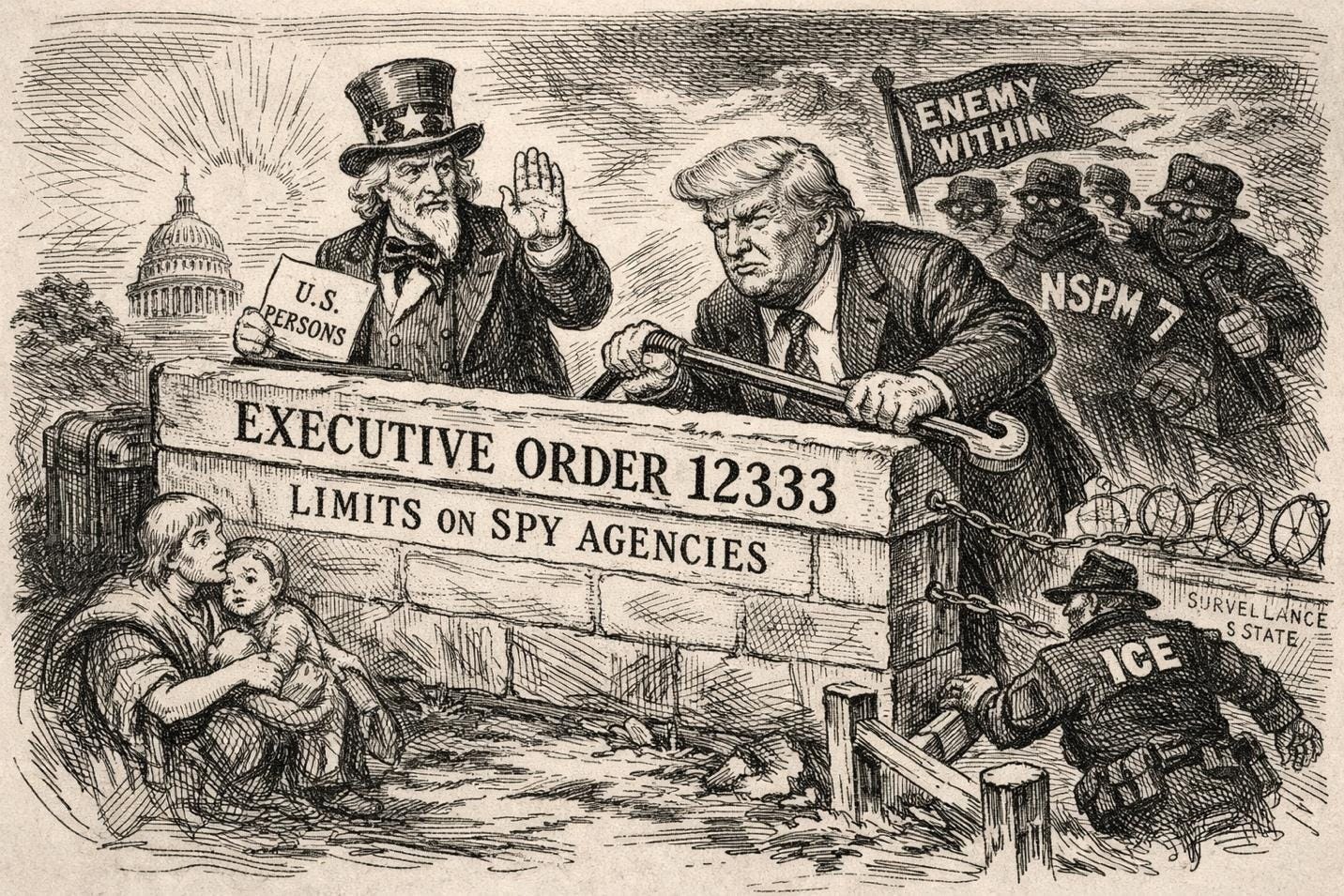
Executive Order 12333 is one of the publicly least well known, and most important, documents in American national security. First issued by President Ronald Reagan in 1981 and last substantively updated by President Barack Obama, it is the foundational directive that governs what the United States Intelligence Community may, and may not, do. It defines intelligence authorities, assigns responsibilities, and, critically, imposes binding limits. It is also a textbook example of what an executive order is actually supposed to be: a presidential directive that organizes executive branch activity within the boundaries set by law and the Constitution.

Unlike campaign rhetoric or policy memoranda, Executive Order 12333 is operational. It is relied upon daily by intelligence officers, lawyers, inspectors general, and courts. It tells intelligence agencies how they may collect, retain, analyze, and disseminate information, including detailed rules for information concerning U.S. persons. It also tells them what they cannot do.

At the center of the order is a simple but profound principle: intelligence agencies exist to collect intelligence on foreign powers and foreign threats, not to monitor Americans.

Executive Order 12333 therefore draws a sharp line around “United States persons,” a category that includes U.S. citizens, lawful permanent residents, and most U.S.-based associations and corporations. With narrow and carefully defined exceptions, the order prohibits intelligence agencies from intentionally collecting information about U.S. persons. Where incidental collection may occur, the order imposes strict rules governing minimization, retention, and use. Intelligence agencies are required to delete or destroy information about U.S. persons that does not meet specific legal criteria for retention, and even then, use is tightly constrained.

These protections did not arise by accident. They are the product of painful history. The intelligence abuses uncovered in the 1970s by the Church Committee revealed extensive domestic surveillance of civil rights leaders, political opponents, journalists, and protest movements. Executive Order 12333, along with statutes such as the Foreign Intelligence Surveillance Act, was designed to ensure that those abuses would not recur and to impose lasting legal and procedural limits on intelligence activities.

President Obama’s updates to the order reinforced those guardrails. They clarified limits on bulk collection, strengthened privacy protections, and reaffirmed that intelligence authorities exist to protect national security, not to serve partisan or ideological ends. The order was treated not as a political instrument, but as a constitutional restraint.

That is why Executive Order 12333 deserves renewed attention now.

If recent patterns hold, this order is likely to become a central battleground. President Trump has already demonstrated a willingness to disregard institutional norms, to blur distinctions between political opposition and national security threats, and to frame dissent as disloyalty. National Security Presidential Memorandum 7 (NSPM-7) is an early warning sign. In its text, it relies on established legal categories such as ‘domestic terrorism.’ But in public remarks, explaining and justifying these authorities, President Trump has repeatedly described the same targets as the ‘enemy within,’ including in meetings with senior U.S. military officials in late September 2025. His rhetoric does not merely echo the memorandum; NSPM-7 itself treats “hostility towards those who hold traditional American views” as an indicator of whether a person or group may fall within the scope of these investigative tools. The rhetorical and legal conflation of lawful counterterrorism authorities with an ideologically-defined internal enemy–a category so elastic that it effectively encompasses anyone who does not share what Donald Trump asserts are “American values”–collapses critical distinctions on which constitutional limits depend.

This is where authority meets danger.

Executive Order 12333 is the document that stands between that worldview and the machinery of the Intelligence Community. If a president wishes to turn foreign intelligence tools inward, to repurpose intelligence collection capabilities toward domestic political ends, this is the guardrail that must be weakened, reinterpreted, or removed. The order’s restrictions on collection concerning U.S. persons are not a technical detail. They are the point.

History shows how this pressure unfolds. Authoritarian systems rarely announce that they are dismantling legal limits. Instead, they redefine threats, expand exceptions, and demand loyalty from institutions designed to be neutral. Intelligence services are particularly vulnerable to this process because they operate largely in secret and, as executive agencies, are required to follow presidential direction within the bounds of the law. That is precisely why Executive Order 12333 exists, to make clear that presidential direction itself has limits.

Americans tend to focus on dramatic acts: mass arrests, overt censorship, visible repression. But democratic erosion more often begins in documents, definitions, and legal interpretations. It begins with quiet changes to authorities that most people have never heard of, but that govern immense power.

Executive Order 12333 is one of those documents. It is not glamorous. It does not trend on social media. But it is a cornerstone of the legal framework that seeks to balance security and liberty in a manner consistent with constitutional limits . If it is altered to accommodate an expansive definition of internal enemies, or if its protections for U.S. persons are weakened in the name of ideological conformity, the consequences will be profound.

That is why this order matters, and why it deserves public scrutiny now. The most important guardrails are often the ones you never hear about, until they are gone.

Steven A. Cash served as a prosecutor in the Manhattan District Attorney’s office before joining the CIA in 1994 as Assistant General counsel and subsequently serving as an intelligence officer in the Directorate of Operations. In 2001 he joined the Senate Select committee on Intelligence as Counsel and designee-staffer to Senator Diane Feinstein). He later served as a senior staffer in the House Select Committee on Homeland Security, the Department of Energy, the Senate Judiciary Subcommittee on Terrorism, Technology and Homeland Security and the Department of Energy. In the private sector he has advised on national security, counterintelligence, and technology policy and served on the Biological Sciences Experts Group under the Director of National Intelligence. Mr. Cash is currently the Executive Director of The Steady State.

Founded in 2016, The Steady State is a nonprofit 501(c)(4) organization of more than 360 former senior national security professionals. Our membership includes former officials from the CIA, FBI, Department of State, Department of Defense, and Department of Homeland Security. Drawing on deep expertise across national security disciplines, including intelligence, diplomacy, military affairs, and law, we advocate for constitutional democracy, the rule of law, and the preservation of America’s national security institutions.

Powered by WPeMatico