
Gen Z: It’s not Apathy; It’s Exhaustion.
By: Author’s Name Withheld
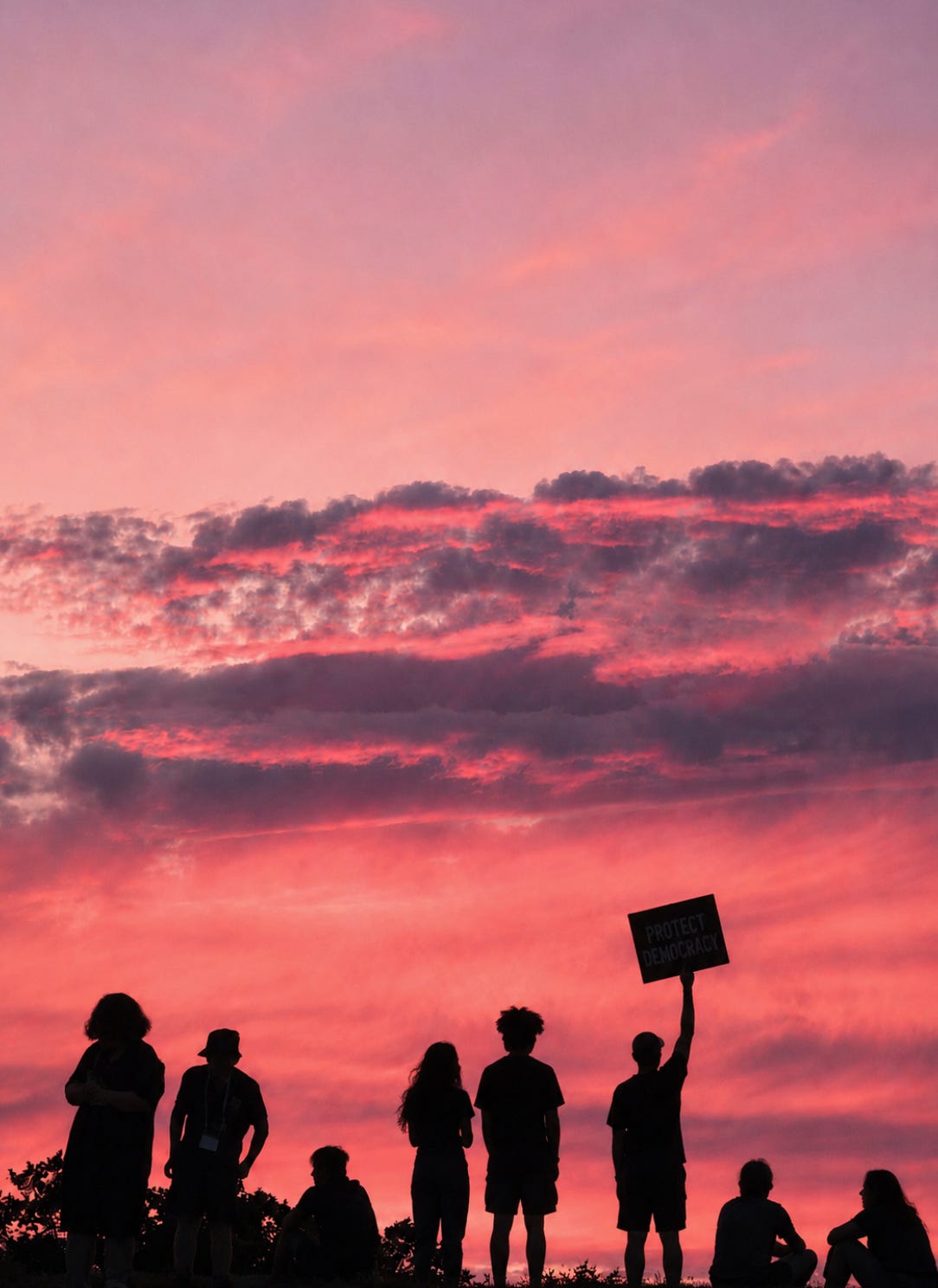
From school shootings to climate change, racial justice, and reproductive rights, Gen Z has repeatedly answered the call. The real challenge today isn’t motivating a generation to engage; it’s giving them a reason to believe engagement still matters.
There is a different kind of exhaustion that has nothing to do with a lack of sleep. It’s the kind that leaves you staring numbingly at your phone long after you’ve stopped reading. It’s the kind that makes many grab a bag of chips, sink into the couch and doomscroll for another hour because it feels simpler than caring. All of this is not because we’ve stopped paying attention, it’s because we’ve been paying attention for too long, and with too little change.
This is political exhaustion, and I think my generation knows it well.
For as long as we have been old enough to understand the world around us, we’ve been told that this moment is ours to fix. We didn’t get a say in creating the problems, however, we are now responsible for solving them.
When students were murdered at Sandy Hook, Columbine, and Marjory Stoneman Douglas, (and at least 2,409 more schools), it was our generation that took to the streets demanding, ‘Never Again.’
When George Floyd was killed, it was teenagers who painted signs in their garages, strapped signs to their bikes and rode to protests.
When the climate crisis movement reached a global audience, it was a young woman who challenged world leaders and inspired millions of others to do the same.
After the 2022 overturning of Roe v. Wade, young people organized marches, voter registration drives, and advocacy campaigns across the country, turning outrage into action almost overnight.
Don’t get me wrong, none of this is to suggest that previous generations had it easier, because they didn’t. Every generation in history has faced moments that have demanded exorbitant amounts of courage and a steadfast belief in our democracy and country; history has always asked ordinary people to carry extraordinary burdens.
But this moment asks something different of our generation.
It’s one thing to inherit difficult problems, but it’s another to inherit a country that can no longer agree on reality itself. When we live in a nation where people exist in siloed echo chambers, it’s difficult to fix problems when we all see the problem differently. Facts have become partisan, truth is a debate rather than a discovery. And now, every crisis arrives instantly on our phones, followed by a tsunami of competing narratives telling us what happened, who to blame, or, whether it even happened at all.
So, when you ask a twenty-something about climate change, voting rights, or immigration, you may be met with a shrug. But don’t mistake that for indifference, it’s simply what happens when caring has demanded so much for so long with so little to show from it.
The political exhaustion our generation faces is dangerous because it doesn’t create a vacuum, rather, it creates an opening. When people lose faith that patient, democratic participation can produce meaningful change, we begin to nurture the soil that allows authoritarianism to grow so well.
And authoritarianism, when it begins, is difficult for any generation to fix, point, blank, period.
And yet, I am optimistic, because I truly don’t believe my generation has lost faith in democracy in its entirety.
I think we’ve lost faith that democracy, as it’s too often practiced today, is capable of meeting the moment.
We still believe our votes matter. We still believe institutions matter. We still believe civic participation matters.
What we’re searching for is proof that our participation matters too, and that may begin to heal our political exhaustion.
Give people a reason to believe their voices can make a difference, and they’ll show up. They always have. The challenge isn’t convincing young people to care, it’s building a democracy that gives us a reason to keep caring.
I’ve watched my generation turn grief into action, frustration into organizing, and uncertainty into service. That gives me hope that we can do it again.
The Guest Author is a member of Generation Z and a college student, majoring in Sociology and Peace and Justice Studies.
Founded in 2016, The Steady State is a nonprofit 501(c)(4) organization of more than 400 former senior national security professionals. Our membership includes former officials from the CIA, FBI, Department of State, Department of Defense, and Department of Homeland Security. Drawing on deep expertise across national security disciplines, including intelligence, diplomacy, military affairs, and law, we advocate for constitutional democracy, the rule of law, and the preservation of America’s national security institutions.
Powered by WPeMatico