
Papers, Please, America
By Guest Author (Name Withheld)
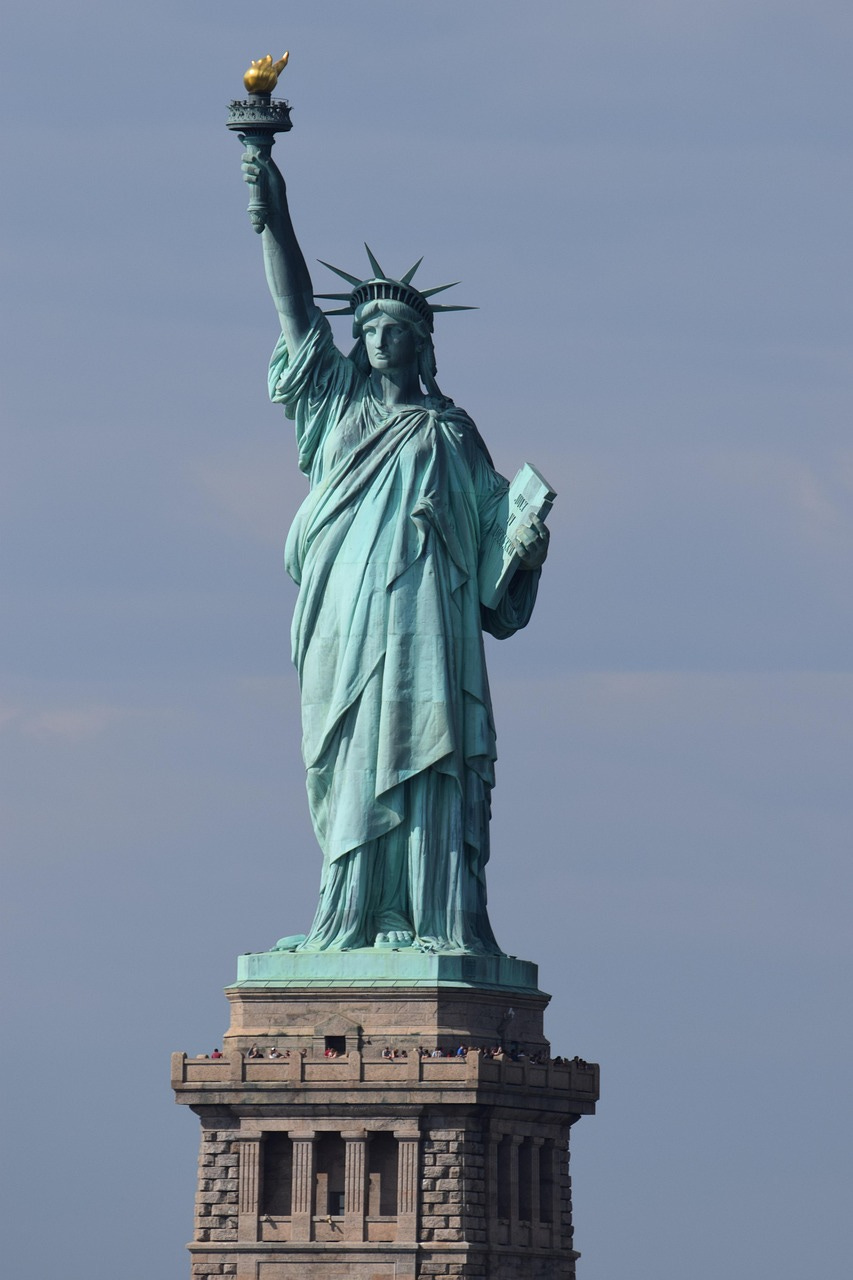
When a country starts treating belonging as conditional and dissent as dangerous, it’s no longer deciding who gets to stay, but whether democracy itself will endure.
I came to America in the summer of 2016. I was twelve years old. My family and I landed at Newark Liberty International Airport, and though I didn’t fully understand what it meant to be in “the land of milk and honey,” I could see the hope in my parents’ eyes, and in the eyes of everyone we left behind. Everything felt new: the sounds, the smells, the vastness of the place. I was overwhelmed, but more than anything, I was excited. We had arrived.
My parents had not come for themselves alone; they foresaw a place where we could all have real stability. Not the precarious kind they had known. For them, being here meant a good American education for my siblings and me, endless job opportunities and the chance to dream, and expand on those dreams. They saw themselves earning enough not just to raise a family, but to have something they had rarely experienced: a full life, not one consumed entirely by the worry of making ends meet. They aimed to send money back home to relatives, paying for my cousins’ school fees, covering medical bills. And, most of all, they saw peace of mind. The idea that if they found good jobs and worked hard, they would be able to provide for their children and set us up for better, more stable futures: Higher education, help for people back home and everything they had not been able to have growing up.
The months that followed were not easy. My parents left before dawn and returned late at night, working jobs that wore them down. My mother struggled to adjust to new tastes, new attitudes, new people. I was the new girl in school, and as the oldest child, I had to help my parents navigate a system we barely understood. Still, we were building something.
Ten years later, I am a U.S. citizen. As a college student, I conduct research. I have found my academic path, and I have finally grown comfortable identifying as American. My parents have bought their first house in a quiet suburban neighborhood and can work sensible hours. They feel like they belong. For the first time since we arrived, the American dream has begun to feel real.
And Donald Trump was elected again.
Almost immediately, the administration rolled out policies that made our hard‑won stability feel fragile. Expedited removal was expanded, allowing deportation without a court hearing for anyone who could not prove they had been in the country for more than two years. An executive order attempted to end birthright citizenship, directly challenging the 14th Amendment. Sanctuary cities were threatened with the loss of federal funding. The IRS, Social Security Administration, and other agencies were ordered to share data with ICE, turning routine government functions into deportation infrastructure. A new nationwide registration system required non‑citizens, including children as young as fourteen, to submit fingerprints and personal information or face detention. Family detention was relaunched, and the task force reuniting families separated during the first term was disbanded.
These were not abstract policies. They created real fear. Now I find myself asking questions that never occurred to me before: Should I carry my passport everywhere I go? Does it even matter, or could I still end up in a detention center?
But the targeting has not stopped at immigration. Federal agents have been used to suppress protests, sometimes with tear gas. Student activists, including foreign students, have had their visas revoked for participating in campus demonstrations. The White House has pressured agencies to purge documents containing terms like “diversity,” “equality,” and “gender.” Broadcast licenses have been threatened for news outlets that produce critical reporting, which the president has labeled “enemies of the people.” The Department of Justice has been weaponized to investigate and prosecute political critics.
Then there are the killings of Renee Good and Alex Pretti. Two white American citizens, speaking for their rights, ended up dead. If two citizens can face that fate while exercising their freedoms, what does that say about where I, a Black immigrant, could end up if I encounter the same forces? This goes beyond race. It goes beyond citizenship status. It becomes a question of humanity, of democracy, of whether the little person can still be heard. It becomes a question of whether this country still cares more about its people than about political retribution and authoritarian consolidation.
This nation was built to be a home, a safe haven, a place for second chances, a place to start over. My family and I found that version of America, at least for a while. But under the second Trump administration, that America feels like a memory we can barely hold onto.
The American dream, the one my parents carried with them through the doors of Newark Liberty, has been cheapened. The values this country was built on are being stripped away. And what is replacing them is not strength, but fear, not democracy, but authoritarianism dressed in executive orders.
Guest Author (Name Withheld) is an immigrant who arrived in the U.S. at age twelve, the author is now a citizen, college student, and researcher. Having witnessed the first of Donald Trump’s terms, and currently living through the second, they remain grateful for what America has offered while feeling a deep responsibility to speak out and work for what it could yet become.
Founded in 2016, The Steady State is a nonprofit 501(c)(4) organization of more than 400 former senior national security professionals. Our membership includes former officials from the CIA, FBI, Department of State, Department of Defense, and Department of Homeland Security. Drawing on deep expertise across national security disciplines, including intelligence, diplomacy, military affairs, and law, we advocate for constitutional democracy, the rule of law, and the preservation of America’s national security institutions.
Powered by WPeMatico