Don’t Take My America Away – Immigration and Soft Power
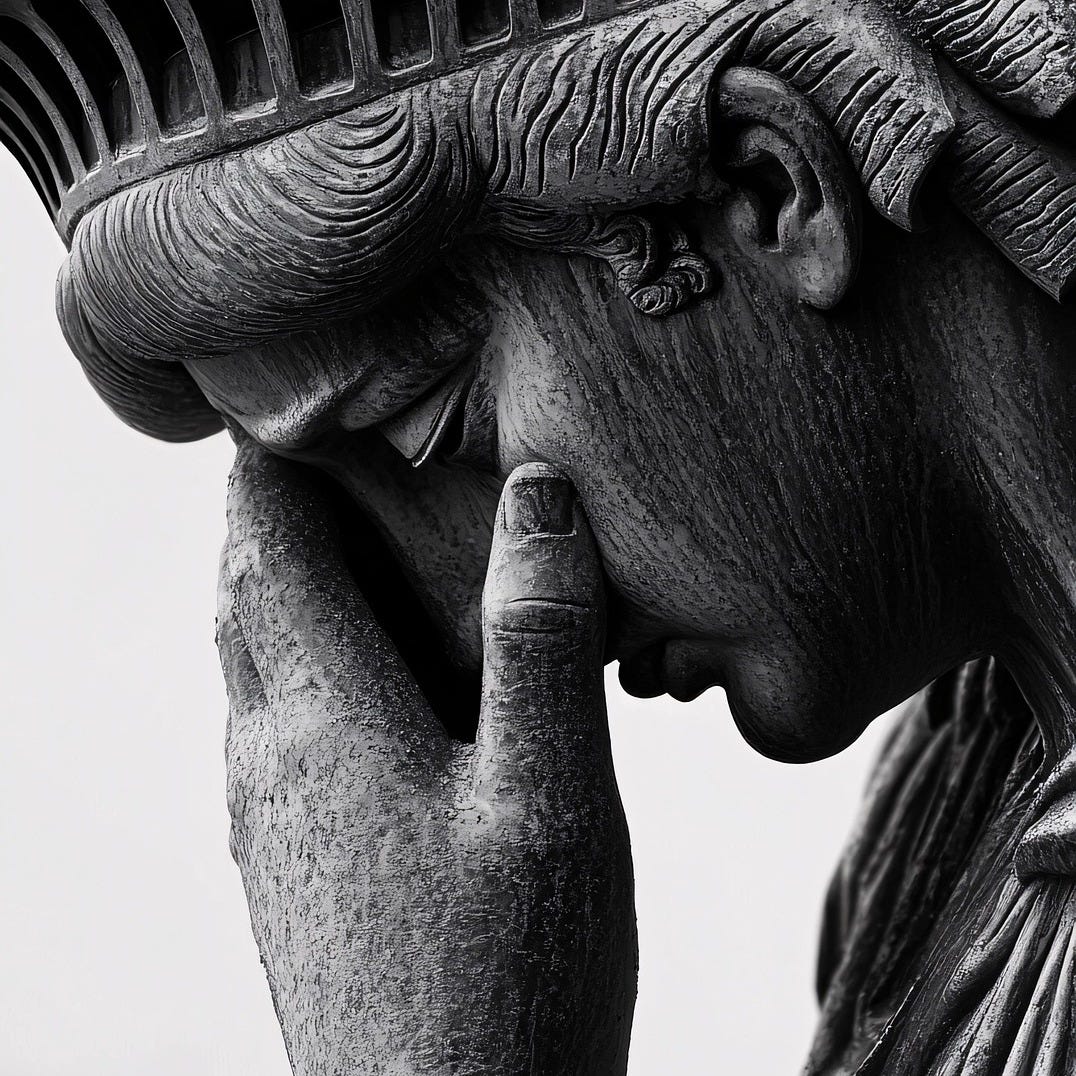
Created by Vilkasss, Pixabay
The Trump administration has undertaken a wholesale effort to gut America’s soft power, from huge budget cuts to bullying most countries around the world. One of the most insidious actions has been the brutal crack-down on immigration, including attempting to end birth-right citizenship. While these actions have major impacts domestically, a much less appreciated but nonetheless significant consequence is the severe damage it does to the US image internationally: it threatens the US global brand, or in foreign policy-speak, its soft power.
Immigration and Soft Power – America (pre-Trump) Stood Out
The US has had a different concept of immigration and citizenship from other countries for much of its history. Someone could become an American by believing and supporting certain ideals of freedom, justice, equality, democracy, and rule of law. Being an American was a choice not tied to where someone was born, what their race or ethnicity may be, or their religion. The idea that a country should be based on a set of ideals and that anybody from anywhere could become a fully equal American is substantially different from the majority of other countries in the world. Beyond this ideal being important to America’s self-identity, this is a critical component of US soft power.
I first personally appreciated the role of the relatively open and welcoming US immigration concept while working as a waiter in Australia in the mid-1970’s. All the other workers were originally from elsewhere and often referred to themselves by their origin country, e.g., French, Greek, German, etc., despite migrating to Australia. When discussing possibly moving to the US, they notably said they could become American, not just move there for a better job (as they would say about other countries), as if it were a fact and one they admired.
Fast forward four decades to June 2016, and Trump has just secured the GOP nomination. During a lively political conversation in Europe at a post-international conference dinner with several noted non-American academics, one pointedly stared at me and said, “Don’t take my America away”. Another (to paraphrase here) followed up that even if he did not want to move to the US, the idea that anybody can become an American by ascribing to a set of ideals that is not tied to blood, land, or religion, was central to the ideas of freedom and democracy around the world. He added that Americans do not appreciate how powerful that idea is in the world, noting that “even if things get desperate in my country, I know there is always America.”
Soft Power Bolsters US Influence
The Trump administration speaks out of both sides of its mouth on the importance of soft power. On one hand, some tout a dog-eat-dog worldview where only power matters. On the other hand, others still recognize the value of soft power as they extol the virtues of freedom, capitalism, European (or western) civilization, religious freedom, and democracy. For example, the administration is trying to use the US’s much-weakened soft power to support protests in Iran.
Soft power serves as the foundational backdrop for US national security policy, even though it is hard to translate into specific policy gains. But as any country’s diplomats will state, its decline or absence shows up noticeably. Several years ago, China initiated its so-called “wolf warrior” diplomacy, trumpeting Beijing’s power, thumping a nationalist message, and seeking to throw its economic and military weight around. Despite the cheers by nationalists inside China, wolf warrior diplomacy led to an international backlash, even from governments more sympathetic to China. Consequently, Beijing has largely backed off this approach and adopted a much more positive, collaborative approach, enabling it to exploit the Trump administration’s hyper-bullying nationalist diplomacy.
Trump’s Immigration Policy Damaging US International Influence
While often considered a domestic issue, immigration is central to foreign policy. The US has historically benefitted from a relatively open and welcoming immigration policy, including strengthening the US brand. In contrast, the Trump administration’s immigration policies directly weaken US influence around the world. For some in the administration, that is intentional, since the aim of the immigration policy is to make coming to the US so undesirable that people will not try, and for those who are in the country, will be so miserable that they will “self deport” — a truly Orwellian term. Such an attitude has echoes of the Vietnam War quote, “we had to destroy the village to save it.”
Harry Hannah retired after four decades of experience in the Intelligence Community. He retired from the CIA in 2018. About half that time was focused on analyzing the capability of multiple foreign militaries in direct support of US military planning and operations and national level decision making. He is a member of The Steady State.
Founded in 2016, The Steady State is a nonprofit 501(c)(4) organization of more than 360 former senior national security professionals. Our membership includes former officials from the CIA, FBI, Department of State, Department of Defense, and Department of Homeland Security. Drawing on deep expertise across national security disciplines, including intelligence, diplomacy, military affairs, and law, we advocate for constitutional democracy, the rule of law, and the preservation of America’s national security institutions.
All statements of fact, opinion, or analysis expressed are those of the author and do not reflect the official positions or views of the US Government. Nothing in the contents should be construed as asserting or implying US Government authentication of information or endorsement of the author’s views.
Powered by WPeMatico