
The Spies America Is Losing

unsplash
America’s intelligence edge has never depended solely on satellites, AI, or intercepted communications. It has depended on courageous people who believed the United States stood for something worth risking their lives for. When our leaders erode those ideals, they don’t just damage America’s reputation; they make it harder to recruit the human sources who prevent wars, expose dictators, and keep Americans safe.
This administration is doing serious and enduring damage to the very organizations charged with protecting the country.
Let me reiterate what I said in my recent article for The Steady State.
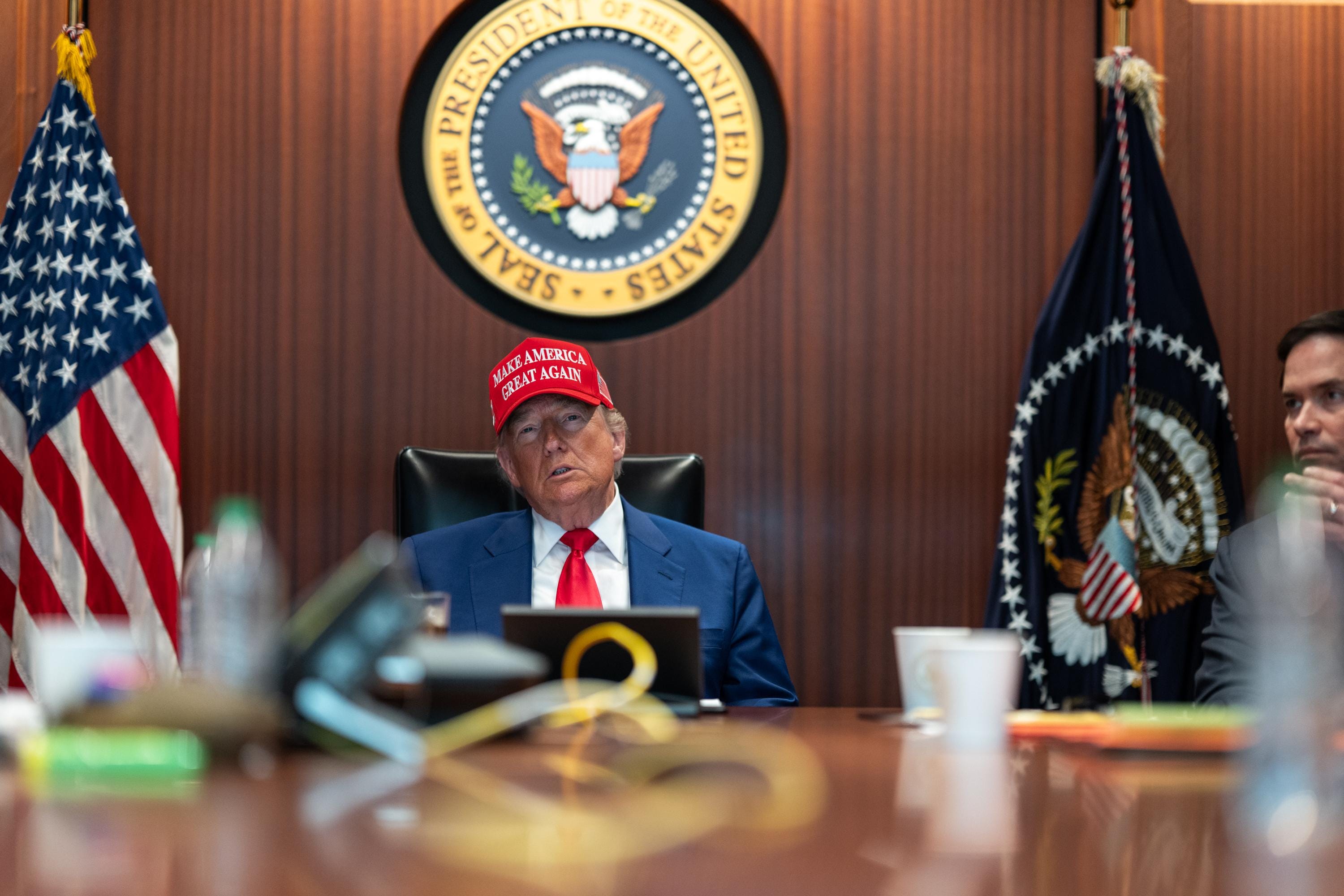
• The Intelligence Community (IC) informs policy.
• The President and other government officials who are consumers of intelligence make policy. Full stop!
Neither the President, the primary consumer of U.S. intelligence, nor his appointed officials are obligated to heed the analysis of the U.S. intelligence community (IC). But they are responsible and accountable for the decisions they make, informed or not. When these decisions involve foreign policy, they should, at a minimum, do no harm here at home. Unfortunately, that is not the case.
By treating the IC as an obstacle rather than an asset, the President is hollowing out the very U.S. institutions that serve as the first line of defense in protecting us from those who wish us ill. This is more than electing to ignore the analysis of IC experts or dismissing analysts within the National Intelligence Council (NIC). It goes to the core of what makes our IC, and the analysis it produces, uniquely insightful: the human source. And we risk losing that edge.
The “Critical 10%” of intelligence collection
Through its actions, this administration risks eroding the foundation of CIA and other Human Intelligence (Humint) collection organizations’ ability to recruit the sources that provide the “last mile,” the final 10% of information that pulls the entire intelligence picture together. Not by treating intelligence officers badly, or not appreciating their work, but by degrading the ideological engine that underpins so many non-U.S. citizens’ willingness to risk their lives to inform what they used to see as a shining city on a hill, America.
Much is appropriately made of signals intelligence (SI) and AI’s emerging capabilities. They are frequently important and, with AI, increasingly critical. But these often cannot provide the context that a vetted human source can. I am a Humint officer, so perhaps I am biased. But as a former senior CIA officer who focused on both Iran and Iraq, I have seen the consequences firsthand.
Assume, for example, a signals intercept indicates that “special weapons” were going to be used against U.S. troops in combat. This interecept could be referencing specialized conventional weapons, or WMD. In such cases, it is the vetted, validated, and proven human source, sitting in a room where no CIA officer can go, and no intercept can reach, who can acquire the details and tell his or her CIA contact not only who said what, and why, but what it means. This is the human context gap.
Without such human sources, the signals intercept risks becoming just noise, potentially leading to the kind of catastrophic intelligence failure we experienced in Iraq. And such sources are exceedingly difficult under the best of circumstances to identify and recruit to commit espionage on behalf of the United States. .
The Calculus of Betrayal
There are several factors that dictate whether a source is recruitable. In my experience, the true calculus rests on three pillars: Trust, Risk, and Value.
• Trust: Does the source trust the officer, the organization, and the government they represent to keep them safe?
• Risk: Is the considerable risk of their cooperation justified by the potential impact of their information?
• Value: Does their information make a real difference?
Ego and revenge are often motivations, and money is almost always involved, even if only as a symbol of worth. But there is almost always a deeper ideological current at play.
Some years ago, I was sitting with a young Iranian Revolutionary Guard somewhere in the Middle East. He spoke only Farsi and had never met an American before.
While we were taking a break from intensive debriefs, he said, “You know, you really ask a lot of questions,” causing me to laugh and acknowledge that indeed I did, and that I appreciated his willingness to provide answers to my many questions. As he was wont to do, he asked me what the English name was for a banana, which he was eating. Then he asked me a question I found much harder to answer: “What was the United States thinking when it pursued the discussions with Iran that led to the Iran/Contra scandal (which was right then blowing up in the news), and why would we agree to support the Iranian regime in such a manner?” Frankly, I didn’t have all the details and was at a bit of a loss myself, and in the end, I settled on, “Sometimes we make mistakes, and this might be one. We’ll see.”
After a thoughtful pause, he simply said, “But… You are America!”
He took money. He wanted revenge. But underlying it all, he also believed in what America represented.
The Erosion of U.S. Ideals
Through his actions, including a careless disregard for sensitive intelligence and an open disdain for objective analysis, this President is eroding the very reputation that once made the United States a beacon for those willing to act against their own regimes. His relentless, authoritarian, and undemocratic actions serve to undermine confidence in the values of the United States that have set us apart. Who would place at risk his or her life and those of their family to spy for a government that, step by step, is adopting the attributes they despise in their own country?
Recruiting sources is difficult under the best of circumstances. This administration has made it infinitely harder for potential sources who, at their core, are seeking a way to emulate the ideals of the United States. When a President treats the values of our nation as negotiable or an afterthought, he alienates the very people who would risk everything to provide that last 10% of insight.
As we face a precarious future with Iran and elsewhere, this is a loss we can ill afford.
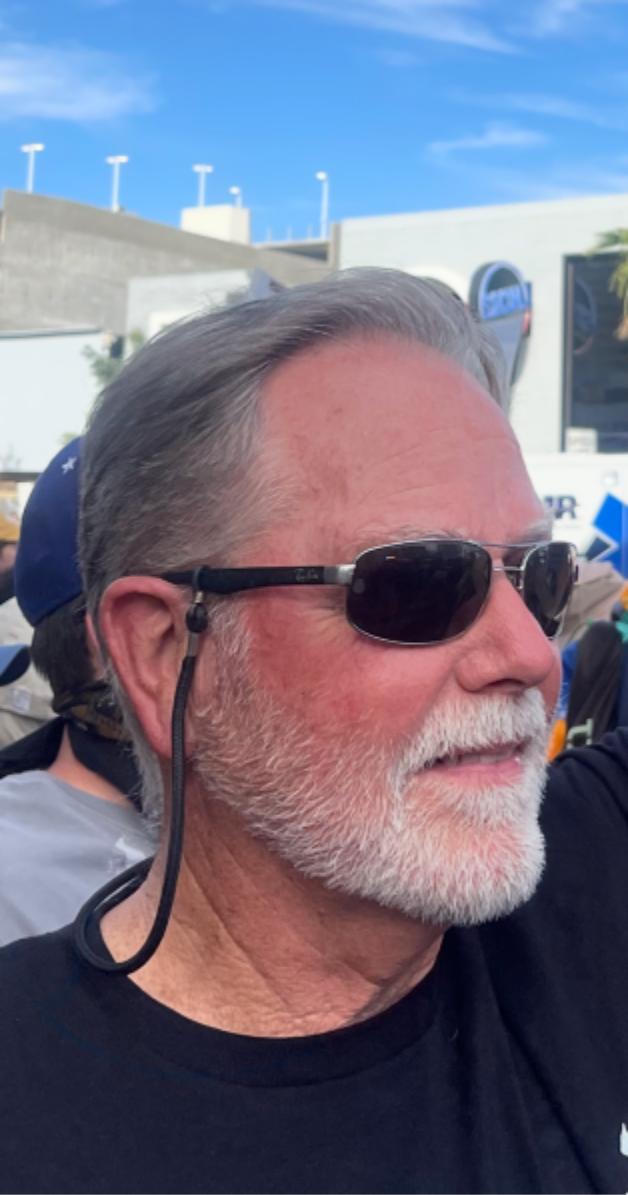
Mark Fowler is a decorated CIA Senior Operations Officer. Retired 22 years of service, he is a middle east expert, a veteran of the War on Terror, Iran specialist and served in foreign assignments across Europe, South Asia. He is a first-time author of, soon to be published, A PRINCE OF MIRRORS (A CIA Odyssey of Trust and Betrayal), and is currently working on his second novel, SECOND PROTOCOL. He is a member of The Steady State.
All statements of fact, opinion, or analysis expressed are those of the author and do not reflect the official positions or views of the US Government. Nothing in the contents should be construed as asserting or implying US Government authentication of information or endorsement of the author’s views.
Founded in 2016, The Steady State is a nonprofit 501(c)(4) organization of more than 400 former senior national security professionals. Our membership includes former officials from the CIA, FBI, Department of State, Department of Defense, and Department of Homeland Security. Drawing on deep expertise across national security disciplines, including intelligence, diplomacy, military affairs, and law, we advocate for constitutional democracy, the rule of law, and the preservation of America’s national security institutions.
Powered by WPeMatico